A Latin American turn in a distant war: Milei, Argentina and the Middle East conflict

When Argentine president Javier Milei declared in New York that he was “the most Zionist president in the world”, the statement immediately resonated far beyond the room where it was delivered.
Speaking at Yeshiva University, Milei praised Israel and the United States while warning that the West would ultimately prevail in its confrontation with Iran. At a moment of heightened tensions in the Middle East, the remarks placed Argentina squarely within a geopolitical debate that Latin American governments have traditionally observed from a cautious distance.
The episode represents what could be described as a Latin American turn in a distant war. For decades, most countries in the region tried to maintain diplomatic balance in Middle Eastern conflicts, avoiding explicit alignment while preserving relations with multiple actors. Milei’s rhetoric breaks with that tradition. By openly identifying himself with Zionism and the strategic position of Israel and the United States, the Argentine leader has moved his country closer to the political logic of global blocs.
The shift is not only diplomatic but also ideological. Milei often frames international politics as a struggle between what he calls the “free world” and authoritarian regimes. In that worldview, support for Israel becomes part of a broader narrative that links Argentina to Western political and economic models. Foreign policy, therefore, is presented not simply as pragmatic diplomacy but as an extension of a larger ideological project.
This posture also reflects Milei’s effort to redefine Argentina’s international identity. Historically, Latin American diplomacy leaned toward multilateralism, neutrality, or regional consensus when confronting distant conflicts. By contrast, Milei’s discourse suggests a more assertive positioning within global disputes. In doing so, Argentina becomes one of the few countries in the region to openly take sides in a conflict unfolding thousands of kilometres away.
RECOMMENDED FOR YOU
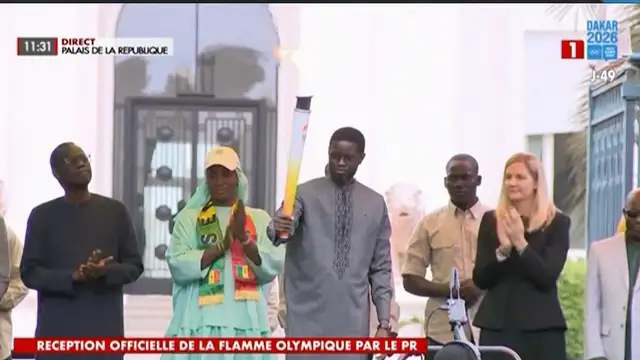
Olympic flame arrives on African soil for first time as Senegal begins Dakar 2026 countdown
The implications go beyond Buenos Aires. If Argentina adopts a consistently aligned stance with Israel and the United States on Middle Eastern affairs, it could alter long-standing diplomatic patterns across Latin America. Some governments in the region have traditionally supported Palestinian causes, while others prefer cautious neutrality. Milei’s position introduces a new variable into that delicate balance.
Ultimately, the significance of the statement lies less in the phrase itself than in what it reveals about the changing geopolitical posture of the region. A Latin American turn in a distant war may still be largely rhetorical, but it reflects a broader question about the region’s place in an increasingly polarised world: whether Latin America will continue observing global conflicts from the sidelines, or whether some of its leaders will choose to take clearer positions in the battles shaping the international order.
This story is written and edited by the Global South World team, you can contact us here.