Afghanistan Roundup: Media repression, security fears, political tensions deepen

Press freedom violations surge as watchdog reports 150 cases in one year
A media watchdog, the Afghanistan Journalists Centre, has documented 150 violations of press freedom across Afghanistan over the past year, highlighting a sustained deterioration in the country’s information environment. These violations reflect a broad pattern rather than isolated incidents, pointing to systemic constraints on journalists and media institutions. The scale of the figure signals that restrictions are not episodic but embedded in governance practices. This trend reinforces concerns raised internationally about shrinking civic space and the inability of journalists to operate independently or safely.
EU warns democracy cannot exist without a free press amid rising threats
The European Union has issued a clear warning that democracy cannot function without a free press, linking Afghanistan’s media restrictions directly to broader governance concerns. The statement underscores that attacks on journalism are not just sectoral issues but foundational political risks. The EU’s position frames press freedom as a prerequisite for accountability and public participation, suggesting that continued pressure on media could further isolate Afghanistan diplomatically and weaken institutional legitimacy.
Fawzia Koofi condemns Taliban raid on her Badakhshan home as ‘cowardly’
Former Member of Parliament Fawzia Koofi publicly denounced a Taliban raid on her home in Badakhshan, describing the action as “cowardly.” Her reaction reflects ongoing tensions between former political figures and the current authorities. The incident is significant not only because of Koofi’s prominence but also because it signals continued targeting or intimidation of former officials. Her use of strong language suggests deepening mistrust and highlights the personal risks faced by political actors linked to the previous system.
Rising crime in Kabul fuels growing public concern over safety
Authorities and observers report increasing crime rates in Kabul, which are now becoming a major source of public anxiety. This trend suggests a gap between governance control and everyday security. Public concern over crime often reflects broader issues such as economic strain, weakened policing capacity, or uneven enforcement. The situation in Kabul, as the capital, carries symbolic weight: rising insecurity there tends to amplify perceptions of instability nationwide.
RECOMMENDED FOR YOU
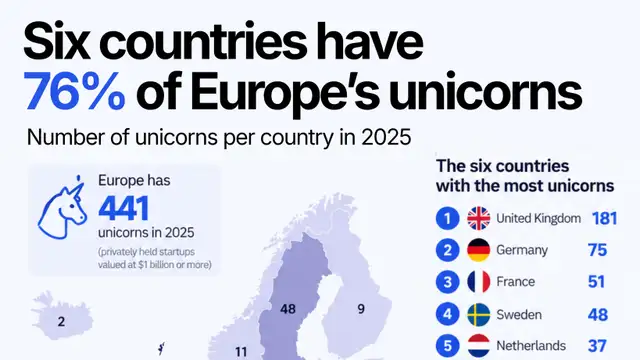
Six countries account for three-quarters of Europe’s unicorn startups
Government pushes media to align with Islamic and national values
Afghan officials have stated that media outlets should align their reporting with Islamic and national values, signalling a clear expectation of ideological conformity. This directive reinforces the broader pattern of media control and frames journalism within a prescribed moral and political framework. While presented as guidance, such positioning effectively narrows editorial independence and shapes the boundaries of acceptable discourse. It also complements the reported rise in press freedom violations, suggesting both formal and informal mechanisms of control.
This story is written and edited by the Global South World team, you can contact us here.