Africa’s coups crisis is not a rejection of democracy, but of its limits - Ernest Harsch
Ernest Harsch of the Institute of African Studies at Columbia University has rejected the idea that coups represent a rejection of democracy itself. He told Global South World that Africa's problem with democracy is the "limitations that an unequal global system and unequal societies have placed on democracy.” Democracy, he argues, is far more than voting every four or five years.
“Real democracy means people having a voice in local day-to-day matters, being engaged in their communities, having representative local governments and the right to protest,” he added.
Despite the right to protest existing on paper, demonstrators in many democracies face violence or internet shutdowns. Harsch observed that the democratic story across Africa is not uniform. According to him, some countries have managed to institutionalise competitive politics in meaningful ways.
"Some democracies in Africa are functioning quite well. Your own country [Ghana] for the past thirty-odd years has had regular turnovers between ruling party and opposition. That’s not a small achievement. Senegal, until recently, had pretty free and fair elections. South Africa has gone so far that even the ruling party lost its majority in Parliament, and they allowed it to happen. They stuck to the Constitution. Botswana and a handful of others have also maintained stable electoral systems," he told Ismail Akwei on Global South Conversations.
Harsch reiterated that Africa does not lack democratic success stories, and the crises coexist with a broader continental pattern he describes as "electoralism". Referencing Cameroonian political thinker Achille Mbembe, he draws on the phrase “administrative multi-partyism.”
RECOMMENDED FOR YOU
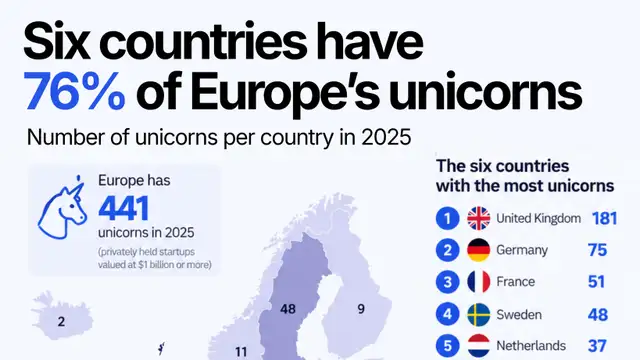
Six countries account for three-quarters of Europe’s unicorn startups
“What you have in many places is an administration that runs elections with multiple parties, but there’s no real choice for ordinary citizens. You can’t get genuine opposition voices in. Alternative visions are systematically squeezed out. The rituals of democracy are there, ballots, campaigns, observers, but the substance is limited,” he explained.
One of the structural problems, he argues, dates back to the 1990s when “elections became tied to neoliberal economic policies. People could occasionally change who was in office, but they couldn’t budge on the economic front. That disjuncture between political choice and economic immobility is at the heart of the frustration.”
Watch the full interview attached to the story above.
This story is written and edited by the Global South World team, you can contact us here.