Ahead of Trump visit, China counters America's economic threat: Opinion
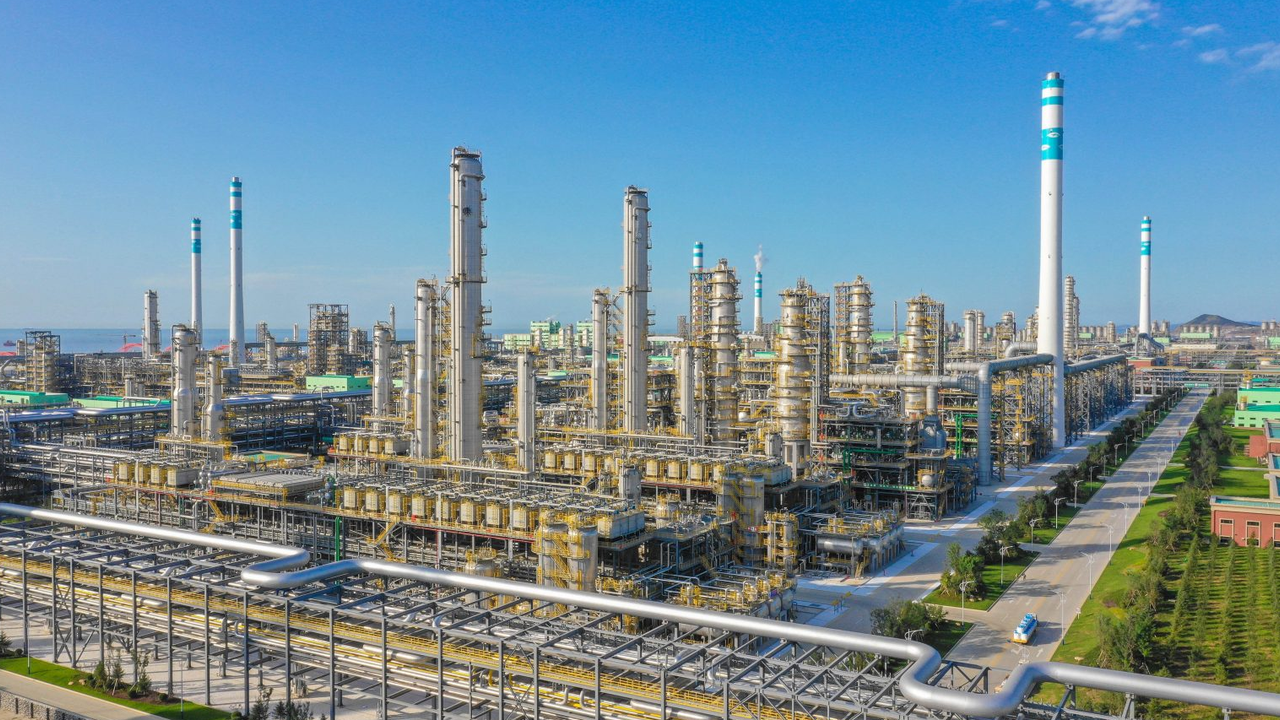
In the delicate dance of international diplomacy, timing is rarely a coincidence. As preparations begin for Donald Trump’s upcoming visit to China, Beijing has quietly but firmly bolstered its legal battlements. On Saturday, the Ministry of Commerce (MOFCOM) invoked its "blocking statute" against U.S. sanctions on five Chinese petrochemical firms. This marks the first time China has deployed a systematic, institutional response to dismantle the extraterritorial reach of American law on its own soil.
Sanctions countermeasures
The catalyst for this shift was the U.S. Treasury’s decision in late April to place firms such as Hengli Petrochemical (Dalian) and Shandong Shouguang LuqingPetrochemical on the Specially Designated Nationals (SDN) list. The move, based on allegations of involvement in Iranian oil trades, sought to sever these industrial giants from the global financial system. However, by activating the Rules on Counteracting Unjustified Extra-territorial Application of Foreign Legislation, Beijing has effectively neutralised the transmission belt of Washington’s "long-arm jurisdiction."
The Anatomy of the Shield
Under Order No. 21 of 2026, the Chinese government has transformed what was once a geopolitical grievance into a domestic legal mandate. The implications for entities operating within China—including multinational banks and insurers—are profound:
- Mandatory Non-compliance: Domestic entities are now prohibited from recognising or enforcing the U.S. sanctions.
- A Right to Compensation: In a sharp escalation, impacted firms are now legally entitled to sue any party in Chinese courts that restricts services in adherence to the U.S. order.
- The Sovereign Firewall: By granting firms the right to apply for "exemption petitions" to comply with foreign law under exceptional circumstances, Beijing has seized the ultimate arbitral authority over trade within its borders.
The genesis of these Blocking Rules lies in a direct response to the escalating use of unilateral sanctions and export controls by the United States. In formulating this mechanism, MOFCOM pointedly noted that such measures frequently leverage "secondary sanctions" to coerce entities in third-party countries into compliance. At the rules' inception, the Department of Treaty and Law at MOFCOM described these practices as a violation of international law principles—specifically sovereign equality—and a direct assault on the legitimate economic activities of Chinese enterprises.
In terms of institutional design, Beijing has not acted in a vacuum. The framework draws inspiration from "blocking statutes" pioneered by the European Union and other jurisdictions. By implementing these rules, China joins a global cohort of jurisdictions that formally refuse to recognise the extraterritorial validity of foreign administrative measures, thereby reasserting the primacy of international law over unilateral diktats.
Stepping up to the fight
For decades, Chinese enterprises were caught in a legal pincer movement: comply with U.S. sanctions and face domestic backlash, or remain loyal and be frozen out of the dollar-clearing system. This weekend's announcement suggests that the era of passive endurance is over.
"We are witnessing a coming of age for China’s legal toolkit," notes Xiaxi Luh, a Beijing-based trade analyst. "This is a domestic legal 'firewall' designed to force a choice. By penalising those who enforce foreign sanctions internally, Beijing is making the cost of following Washington’s orders prohibitively expensive."
The focus on Hengli Petrochemical—a linchpin of China’s refining sector—underscores the stakes. For Beijing, this is a matter of energy security. The message is clear: domestic stability will not be bartered for foreign administrative compliance, particularly when transactions are increasingly settled in Yuan via the Cross-Border Interbank Payment System (CIPS).
The Pre-Summit Signal
The timing of this "institutional riposte" provides significant leverage ahead of Donald Trump’s visit. By codifying its resistance into law before the leaders meet, Beijing has removed the issue from the realm of mere "grievance" and placed it in the realm of "statute." It signals to the White House that the tools of unilateralism are losing their edge.
As the global community watches this legal tug-of-war, the underlying narrative is the accelerating erosion of dollar hegemony. When the two largest economies clash over who holds the gavel on international trade, the world is forced to reconsider the reliability of the greenback as a neutral instrument.
For now, the Ministry’s order stands as a stark reminder: within the Chinese market, the final arbiter of trade is no longer a Treasury office in Washington, but the law of the land in Beijing.
Du Yubin is a journalist and Executive Producer for CGTN. He was stationed in Washington, D.C. and London for six years each, focusing on China-US and China-EU relations. He has over 15 years of experience in international communication and digital media. The views expressed in this article are the author’s own.
This story is written and edited by the Global South World team, you can contact us here.
