As fuel prices rise, Filipinos rethink Holy Week traditions
Rising fuel costs are reshaping how Catholics observe Holy Week in the Philippines — a net oil-importing country and the largest Catholic population in Asia — pushing many to adapt long-standing religious traditions and travel plans without abandoning them altogether.
From scaled-down pilgrimages to symbolic acts of devotion tied to global events, practices this year reflect a blend of pragmatism and persistence as oil-driven price pressures ripple through daily life.
Scaled-down ‘Visita Iglesia’
The impact of higher fuel prices is most visible in Visita Iglesia, a Maundy Thursday tradition where devotees visit seven or more churches to pray the 14 Stations of the Cross
This year, some Catholics are compressing the ritual — opting to visit just one church and complete all 14 stations within its premises, rather than travelling across multiple locations.
Others are limiting their routes to nearby parishes, abandoning longer trips that previously stretched to provinces such as Pampanga, Ilocos or Tagaytay.
RECOMMENDED FOR YOU
Fertilizer shipments through Strait of Hormuz fall to zero as food security fears grow
The shift reflects the sharp rise in fuel prices, with gasoline costs nearly doubling in some cases, prompting households to cut back not only on travel but also on electricity and other daily expenses.
Urban centres such as Quezon City and Manila have seen steady foot traffic in major churches, suggesting that while mobility has been curtailed, participation in the tradition remains intact — albeit in a more localised form.
‘Jesus’ prays for the Middle East
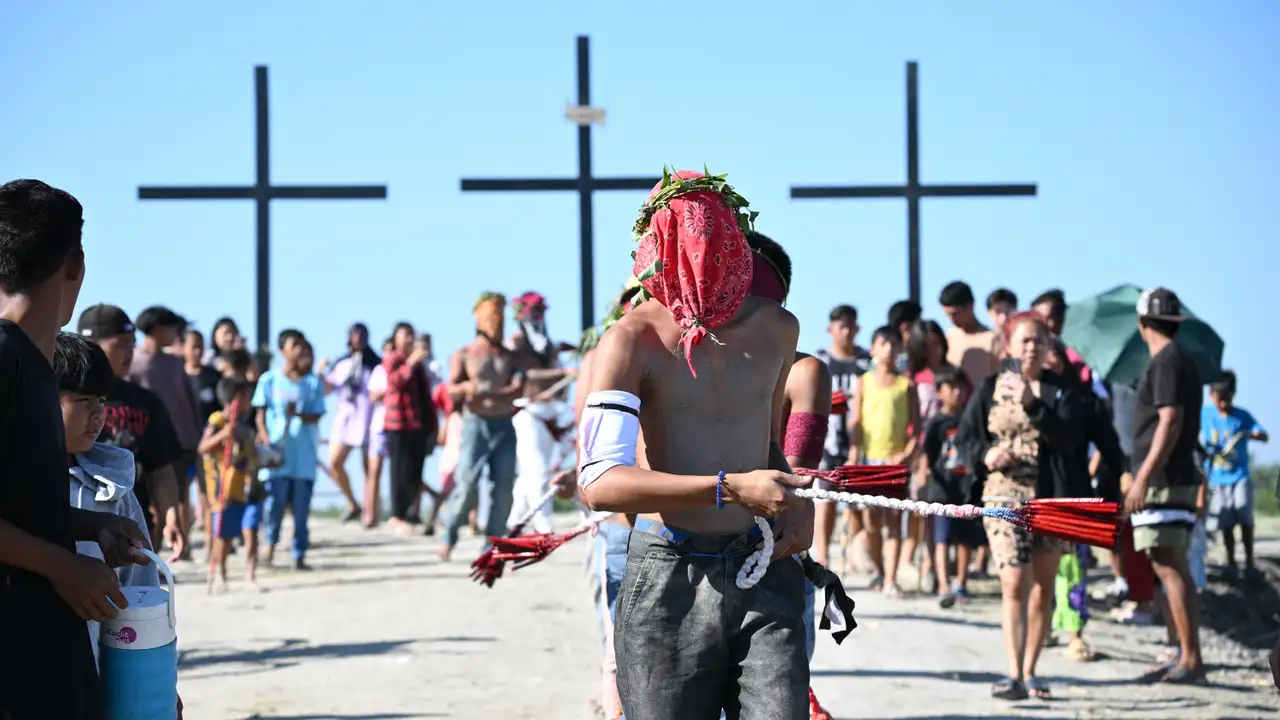
In Pampanga, one of the country’s most extreme expressions of Holy Week devotion has taken on a contemporary geopolitical dimension.
In San Pedro Cutud, San Fernando, a long-time devotee known as the “Christ of Pampanga” marked his final crucifixion after 37 years — dedicating the act to prayers for peace in the Middle East.
The ritual, in which participants are nailed to wooden crosses, drew about 8,000 spectators at the main site and more than 15,000 across five locations this year, according to organisers.
The annual reenactment, already physically demanding, unfolded under intense heat, with some attendees fainting during the ceremonies, though no major incidents were reported.
The retiring devotee, aged 65 and managing health issues including asthma, required oxygen support after the performance — underscoring both the personal toll and enduring appeal of the tradition, which continues to draw both local and foreign visitors.
Travel demand still up 50%
Despite mounting cost pressures, data suggest that Filipinos are still travelling in large numbers during Holy Week — though with notable adjustments.
RECOMMENDED FOR YOU

Serbia election 2026: Student-led opposition secures parliamentary majority, defeats Vučić’s coalition
Outbound travel demand rose by 50% year-on-year for the April 1 to 12 period, while domestic bookings increased by 25%, according to travel platform Trip.com.
However, travellers are increasingly favouring destinations closer to home, particularly within Asia. Hong Kong, Tokyo and Singapore topped outbound preferences, followed by Bangkok and Taipei, with longer-haul trips to Europe and the United States seeing reduced demand as airfares climbed sharply.
Holy Week remains one of the Philippines’ busiest travel periods, with bookings made earlier — averaging 74 days in advance — as travellers seek to manage rising costs.
This story is written and edited by the Global South World team, you can contact us here.