Backlash grows over copyright rules in South Korea’s AI strategy

South Korean creator and copyright groups are pushing back against a key provision in the government’s artificial intelligence (AI) roadmap, warning it could allow companies to train AI systems on protected works before securing permission or payment.
In a joint statement, the groups rejected what they described as a “use first, pay later” approach embedded in the Korea AI Action Plan, arguing it would threaten creators’ rights and undermine the country’s cultural industries.
Their criticism centres on a section of the plan that seeks to enable the use of copyrighted material for AI training without legal uncertainty, potentially through amendments to existing law or the introduction of a new AI-specific statute.
Creators say the proposal favours commercial AI developers and shifts the burden of enforcement onto individual rights holders.
They also warned that references to opt-out mechanisms would offer little real protection, as most creators lack the resources or technical capacity to deploy machine-readable safeguards.
RECOMMENDED FOR YOU
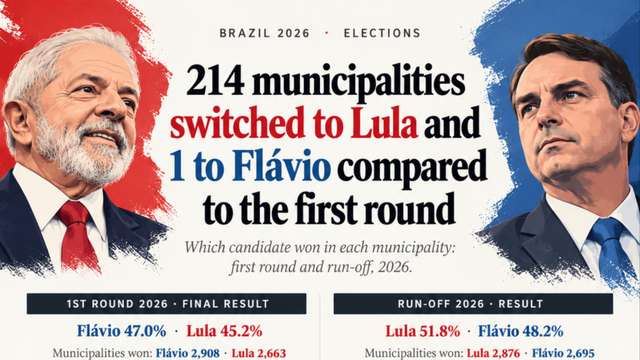
Brazil election 2026: Lula overturns Flávio Bolsonaro's lead in more than 200 municipalities to win presidency
“This is a declaration that the government is abandoning the sustainability of Korea’s cultural industry,” the groups said.
Newsmen also concerned
Sixteen organisations signed the statement, representing writers, screenwriters, performers, musicians, choreographers, visual artists, independent producers and the broadcasting sector.
The intervention follows concerns similar to those raised by newspaper publishers, who argue that copyright is rooted in the right to grant or refuse permission in advance, not after the fact.
The dispute comes as the Lee Jae Myung administration accelerates efforts to position South Korea as a global AI leader, with the Presidential Council on National Artificial Intelligence Strategy coordinating policy across government and industry.
The draft Korea AI Action Plan, released in December, sets out 98 measures spanning infrastructure investment, AI semiconductor development, talent training and regulatory reform.
Among them are proposals to revise laws governing personal data and copyrighted works to facilitate AI training, a move officials say is necessary to support innovation and competitiveness.
Public consultation on the draft plan closed earlier this month, and the council has indicated it will hold further discussions on the copyright issue.
RECOMMENDED FOR YOU

LIVE: Lula stays in power, beats Bolsonaro in stunning comeback
This story is written and edited by the Global South World team, you can contact us here.