Brazil tightens grip as world’s largest coffee producer in 2025
- #Space Force
- #Akihisa Shiozaki
- #Sedona Forum
- #Tien Shan
- #infrastructure projects
- #GlobalHealth
- #InfectiousDiseases
- #PublicHealth
- #Hantavirus
- #Kabul crime
- #media repression
- #Fawzia Koofi
- #GlobalPolitics
- #ZeroTariffs
- #ChinaAfricaTrade
- #Offshore Gas
- #EnergyPolicyShift
- #GlobalOilMarkets
- #UAEOPECExit
- #African Athletes
- #Visualized
- #World Visualized
- #Space Force
- #Akihisa Shiozaki
- #Sedona Forum
- #Tien Shan
- #infrastructure projects
- #GlobalHealth
- #InfectiousDiseases
- #PublicHealth
- #Hantavirus
- #Kabul crime
- #media repression
- #Fawzia Koofi
- #GlobalPolitics
- #ZeroTariffs
- #ChinaAfricaTrade
- #Offshore Gas
- #EnergyPolicyShift
- #GlobalOilMarkets
- #UAEOPECExit
- #African Athletes
- #Visualized
- #World Visualized
Brazil is expected to remain the world’s dominant coffee producer in 2025, widening its lead over global rivals as demand for coffee continues to rise despite climate pressures and supply chain volatility affecting major growing regions.
Main Points
- Brazil remains the world’s largest coffee producer
- Vietnam, Colombia, Indonesia and Ethiopia dominate the global coffee supply
- Climate change and extreme weather are increasingly threatening coffee production
Brazil is expected to remain the world’s dominant coffee producer in 2025, widening its lead over global rivals as demand for coffee continues to rise despite climate pressures and supply chain volatility affecting major growing regions.
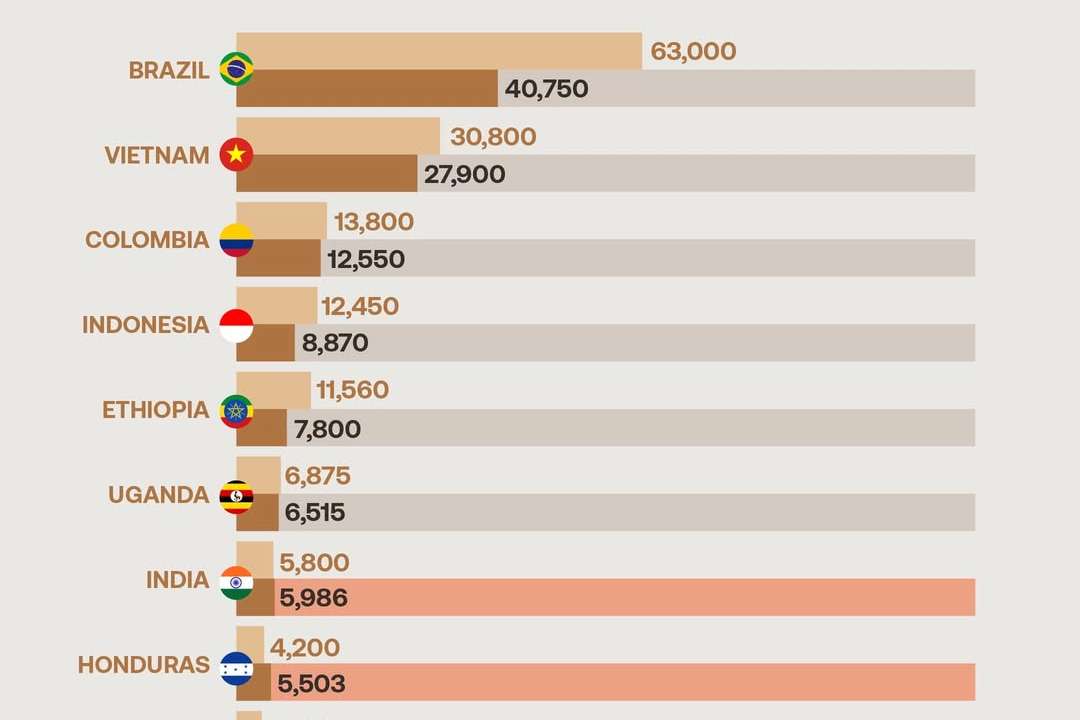
According to data compiled from the USDA Foreign Agricultural Service (FAS), the International Coffee Organisation (ICO), Colipse Coffee and StatRanker, Brazil is projected to produce around 63 million 60-kg coffee bags in 2025, far ahead of second-place Vietnam at 30.8 million bags.
Brazil is also forecast to export more than 40 million bags, reinforcing its position as the backbone of the global coffee trade. The country accounts for roughly one-third of global coffee production and remains the world’s largest supplier of arabica beans, widely used in premium blends and espresso markets.
Vietnam, the second-largest producer, is expected to export nearly 27.9 million bags, driven largely by robusta coffee production. Robusta beans, which contain higher caffeine levels and are commonly used in instant coffee, have seen growing global demand amid rising Arabica prices.
Colombia ranks third with a projected production of 13.8 million bags, followed by Indonesia and Ethiopia, the birthplace of coffee, with estimated outputs of 12.45 million and 11.56 million bags, respectively.
In Africa, Uganda continues to strengthen its role in global coffee markets, with production expected to reach nearly 6.9 million bags, according to USDA estimates.
One notable trend in the data is that countries such as India, Honduras and Peru are projected to export more coffee than they produce domestically during the year. Analysts say this can occur due to carryover inventories from previous harvests, re-exports and stockpiled reserves entering international markets.
The global coffee industry has faced mounting pressure in recent years from extreme weather events linked to climate change. Brazil experienced severe drought and frost episodes between 2021 and 2023, while Vietnam and Colombia have also dealt with shifting rainfall patterns affecting crop yields.
The International Coffee Organisation has repeatedly warned that climate instability poses a growing long-term threat to coffee-growing regions, particularly for arabica production, which is highly sensitive to temperature changes.
Despite supply concerns, global coffee consumption continues to rise steadily. The USDA projects growing demand across Asia and emerging markets, while established markets in Europe and North America remain among the world’s largest consumers.
Industry analysts say tightening supplies and weather-related disruptions have contributed to elevated global coffee prices over the past two years, affecting everyone from multinational café chains to independent roasters.
What this really highlights is how a handful of producing nations continue to shape one of the world’s most traded agricultural commodities, even as climate risks increasingly threaten the future of global coffee production.
This story is written and edited by the Global South World team, you can contact us here.