BRICS silent on U.S.-Israel strikes on Iran – Here’s why
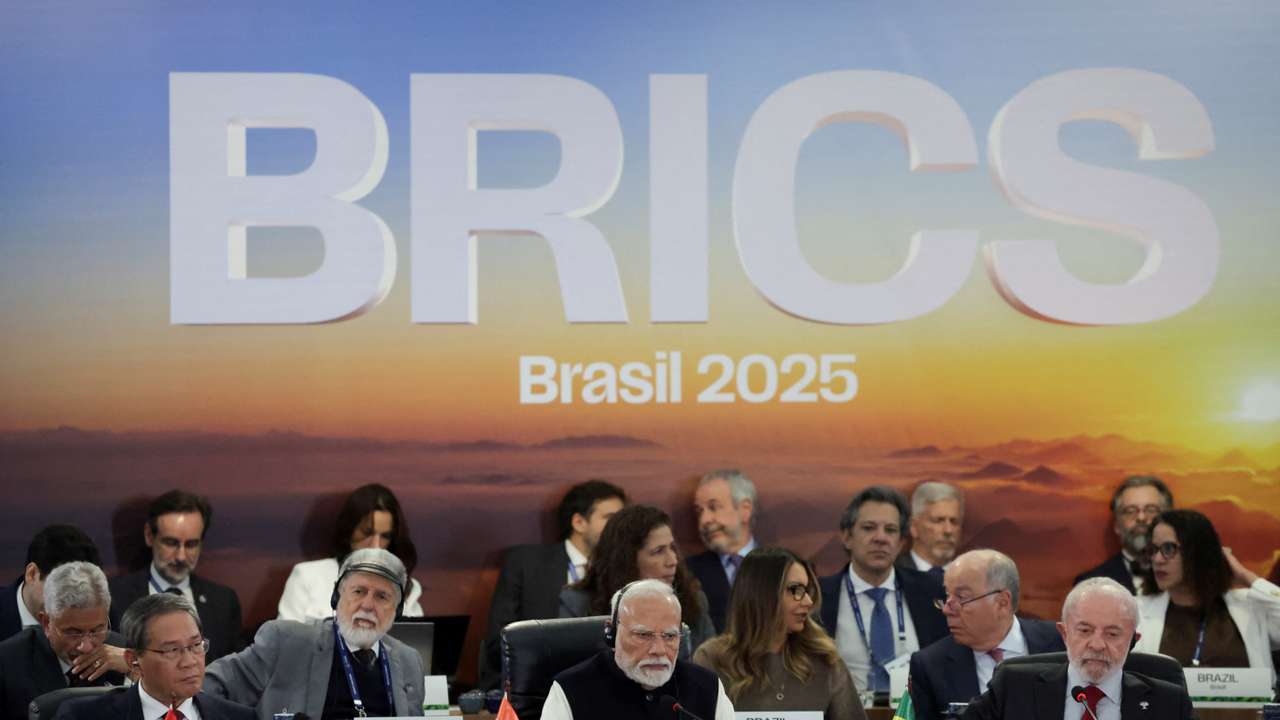
The BRICS bloc, which positions itself as a collective voice for the Global South and a counterweight to Western power, has remained largely silent over the United States–Israel war on Iran.
More than a week after U.S. and Israeli strikes killed Iran’s Supreme Leader Ayatollah Ali Khamenei and triggered one of the most severe Middle East crises in years, the grouping has yet to issue a joint statement on the conflict.
The silence contrasts with BRICS’ frequent calls for a more “multipolar” world order and its ambition to amplify the political influence of developing nations in global affairs.
Several member states have responded individually. China and Russia condemned the strikes and warned they violated international law, while South Africa called for a ceasefire and warned the conflict risked spreading beyond the Middle East.
But the organisation itself — which now includes Iran — has not taken a collective position.
RECOMMENDED FOR YOU

‘We will rescue Brazil’ - Flavio Bolsonaro targets Lula at Recife rally
This reflects growing divisions within the bloc, particularly after its rapid expansion.
Fractures within BRICS
Originally formed in 2009 by Brazil, Russia, India and China, with South Africa joining the following year, BRICS began primarily as an economic partnership among emerging economies. In 2024, the group expanded to include Iran, Saudi Arabia, the United Arab Emirates, Egypt, Ethiopia and Indonesia.
Supporters hailed the enlargement as a milestone for a rising coalition of Global South powers seeking greater influence in international institutions traditionally dominated by the West.
However, the Iran war has highlighted the challenges of maintaining unity among members with competing strategic interests.
Iran, under attack from the U.S. and Israel, has launched retaliatory strikes against American assets across the region, including in Saudi Arabia and the UAE — both fellow BRICS members. The attacks marked the first time one member of the organisation has fired missiles at another, underscoring internal tensions within the bloc.
India’s position has drawn particular attention. As the current BRICS chair, New Delhi has limited its response to calls for dialogue and de-escalation, avoiding direct criticism of Washington or Tel Aviv.
This cautious approach comes as India strengthens ties with both countries. Prime Minister Narendra Modi visited Israel weeks before the war began, announcing a “special strategic partnership” that includes defence and technology cooperation.
At the same time, India has sought to stabilise trade relations with the U.S. following tariff disputes with the Trump administration.
RECOMMENDED FOR YOU

Indonesia Earthquake: Injured victims airlifted from Flores
Those overlapping relationships have complicated efforts for BRICS to adopt a unified position on the conflict.
While BRICS leaders frequently emphasise their role as a voice for the Global South, the differing responses to the Iran war suggest the alliance still struggles to coordinate on major security crises — even when one of its own members is directly involved.
This story is written and edited by the Global South World team, you can contact us here.