China accuses Dalai Lama of politicising Grammy win
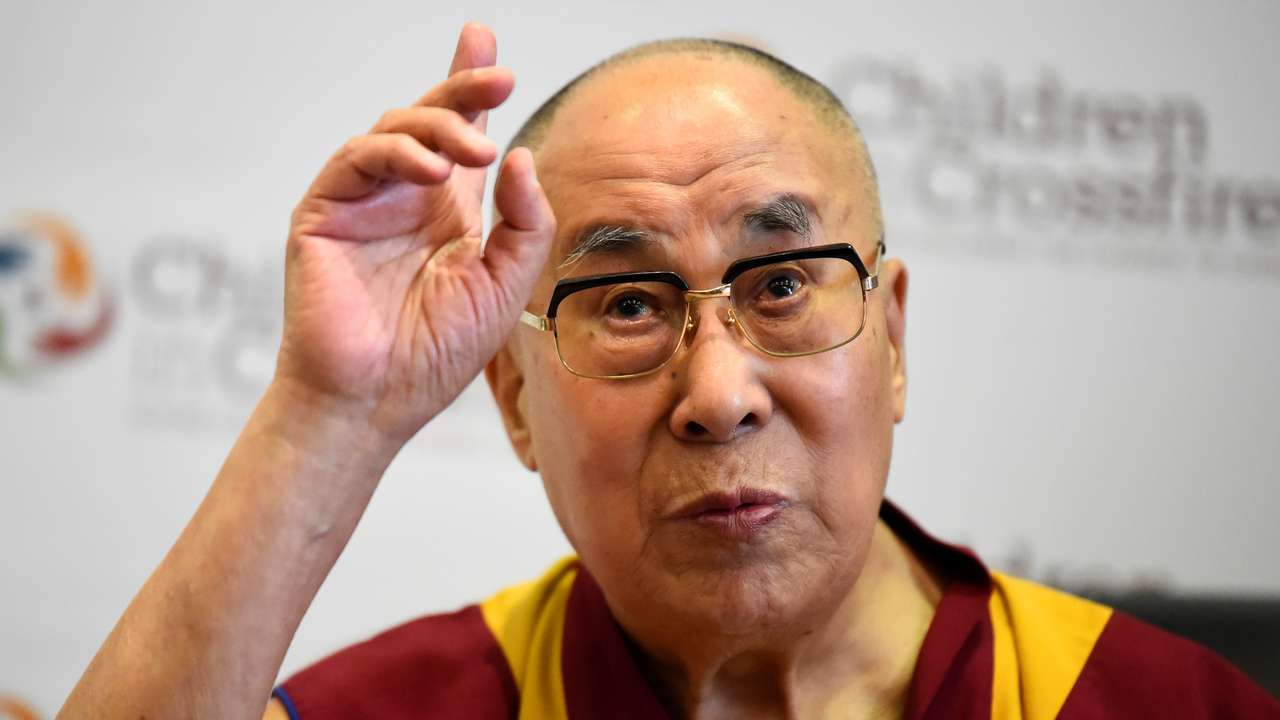
China has criticised the Dalai Lama’s Grammy Award win, accusing him of using cultural platforms to advance a political agenda against Beijing, after the Tibetan spiritual leader took home one of the top honours at this year’s ceremony.
In a post on Facebook, a spokesperson for China’s Ministry of Foreign Affairs said the 14th Dalai Lama was a “political exile who aims and acts under the cloak of religion to split China.”
“China always and will continue to oppose using any arts award for political agenda against China,” the post continued.
The remarks followed news that the Dalai Lama, 90, won the Grammy for Best Audio Book, Narration and Storytelling Recording for “Meditations: The Reflections Of His Holiness The Dalai Lama” at the 68th Grammy Awards on February 1.
The Tibetan leader beat several high-profile contenders in the category, including Grammys host Trevor Noah, U.S. Supreme Court Justice Ketanji Brown Jackson, and musician Fab Morvan of Milli Vanilli.
RECOMMENDED FOR YOU
Brazil election 2026: Lula overturns Flávio Bolsonaro's lead in more than 200 municipalities to win presidency
The Dalai Lama later acknowledged the win in a statement posted on his official Instagram account, saying he accepted the award “with gratitude and humility” and viewed it not as a personal accolade, but as recognition of shared global responsibility.
Why China is critical of the Dalai Lama
Beijing’s sharp reaction underscores how sensitive China remains to the Dalai Lama’s international profile.
As the spiritual leader of Tibetan Buddhists — around six million people worldwide — the Dalai Lama embodies a cultural and religious identity Beijing has struggled to fully control since occupying Tibet in the early 1950s.
China maintains it “liberated” Tibet from feudal rule and brought development to the region. Many Tibetans, however, continue to cling to their language, culture and religious traditions, with the Dalai Lama at the centre of one of the world’s longest-running nonviolent political struggles.
After a failed uprising against Chinese rule in 1959, the Dalai Lama fled to India, where he established a government in exile in Dharamshala.
While he later relinquished his political role to focus on spiritual leadership, Beijing has continued to label him a separatist and pressures governments to avoid official contact with him.
This sensitivity has only grown as questions loom over the Dalai Lama’s eventual succession.
In August 2025, Chinese President Xi Jinping made a rare visit to Tibet, stressing “political stability, national unity and religious harmony,” and reiterating Beijing’s push to “sinicize” religion.
RECOMMENDED FOR YOU

Lula and Flávio Bolsonaro over economy, crime and personal attacks in final Brazil election debate
This story is written and edited by the Global South World team, you can contact us here.