Coming soon: Indonesia’s first aircraft carrier
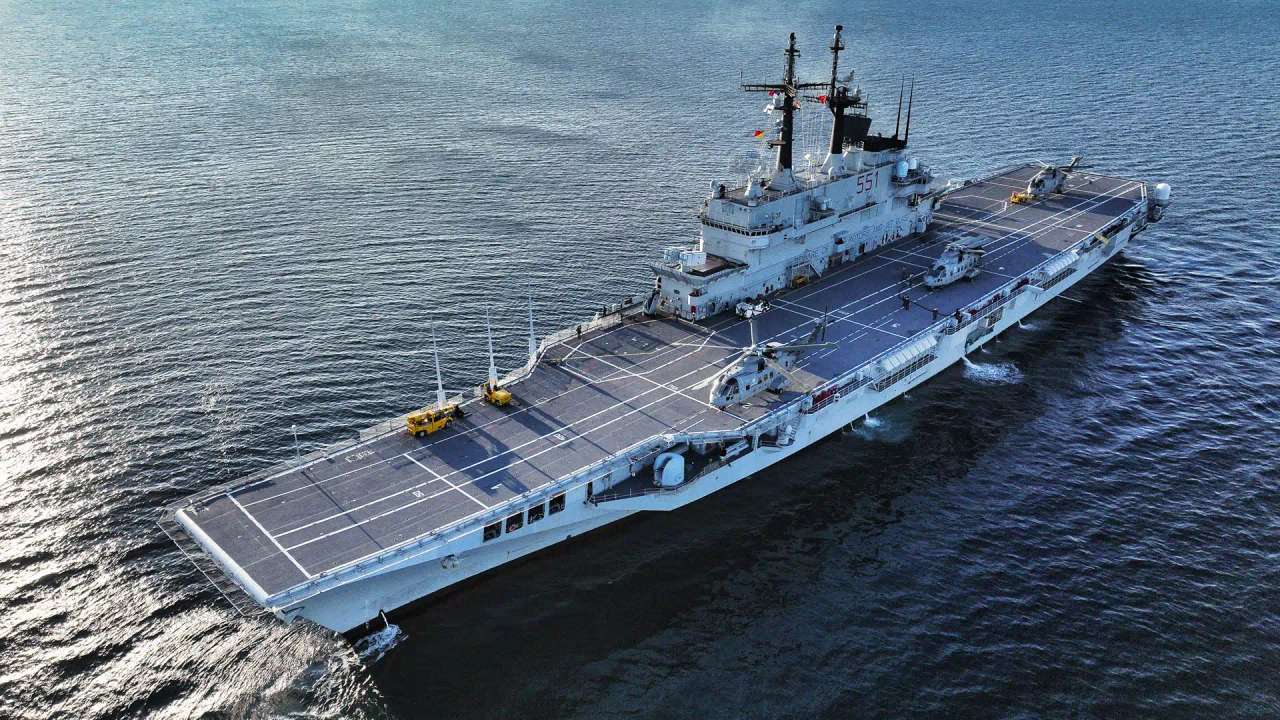
Indonesia is set to acquire its first aircraft carrier, marking a significant step in the country’s naval modernisation, after the Italian government agreed to transfer the former Italian Navy vessel “Giuseppe Garibaldi” as a grant.
According to the Indonesian Ministry of Defence, negotiations and administrative processes with both Rome and Italian shipbuilder Fincantieri are ongoing.
Although the vessel will be handed over as a grant, Jakarta will shoulder the costs of refitting and adapting the ship to meet the operational requirements of the Indonesian Navy.
The 180-metre carrier, capable of speeds of up to 30 knots, previously served the Italian fleet and is equipped with a range of air-defence and anti-ship systems.
Indonesian officials have indicated that the ship is expected to arrive before October 5, 2026, in time for the anniversary of the Indonesian Armed Forces (TNI), subject to the completion of talks.
For context, Giuseppe Garibaldi was retired by Italy in 2025 and would become Indonesia’s first platform capable of operating fixed-wing aircraft at sea, although Jakarta has not yet detailed what aircraft it intends to deploy.
Indonesia joins elite club
Indonesia’s entry into the carrier club would place it among a limited group of nations. According to open-source defence data, the countries currently operating aircraft carriers or large aviation-capable amphibious ships include:
- United States – 11 fleet carriers
- China – 3 carriers
- United Kingdom – 2 carriers
- India – 2 carriers
- Italy – 2 carriers
- Japan – 2 helicopter destroyers being modified for F-35B jets
- South Korea – 2 amphibious assault ships
- Australia – 2 amphibious assault ships
- Egypt – 2 helicopter carriers
- France – 1 nuclear-powered carrier
- Russia – 1 carrier, currently under repair
- Turkey – 1 amphibious assault ship
- Thailand – 1 light carrier primarily used for helicopters
- Spain – 1 amphibious assault ship
Why aircraft carriers are crucial
The world’s largest carrier force belongs to the United States Navy, which operates 11 nuclear-powered supercarriers, including vessels of the Nimitz and Ford classes. Washington aims to sustain a 12-carrier force in the coming years, even as one older vessel is scheduled for retirement.
By contrast, the People's Liberation Army Navy fields three carriers — the Liaoning, Shandong and the newer Fujian — as Beijing seeks to expand blue-water capabilities.
In an earlier interview with Global South World, veteran defence journalist Manny Mogato noted that while the United States maintains a global network of bases and routinely deploys carriers worldwide, China’s carrier fleet remains smaller and less combat-tested.
This, Mogato said, was China’s primary weakness, as aircraft carriers are a critical factor in naval dominance as they effectively provide a country with an on-the-go, agile air force.
From an investment standpoint, many still view aircraft carriers as a sound purchase.
A 2020 poll of 3,394 readers by Naval Technology found that 82% believe aircraft carriers remain an effective use of naval budgets, underscoring their enduring appeal despite their high cost.
This story is written and edited by the Global South World team, you can contact us here.