Dam spillage: The man-made disaster making thousands homeless in Ghana
Ghana is fortunate to be one of very few countries around the world that is not plagued by the devastating impacts of natural disasters.
Countries like Lybia, China, Turkey and Brazil have recently experienced a series of calamities in September 2023, primarily attributed to global warming and climate change.
In less than two weeks, over 11,000 lives were lost due to the catastrophic dam breach and Storm Daniel which ripped through the city of Derna in Lybia, with ripple effects extending to other countries including Turkey.
In China, separate storms, Saola and Haikui, caused massive havoc in Taiwan, Hong Kong and other cities affecting about 7,000 individuals who had to be evacuated.
In Brazil and several European countries, heavy rains and floods resulted in approximately 30 casualties in the state of Rio Grande do Sul.
RECOMMENDED FOR YOU
Six countries account for three-quarters of Europe’s unicorn startups
Inversely, Ghana appears to have created a self-inflicted disaster; one that can be described fairly as ‘man-made’ that is destroying many people.
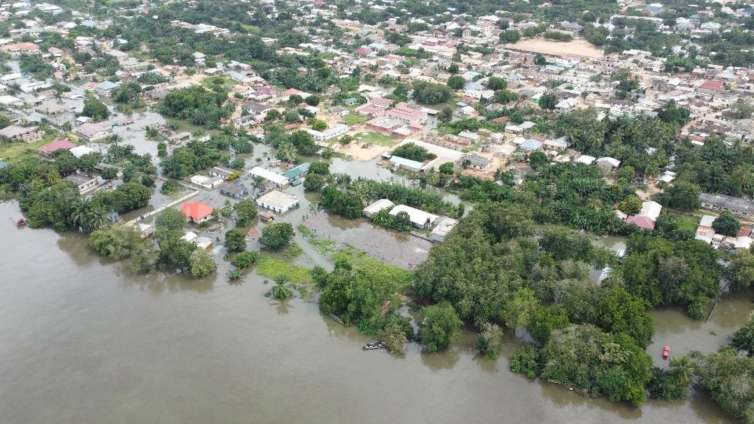
As many as 20,000 people were rendered homeless and displaced as a result of the overflow from two hydroelectric dams in the country, Akosombo and Kpong Dam, both located in the Eastern Regions.
When it began
The spillage which began on September 15, 2023, submerged several homes, and buildings particularly in the lower Volta Basin resulting in property losses totaling millions of Ghana cedis.
The Volta River Authority (VRA) said communities were duly informed to evacuate ensuring the preservation of lives.
Why the spillage?
The Volta River Authority (VRA), responsible for the hydroelectric dams, said that the spillage was a necessary measure.
The dam, which takes a maximum water level of 276 feet according to the authority, was taking 200% more than its capacity as a result of high rainfall levels.
RECOMMENDED FOR YOU
Gold rush spreads ebola - Doctor warns about movement of Ituri miners in eastern DRC
The water used to generate electricity was still higher than the norm despite the usage of all available units and as such, generation alone cannot take out all the water.
The VRA told local media outlet Daily Graphic that there was a need to release water from the reservoirs to make room to accommodate incoming flows to avoid compromising its integrity and leading to uncontrolled spillage.
When the overflow commenced, the water levels in the Akosombo Dam reservoir stood at 272.50 feet and any inflow from that point would have risked a dam burst. Spillage therefore began at a rate of 20,000 cubic feet per second.
Overwhelming effects
The effects have been devastating with residents from nine district assemblies of both the Volta and Eastern Regions including North, Central, South Tongu, Asuogyaman, Shai Osudoku and Ada displaced with their homes wholly submerged in the flood waters. This catastrophe resulted in the loss of properties, farms, vehicles and livelihoods.
Many businesses, resorts, hospitals and other facilities have been affected by power outages caused by flooding at the electricity substation at Fieve, Sogakope.
Response
Ghana’s President Nana Addo Dankwa Akufo-Addo came under massive criticism after a visit to some affected communities in the Volta Region.
RECOMMENDED FOR YOU

Sheinbaum rings historic bell as thousands fill Zocalo for Mexican Independence Day
The president made politically suggestive comments on a government platform during a visit to some affected communities.
“And whether they voted for me or not, once I have taken the oath of office, I am the president of all the people,” he made these comments that have since been criticized with many condemning him for making political statements in the face of an obvious disaster.
Meanwhile, parliamentarians whose constituents have been hit visited the area to offer support and condolences to the affected individuals.
Former Ghana president John Dramani Mahama also called for a State of Emergency while empathizing with those impacted by the floods.
The National Disaster Management Organisation (NADMO) played a central role in distributing relief items and providing temporary shelter to all affected communities and individuals. Other institutions and individuals also donated relief items.
The last time the dam was spilled
This is not the first time that Ghana has experienced such a crisis. In 1991 and 2010, the country faced a similar issue with the spillage of water from the Akosombo dam due to high levels.
It could be argued that dam overflows are necessary to prevent more significant disasters like dam bursts. However, concerns persist regarding the predictability of such events and their impact on residents.
RECOMMENDED FOR YOU
Gaza rescuers search rubble after Al-Saada collapse kills more than 20