DR Congo is quietly redefining itself beyond crisis and conflict
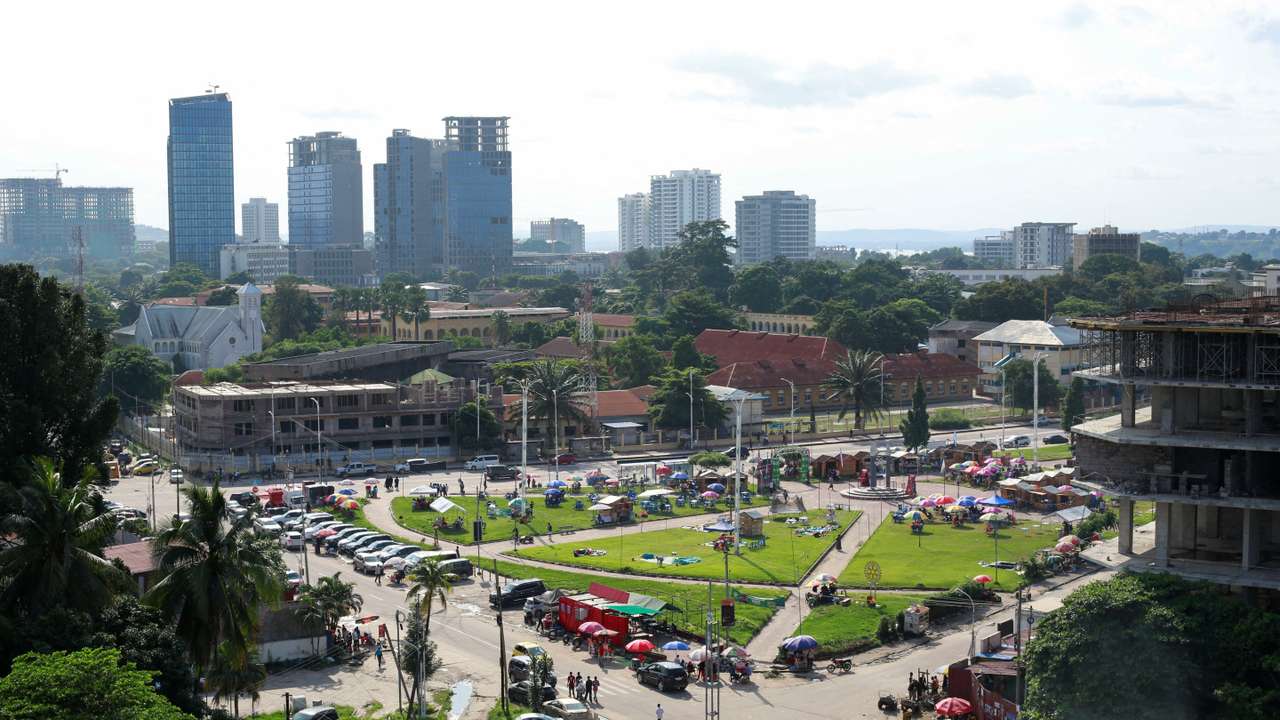
For decades, the Democratic Republic of the Congo has largely been viewed through a security and humanitarian lens. That narrative is now beginning to shift.
In his Address to the Nation on December 8, President Félix-Antoine Tshisekedi did more than review the state of the country. He framed a series of ongoing transformations—military, diplomatic, economic, and institutional—whose impact is increasingly visible. While acknowledging the gravity of the crises, especially in the east, the Congolese leadership is now openly charting a course toward recovery, with early results already taking shape.
Any process of renewal begins with clarity. President Tshisekedi, now in his second term, has never attempted to downplay the challenges facing the country.
Speaking on December 8, 2025, at the Palais du Peuple in Kinshasa before all of the country’s constitutional institutions, he was explicit about the scale and nature of the violence still afflicting eastern Congo. He described it as a “proxy war of aggression” led by neighbouring Rwanda, despite the Washington agreements—an unusually direct and politically frank characterisation in the region.
This clarity is more than rhetorical. It provides the basis for a more structured response. On the ground, the Congolese armed forces are undergoing deep reforms: command structures are being reorganised, professionalisation has accelerated, smuggling networks are being targeted, and the police are being reformed. Stability remains elusive, but the State is no longer merely reacting. It is reorganising, reasserting itself, and embracing its core responsibility: protecting its territory and its people.
RECOMMENDED FOR YOU
U.S. gas prices surge since Iran war, with Iowa up nearly 70%
Congo’s return to international diplomacy
The second major shift is diplomatic. For many years, the DRC was sidelined in international forums and often excluded from decisions that directly affected its future. That period appears to be coming to an end.
Congo’s election to the United Nations Security Council by an overwhelming majority, its leadership of the International Conference on the Great Lakes Region, and UN resolutions explicitly condemning Rwandan aggression all point to a strong re-entry onto the multilateral stage. The Washington agreement with Kigali has not resolved every issue, and President Tshisekedi himself has acknowledged continued violations. But the key point is clear: the DRC is no longer isolated or diplomatically unheard.
This repositioning gives Congo new leverage in debates on regional security, strategic minerals, and climate justice.
Economic stabilisation reshaping the political landscape
Signs of renewal are also visible in the economy. Against the backdrop of conflict in the east and global uncertainty, macroeconomic stabilisation sends a powerful signal. Inflation has fallen to historically low levels, the Congolese franc has stabilised, foreign exchange reserves have increased, and growth has outpaced the regional average. These figures may be debated, but they are grounded in reality.
More importantly, they are producing concrete political effects. Fuel prices have declined, purchasing power has improved for certain essential goods, and budget discipline has strengthened. Gradually, the State is rebuilding trust with the population. While Congo remains heavily dependent on mining, the image of an economy spinning out of control no longer aligns with observable trends.
Infrastructure, public services, and a new governing approach
Another indicator of renewal is the push to rebuild the State through infrastructure and public services. Agricultural roads, national transport corridors, energy projects, ports, and airports are underway on a large scale, though progress remains uneven. The Local Development Program for 145 territories has faced delays—some of them serious—which the President has acknowledged openly.
What stands out, however, is the emergence of a corrective approach: contract clean-ups, tighter operational oversight, and a clearer prioritisation of projects. Where fragmentation once prevailed, the State is now seeking to steer, adjust, and be accountable. This emphasis on method is itself a meaningful political signal.
Climate policy as a tool of sovereignty and development
Congo’s climate strategy further reflects this new posture. The Kinshasa–Kisangani–Goma Green Corridor is not framed as a purely environmental initiative. Instead, it integrates security concerns, rural development, infrastructure, and economic sovereignty.
RECOMMENDED FOR YOU
Olympic flame arrives on African soil for first time as Senegal begins Dakar 2026 countdown
The message is unambiguous: the DRC accepts its role as a global climate solution, but it will no longer bear that responsibility at its own expense. Protecting forests, biodiversity, and peatlands requires real financing, technology transfers, and political recognition commensurate with their global importance.
A fragile but increasingly clear trajectory
Nothing is settled. Violence persists in the east, bureaucratic inertia remains, and social expectations—particularly among young people—are immense. Yet a profound shift is underway.
The Democratic Republic of the Congo no longer sees itself as permanently trapped in crisis. Step by step, it is moving toward a stronger State, a more stable economy, and a more assertive international role. When President Tshisekedi concluded his address by saying that “darkness will not reign forever,” it was no longer mere rhetoric. It reflected a growing and increasingly credible vision of a Congolese renewal in progress.
This story is written and edited by the Global South World team, you can contact us here.
