Egypt wants united Arab army to ensure future regional security: Samir Farag interview
The Iran War proves the case for a united Arab army, according to one of Egypt’s leading military strategists.
Major General Samir Farag told Global South Voices’ Kadria Kassem that the current fighting cannot end regional tensions and that a coordinated approach would be necessary.
“We hope the Arab states will heed the advice of President Abdel Fattah El-Sisi and form an Arab Army with real military capabilities,” he said in an interview.
Wealthy Arab nations could fund a regional defence industry with the ability to bind their militaries together temporarily in times of war, Farag said.
RECOMMENDED FOR YOU

Iran's Pezeshkian urges BRICS to turn economic weight into real projects
He pointed out that Washington’s military involvement in the region would fluctuate, but the underlying problems would remain, especially after Tehran’s policy of retaliating against its neighbours.
“The war might end, but the conflict will persist,” he warns.
Egypt’s three demands
Farag, who has held a range of positions in the military at home and abroad and is a former governor of Luxor, set out Egypt's position on the conflict:
That Iran should not have nuclear weapons
That Iran should not attack the Gulf states
That Iran’s government should not fall.
The latter, according to Farag, would create a vacuum and disrupt the regional balance between Turkey, Egypt, Iran and Israel. “Iran’s exit would be harmful to the strategic balance in the Middle East,” he said
Strategic regional balance
Historically, Egypt’s policy has swung from close links with the Soviets under President Abdel Nasser to tight ties with America. Today, according to Farag, President Sisi is seeking a strategic balance, building relationships with Russia, China, the European Union and the USA as well as regional partnerships.
RECOMMENDED FOR YOU
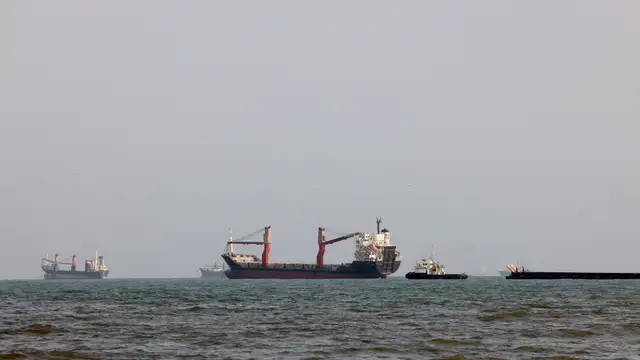
Iran rejects US claim of control over Strait of Hormuz
A key part of this careful navigation is a desire to avoid conflict.
It would have been easy, Farag notes, for his country to have been drawn into the conflict in Gaza.
“We in the military know the cost of war, its problems, the various dimensions and dangers. We know what problems can occur. That is why we are careful,” he says.
Nevertheless, despite avoiding conflict itself, Egypt is profoundly impacted by wars elsewhere. As the largest importer of wheat from Russia and Ukraine, it has been hard hit by price rises and disruptions from the fighting there. And the turmoil in the Gulf has had a profound impact on shipping, hammering important revenues from the Suez Canal.
Farag points out that Egypt has taken in 10 million refugees – he calls them guests – far more than any of its neighbours. And those displaced peoples have found a home in the country that means they are not trying to move on towards Europe, he observes: “Egypt always offers help to every country.”
This story is written and edited by the Global South World team, you can contact us here.

