Ethiopia and Rwanda are redefining Africa’s air travel future with two major airport projects
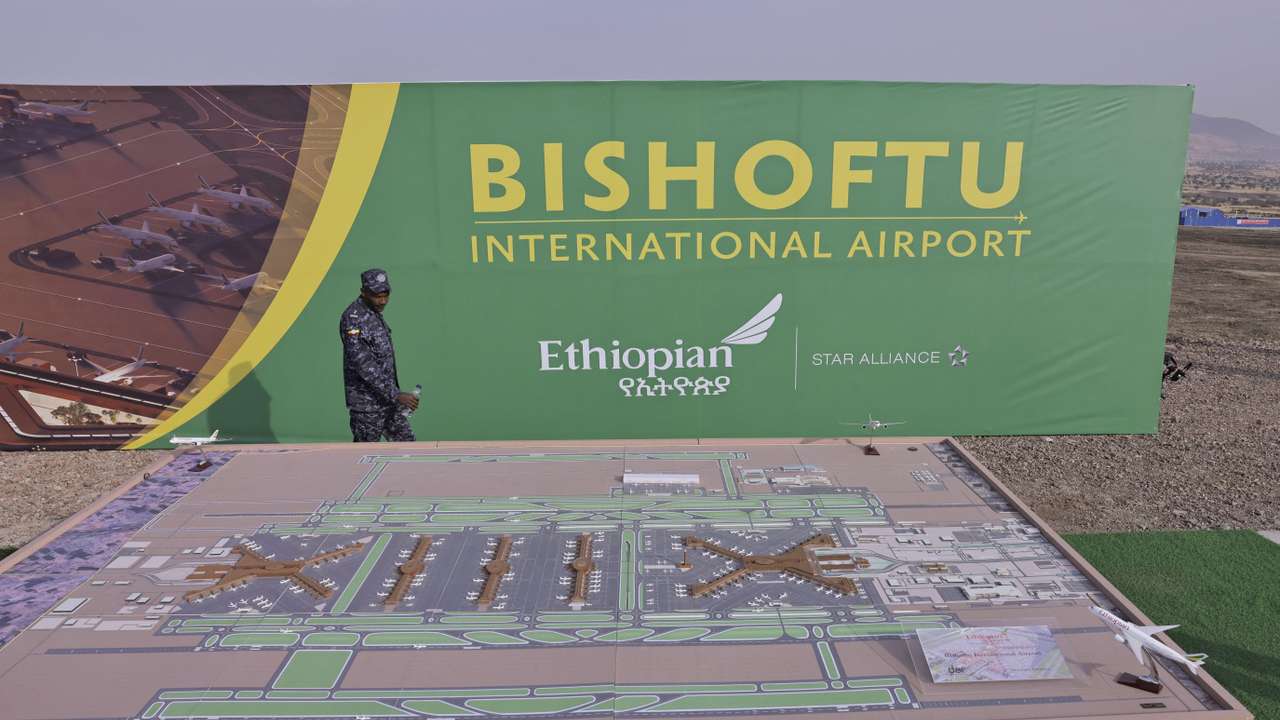
Africa’s aviation story is getting a serious upgrade — and Ethiopia and Rwanda are leading the charge with two of the boldest airport projects the continent has seen in years.
On one side, Ethiopia is building what could become the largest airport in African history, a massive new hub designed to take pressure off Addis Ababa’s fast-growing air traffic. On the other hand, Rwanda is developing a modern international gateway aimed at strengthening its position in East African aviation, backed by a major global airline partner.
Together, these two projects are set to reshape how Africa connects within itself — and with the rest of the world.
Ethiopia’s Bishoftu is a mega hub in the making
Construction has officially begun on Bishoftu International Airport, a project aimed at addressing a significant issue: Addis Ababa Bole International Airport is expected to reach its capacity limit within two to three years.
Instead of trying to squeeze more out of an airport nearing its operational ceiling, Ethiopia is building a whole new one.
RECOMMENDED FOR YOU

‘We will rescue Brazil’ - Flavio Bolsonaro targets Lula at Recife rally
Bishoftu is being developed about 40–45 km southeast of Addis Ababa, and it’s not just an airport — it’s a full-blown $12.5 billion) “Airport City” project and everything about it is huge.
A scale Africa hasn’t seen before
The biggest headline is capacity. Bishoftu is designed to handle 110 million passengers annually, which is far beyond what any airport on the continent currently manages.
To put that in perspective, Africa’s busiest airport right now is O.R. Tambo International Airport in South Africa, and it handles over 20 million passengers. Bishoftu’s planned capacity completely changes the scale of what “Africa’s biggest airport” even means.
Built like a global transit powerhouse
The infrastructure is equally ambitious. The plan includes:
- Four runways
- Parking space for 270 aircraft
That aircraft parking capacity is more than quadruple what the existing Bole hub can handle.
The development includes a 38 km high-speed railway that will connect Bishoftu to Addis Ababa in just 25 minutes — a big deal for an airport located outside the capital.
Rwanda’s Bugesera is smaller, but very strategic
While Ethiopia is going for a continent-changing mega hub, Rwanda’s approach is different: high-standard growth with a clear strategic focus.
Rwanda is developing Bugesera International Airport, valued at about $2 billion, through a partnership between the Government of Rwanda and Qatar Airways, which holds a 60% stake.
RECOMMENDED FOR YOU

Indonesia Earthquake: Injured victims airlifted from Flores
That partnership signals just how seriously Rwanda is treating this project — not only as national infrastructure, but as a major aviation investment.
Built to grow in phases
Bugesera is being developed with a step-by-step plan:
- First phase: capacity for seven million passengers per year by 2028
- Second phase: designed to double that to 14 million by 2032
It’s not trying to be the biggest in the world — but it’s clearly being built to scale up over time.
Designed to strengthen Rwanda’s regional role
Bugesera is also tied directly to Rwanda’s aviation ambitions.
The airport is expected to boost RwandAir, Rwanda’s state carrier, supporting its expansion into new markets — including the USA and various African nations.
In other words, the airport isn’t just a new building. It’s meant to help Rwanda compete harder in international aviation.
Africa’s aviation hierarchy
Currently, the largest airports in Africa are led by O.R. Tambo (South Africa), Cairo International (Egypt), with roughly 17 million passengers, and Addis Ababa Bole (Ethiopia) with approximately 12 to 25 million passengers.
The new projects in Ethiopia and Rwanda will stand out by significantly raising the ceiling for African aviation.
RECOMMENDED FOR YOU

Netanyahu calls IDF 'most moral army' and defends Israel's treatment of Christians
This story is written and edited by the Global South World team, you can contact us here.
