Europe’s ageing reality: The countries with the oldest and youngest populations in 2024
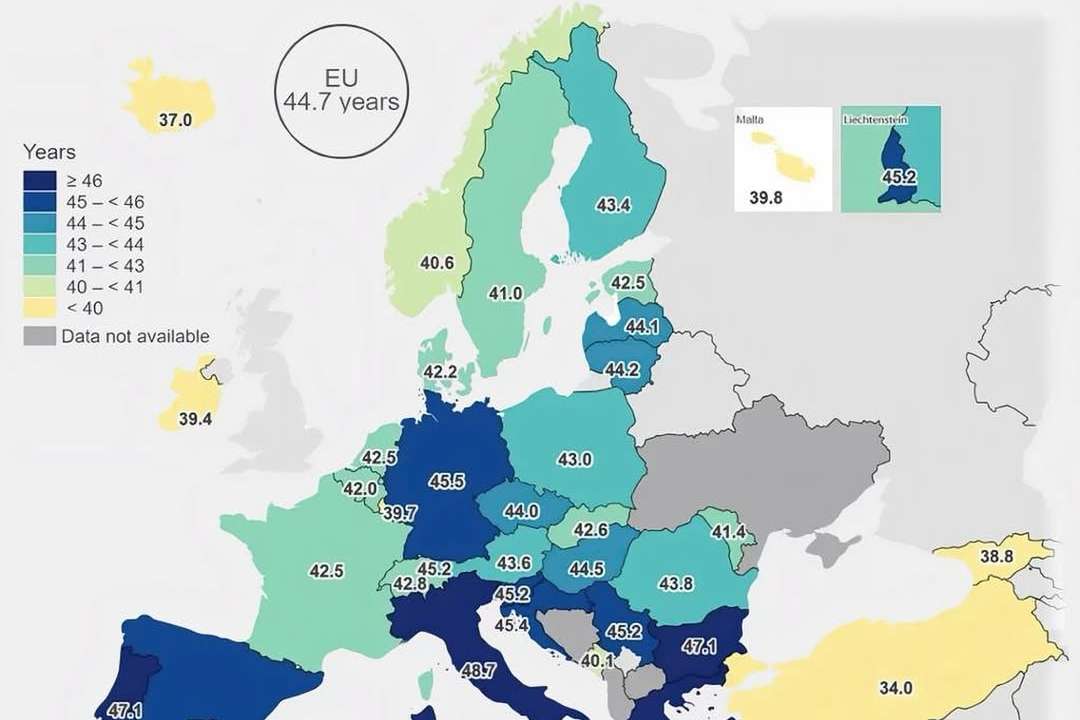
According to the latest data from Eurostat, the European Union is becoming increasingly greyer, with its median age reaching 44.7 years in 2024. This demographic shift highlights disparities between member states and neighbouring countries.
As of January 1, 2024, 21.6% of the EU's population was aged 65 or older, up from 21.3% in 2023. Over the past decade, this figure has surged by nearly 3 percentage points, reflecting long-term trends of low birth rates and increasing life expectancy.
At a median of 44.7 years, the EU’s population is now among the oldest globally, and this has significant implications for labor markets, pension systems, and healthcare infrastructures.
The countries with the oldest populations in Europe include:
RECOMMENDED FOR YOU
Six countries account for three-quarters of Europe’s unicorn startups
- Italy – 48.7 years
- Portugal – 47.1 years
- Greece – 46.9 years
- Spain – 47.0 years
- Germany – 45.5 years
These aging societies share common demographic traits: prolonged low fertility, rising longevity, and substantial post-war baby boomer populations now entering retirement. In Italy, for instance, the birth rate has dropped to one of the lowest in the world—1.24 births per woman, well below the replacement threshold of 2.1.
On the contrary, several countries in and around Europe still retain significantly younger populations:
- Turkey – 34.0 years
- Iceland – 37.0 years
- Ireland – 39.4 years
- Malta – 39.8 years
Turkey, with the lowest median age on the map, maintains higher birth rates (above 2.0 births per woman) and a significantly younger labor force, offering a contrast to the stagnation faced by aging Western European economies.
Eastern and Central European countries such as Poland (43.0), Romania (43.8), and Hungary (42.5) sit below the EU median but are aging quickly due to mass emigration and declining fertility. The situation is compounded by "brain drain"—a loss of working-age populations to wealthier EU nations.
Meanwhile, Nordic countries like Sweden (41.0) and Finland (43.4) fare better, aided by proactive family policies, gender-equal work environments, and generous childcare benefits that mitigate some effects of ageing.