For FIFA’s next World Cup, piracy may be the toughest opponent

Major football tournaments such as the FIFA World Cup have become prime targets for piracy networks, as illegal streaming threatens one of the most lucrative sectors in global media, according to a new U.S. government report.
In its 2025 Review of Notorious Markets for Counterfeiting and Piracy, the Office of the United States Trade Representative (USTR) warned that unauthorised streams of live sporting events are eroding the value of global broadcast rights.
Take the 2018 FIFA World Cup, for example. One group-stage match — Brazil versus Switzerland — attracted about 613,700 illegal viewers, the largest illicit audience recorded for a group-stage game during the tournament.
Football and other major sporting events are particularly vulnerable because they draw huge global audiences watching in real time.
“Sports broadcasting represents one of the most economically significant sectors of the global entertainment industry,” the report said, noting that the worldwide market for sports broadcast rights was worth about $62.6 billion in 2024.
RECOMMENDED FOR YOU
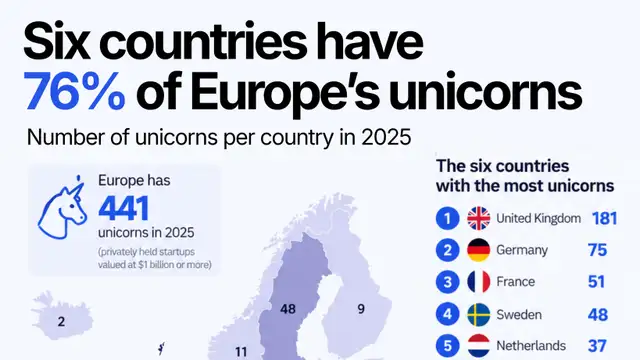
Six countries account for three-quarters of Europe’s unicorn startups
Billions in lost revenue
The economic impact of piracy is substantial.
In a joint industry submission cited by the report, organisations including the NFL, NBA and UFC estimated that live sports piracy causes the global sports industry to lose up to $28 billion in potential annual revenue.
Broadcast rights form the financial backbone of modern professional sports, as revenues from television and streaming deals fund league operations, athlete salaries, youth development programmes and high-quality production of live coverage.
Piracy undermines that system by allowing unauthorised distributors to provide the same content without paying for rights.
“Piracy fundamentally undermines fair competition by allowing unauthorised distributors to offer sports content without bearing the costs of acquiring legitimate rights,” the report said.
How illegal streams spread
Sports piracy usually begins when legitimate broadcasts are captured and retransmitted online through websites, mobile applications or social media platforms without permission.
The report says piracy also occurs through illegal IPTV services, third-party websites embedding official streams, and unauthorised public screenings in commercial venues that have not purchased licences.
RECOMMENDED FOR YOU

Gold rush spreads ebola - Doctor warns about movement of Ituri miners in eastern DRC
Technological advances have made the problem worse. Affordable equipment and widely available streaming software allow individuals or organised networks to retransmit high-quality video feeds that rival official broadcasts.
Social media platforms and messaging apps can then spread links to illegal streams rapidly, reaching thousands of viewers before authorities can intervene.
Real-time enforcement challenge
Sports broadcasts face unique vulnerabilities because their commercial value depends almost entirely on live viewing.
Unlike films or television shows, a match generates little interest once the result is known.
“By the time enforcement mechanisms identify and remove unauthorised streams, much or all of the commercial harm has already occurred,” the report said.
Piracy networks also exploit international jurisdictional gaps, often operating across multiple countries with servers, payment systems and operators located in different places.
Even when authorities shut down a piracy site, operators frequently reappear under new domain names or hosting providers, creating what the report describes as a persistent enforcement challenge.
As the value of sports broadcasting rights continues to rise, the report warns that tackling illegal streams — particularly around global football tournaments — will require stronger international cooperation, technological tools and faster enforcement systems.
RECOMMENDED FOR YOU

Sheinbaum pushes back at Trump and rejects any interference in Mexico
“Sports broadcasting serves important cultural and social functions, bringing communities together and providing shared experiences,” the report said. “As technology continues to evolve and piracy operations grow more sophisticated, the challenge will intensify without proactive policy responses.”
This story is written and edited by the Global South World team, you can contact us here.