French ambassador departs Niger amid deteriorating relations following coup
France's ambassador to Niger has returned to Paris, marking the culmination of a month-long diplomatic standoff.
The military junta in Niger had previously ordered the expulsion of Ambassador Sylvain Itte, and President Emmanuel Macron subsequently announced the withdrawal of French troops from the nation.
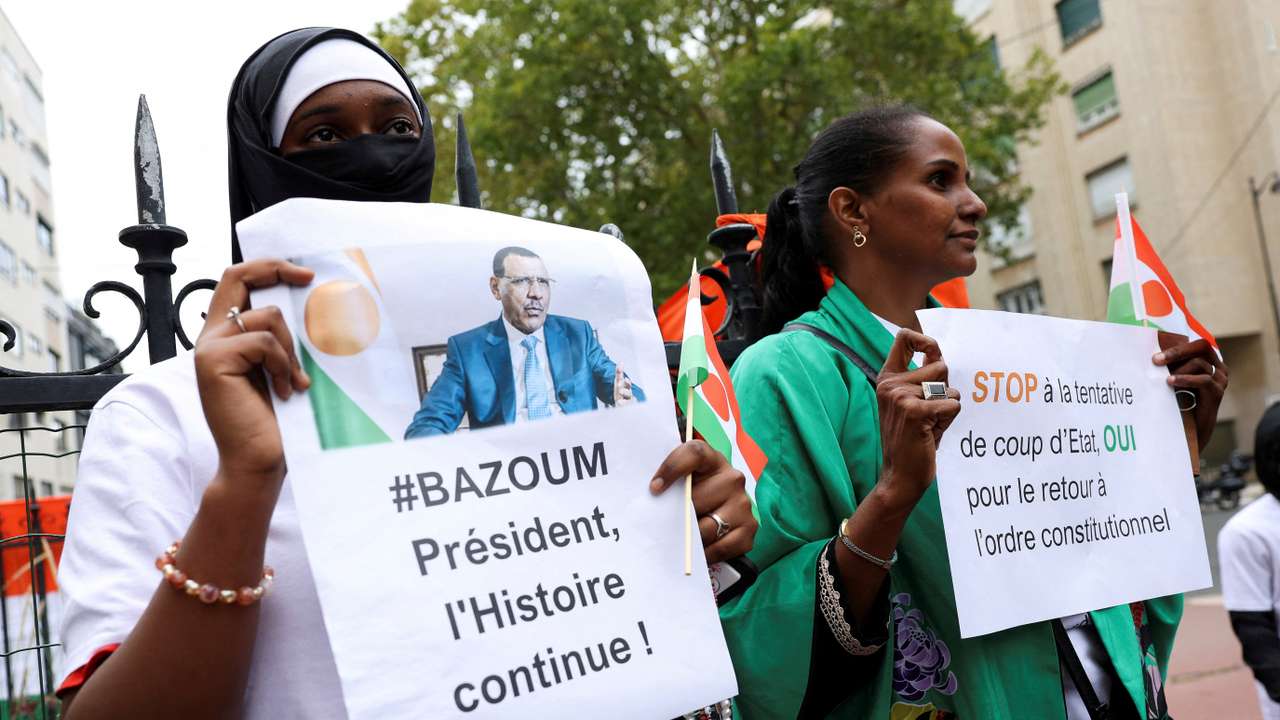
The relationship between Niger and France, its former colonial ruler, has significantly deteriorated since the military seized power in Niamey in July. The junta's decision to expel Ambassador Itte came at the end of August, citing actions by France that were deemed "contrary to the interests of Niger."
France resisted the order, considering the military government illegitimate and demanding the reinstatement of elected President Mohamed Bazoum, who was deposed in the coup. However, President Macron made an abrupt reversal, confirming the ambassador's return to Paris and the withdrawal of French troops.
Two security sources in Niger reported that Ambassador Itte left the country, and the president's office in Paris confirmed his departure from the Chadian capital, N'Djamena, on Wednesday.
RECOMMENDED FOR YOU

Six countries account for three-quarters of Europe’s unicorn startups
Upon his return to Paris, Itte was received by French Foreign Minister Catherine Colonna, according to the Quai d'Orsay.
Yucouba Abdou, a local resident, remarked to Reuters, "Today is a very proud day for me, and especially for the Nigerien people, hearing of the French ambassador’s departure who stubbornly stayed in Niger to show that the new government was not a real authority." He added, "But today, he saw that Niger was not a little country."
Niger has witnessed almost daily protests against France since the military's ascent to power, with crowds of junta supporters gathering outside a French military base to demand the withdrawal of French troops. Macron had expressed concern that Itte and his staff were effectively being held hostage at the embassy.
Anti-French sentiment has been on the rise in several of France's former West African colonies where military rulers have seized power. In Mali, Burkina Faso, Chad, and Niger, army officers now govern, and criticism of France's influence has become increasingly prominent.
While France denies exerting excessive influence and maintains that its actions were conducted with the consent of local governments, some critics argue that military juntas are using France as a scapegoat for complex issues. In Mali and Burkina Faso, French forces have been expelled, posing challenges to Western efforts to combat the Islamist insurgency in the Sahel region, potentially paving the way for increased Russian influence.