From Papá Noel to Viejo Pascuero: How Latin America names Santa Claus
For centuries, Santa Claus has been central to the Christmas tradition, often invoked as a gentle moral compass to encourage good behaviour in children in the lead-up to the holiday.
Yet as Christmas spread across continents, languages, and cultures, the figure of Santa Claus evolved as well. Shaped by local history and linguistic tradition, his name is pronounced and sometimes reimagined in many different ways around the world.
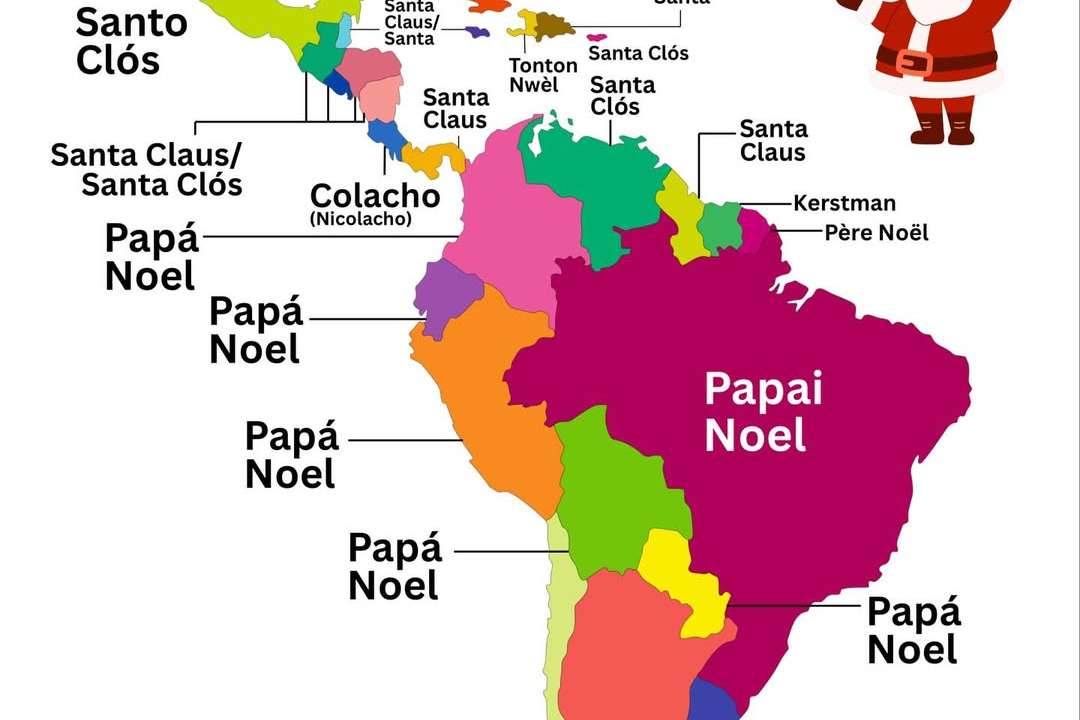
From Papá Noel in much of South America to Viejo Pascuero in Chile and Colacho in parts of Colombia, colonial history and culture have shaped how Latin America refers to the man in red.
In most Spanish-speaking countries in Latin America, Papá Noel is the dominant name. The term comes from the French Père Noël, introduced through European influence in the 19th and early 20th centuries as Christmas customs spread globally.
According to the Museum of Arts and Sciences, the modern Santa Claus figure evolved from Saint Nicholas traditions blended with European folklore and later popularised worldwide through literature and advertising.
Brazil, the region’s largest country and Portuguese-speaking nation, uses Papai Noel, a direct linguistic adaptation that mirrors its colonial heritage. In contrast, Mexico often uses Santa Claus or Santa Clós, reflecting the country’s proximity to the United States and strong cultural exchange across the border.
Chile stands out with Viejo Pascuero, meaning “Old Man of Christmas.” The term emphasises age and familiarity rather than formality, aligning with Chile’s tradition of blending Catholic celebrations with local expression.
In parts of Colombia, particularly in Antioquia, Santa is sometimes called Colacho or Nicolacho, names derived from Saint Nicholas (San Nicolás). This reflects older religious traditions that predate the commercialised Santa image now common worldwide.
Despite the different names, the role Santa Claus plays across Latin America is remarkably similar: a symbol of generosity, family, and childhood joy. Whether he arrives as Papá Noel, Papai Noel, Viejo Pascuero, or Santa Clós, the figure adapts seamlessly to local customs, climates, and cultural rhythms, sometimes swapping snow for summer heat and reindeer for imagination.
This story is written and edited by the Global South World team, you can contact us here.