How Russia is expanding its influence in the Sahel through space deals

Russia is strengthening its ties with military-led governments in the Sahel by pursuing satellite and space technology partnerships with Burkina Faso, Mali and Niger.
Russian Ambassador to Burkina Faso Igor Martynov met Prime Minister Rimtalba Jean Emmanuel Ouédraogo to discuss the possible launch of a Russian communications satellite that would serve the Alliance of Sahel States (AES), which includes the three countries. The meeting was also attended by Russian cosmonaut Alexander Gorbunov, according to a statement from the Russian diplomatic mission.
The talks covered cooperation in space exploration and the use of Russian space technologies in Burkina Faso. Both sides also reaffirmed their commitment to working through United Nations frameworks to address concerns about the militarisation of outer space.
During the meeting, Gorbunov presented the prime minister with Burkina Faso’s national flag, which had spent about six months aboard the International Space Station during his mission.
The engagement builds on a September agreement signed in Bamako, where officials from Burkina Faso, Mali and Niger reached a deal with Russia’s space agency, Roscosmos, to jointly develop telecommunications and remote-sensing satellites.
RECOMMENDED FOR YOU
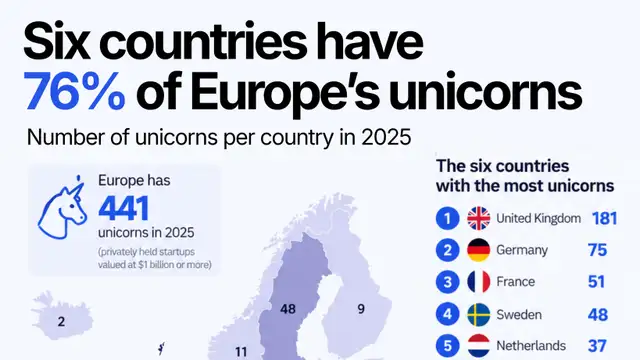
Six countries account for three-quarters of Europe’s unicorn startups
The initiative is intended to support regional priorities such as strengthening security, improving disaster response and expanding high-speed internet access.
Dr Joseph Siegle, who leads research on Russian influence in Africa at the Africa Centre for Strategic Studies, said Moscow’s engagement is driven more by geostrategic goals than long-term economic investment.
Russia has positioned itself as an alternative ally by offering diplomatic backing and security cooperation to the transitional governments in Burkina Faso, Mali and Niger, he said.
Siegle also described the AES as largely symbolic, warning that the three governments lack the economic and security capacity to operate as a cohesive bloc. “The promotion appears intended more to enhance the international credibility of these governments than to achieve tangible regional cooperation,” he told Space in Africa.
This story is written and edited by the Global South World team, you can contact us here.