Identity in Xi’s China: Unity or Uniformity?: Opinion
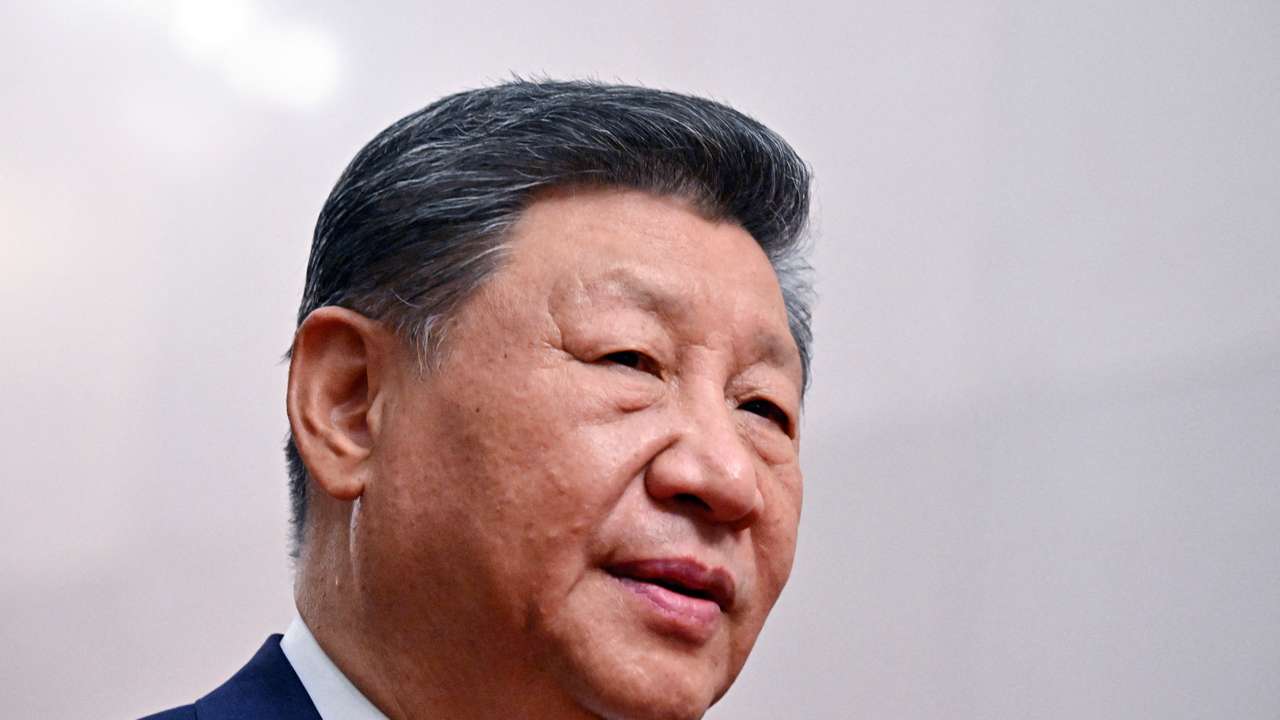
Under the leadership of Xi Jinping, China has sharpened its emphasis on forging a singular national identity.
Official rhetoric frames this unity as a necessary step towards cohesion and modernization. Nevertheless, beneath this state narrative lies a more complex question: Is China building unity or engineering uniformity?
Structurally, China is a unified multi-ethnic country. China officially recognizes 56 ethnic groups, with Han people constituting 91% of the population and the rest representing the minorities. This demographic composition has heavily influenced Beijing’s approach to governance, where unity is not merely ideological but administrative.
On March 12, 2026, China’s National People’s Congress (NPC) adopted the Law of the People’s Republic of China on Promoting Ethnic Unity and Progress (中华人民共和国民族团结进步促进法), to promote ethnic unity and progress. Adopted at the closing meeting of the fourth session of the 14th National People's Congress (NPC), it will come into effect from July 1, 2026.
The legislation aims at legally "fostering a strong sense of community for the Chinese nation" and advancing a law-based governance of ethnic affairs. It is viewed as a transition from earlier policies of limited autonomy towards a more assimilation-driven framework. The government projects this change as a key element for advancing common prosperity and development among all ethnic groups.
RECOMMENDED FOR YOU

‘We will rescue Brazil’ - Flavio Bolsonaro targets Lula at Recife rally
The official rhetoric of cohesion and modernization is not restricted to the legal and policy realm, but it extends to the classrooms and personal choices to strengthen the “Chinese” identity. For example, the law on ethnic unity emphasizes studying Mandarin in pre-schools and directs all the national and local government authorities and private firms to prioritize the display of Chinese characters over minority languages in public settings. The law considers this an important instrument for forging a shared national identity.
CPC’s understanding of minorities is widely shaped by its priority on national security and stability. From that perspective, the new law appears to be a pragmatic step for achieving standardization across language, administration, and ideology. A strong, shared identity acts as an anchor of society, mitigating friction, providing social cohesion, and strengthening state capacity. By invoking the sense of shared identity, the new law tries to align the ethnic groups with the centralized national narrative and resist separatism in any form.
But instead of social cohesion, this engineered standardization of identity intensifies the hierarchies, conferring privileges to some over the others. This hierarchy is iterated in President Xi Jinping’s new model of governance—a “unified multiethnic state." The new system imagined the Han culture as the trunk of the tree, and the remaining 56 ethnic groups as the branches and leaves.
This metaphor of the trunk and the branches, seemingly benign, is laden with the power asymmetries and a sense of subordination of minorities in the name of nation-building rather than co-existence. Under President Xi, minorities are encouraged to bring colors to the geography of China through their culture, festivals, costumes, songs, etc., but any other identity forged through language or ideas is systematically sinicized. The new law seamlessly merges this Han-centric party ideology into the legal framework.
In the context of this centralization project, regions like Xinjiang and Tibet lie at the intersection of minority identity and geopolitical priorities of China. While the whole world is saturated with the documented reports on “re-education” centers for the Uyghur Muslims and the associated human rights violations, laws like this raise suspicions about the Party’s intentions. The extensive surveillance and cultural and religious restrictions corroborate the sense of suspicion on the minorities and, hence, Beijing’s drive towards "de-ethnicization" and enforced assimilation.
Similarly, in Inner Mongolia, the centralized implementation of Mandarin in the education system is symbolic of minority identity being re-scripted. Starting from the classrooms, laws like the Ethnic Unity and Progress Promotion Law aggressively articulate the state-sponsored singular civilizational narrative of Zhonghua, or Chinese civilization, that is predominantly Han.
Compared to democratic countries like the USA and India, China’s approach stands apart. While both the USA and India have historically embraced plurality and multiculturalism, China is experimenting differently with its minorities. Through instruments like the Ethnic Unity and Progress Promotion Law, China is redesigning unity that does not exactly emerge from diversity. This law might redefine the nationhood for Xi’s China in the 21st century, but it has not evolved organically.
Where social cohesion is perceived as synonymous with national security, ethnic identity becomes increasingly ornamental and performative. Unified national identity is not simply a byproduct of national policies; it is bigger than that. National identity is composed of various ethnic, religious, and language groups that live, negotiate, and thrive together. Whether the Ethnic Unity and Progress Promotion Law can manufacture this national identity and cohesion, however, remains an open question.
RECOMMENDED FOR YOU

Indonesia Earthquake: Injured victims airlifted from Flores
The article solely represents the views of Dr. Ila Joshi, an Assistant Professor of International Studies in the Department of Humanities and Social Sciences at Jaypee Institute of Information Technology, Noida, India.
