India-EU free trade pact: The ‘mother of all trade deals,' explained
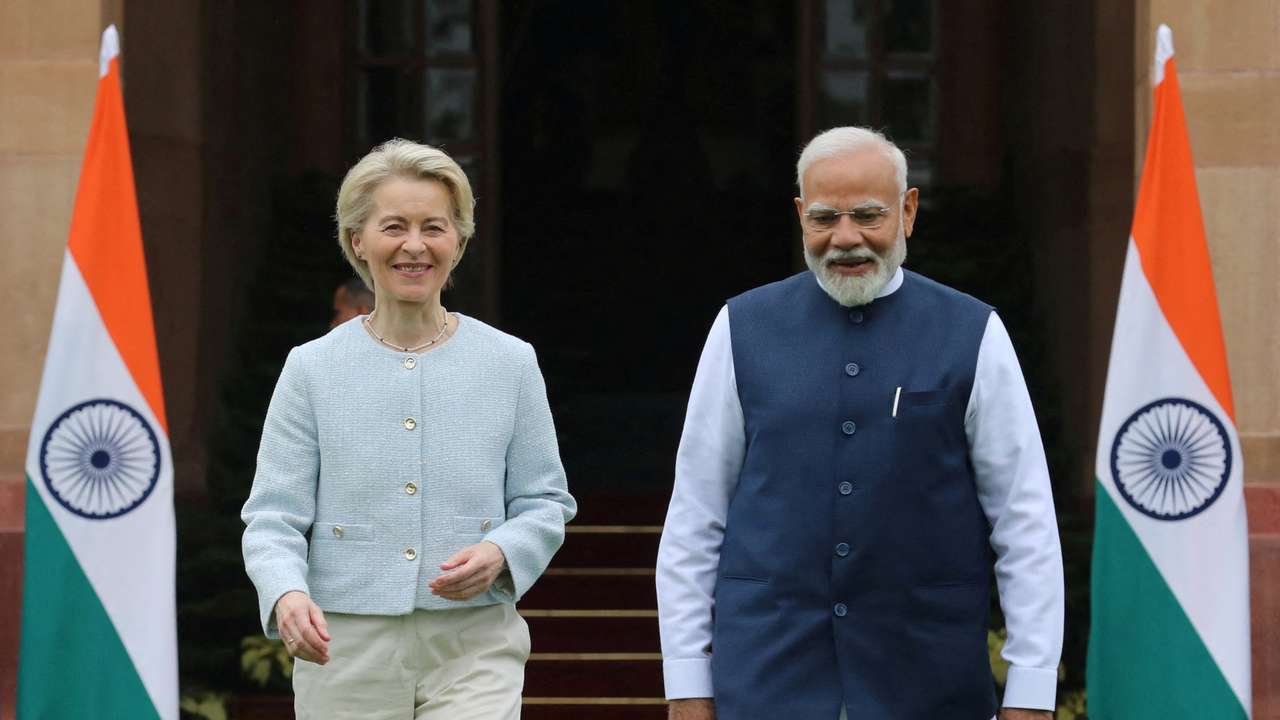
India and the European Union are on the brink of concluding a long-delayed free trade agreement (FTA) — dubbed the “mother of all deals” — expected to enhance economic ties between two of the world’s largest markets.
Talks are expected to conclude by January 27, potentially creating a free trade area covering nearly 2 billion people.
Why it matters
- The deal would be India’s biggest trade pact with Europe and one of the largest FTAs globally.
- It comes as global trade fractures amid tariff wars, supply-chain shocks and geopolitical rivalry.
- Both sides are seeking reliable partners to offset dependence on the U.S. and China.
What’s in it for India
- It could lift India’s trade surplus with the EU by more than $50 billion by 2031.
- EU share of India’s exports may rise from 17.3% to 22% to 23%.
- Restores market access lost after the EU withdrew GSP trade preferences in 2023.
- Lower tariffs for key exports such as garments, pharmaceuticals, steel, petroleum products and machinery.
- Helps cushion the impact of punitive US tariffs, now as high as 50%.
RECOMMENDED FOR YOU

Indonesia drops 3.2 tonnes of dry ice to combat wildfire haze
What’s in it for the EU
- Access to a 1.4-billion-strong consumer market and one of the world’s fastest-growing economies.
- Reduces reliance on China and diversifies global supply chains.
- India currently makes up just 0.8% of EU exports, despite trade in goods rising nearly 90% in a decade.
- About 6,000 European companies already operate in India.
What’s driving the push now
- EU leaders — Ursula von der Leyen, António Costa and Kaja Kallas — are in India to seal the agreement.
- Von der Leyen is chief guest at India’s Republic Day on January 26, underscoring political urgency.
- Negotiations have dragged on for over a decade, but both sides say talks are now in the final stretch.
What they said
- EU trade chief Maroš Šefčovič said the deal is “very close” and called it the bloc’s largest trade deal ever.
- He said India’s tariffs — as high as 150% in some sectors — have shut European firms out of large parts of the economy.
- “The big benefit will be opening the economy,” Šefčovič said.
Geopolitics behind it
- India is signalling a diversified foreign policy, amid strained trade ties with Washington.
- The EU is looking for insurance against global trade turmoil and political uncertainty in the US.
- Analysts say the symbolism of the deal is nearly as important as its economics.
What happens next
- The agreement could be announced during the EU-India summit in New Delhi.
- It will still require approval by the European Parliament to take effect.
Once concluded, the India–EU FTA would mark a rare moment of trade liberalisation in a protectionist era — binding two uneasy but increasingly aligned partners as global commerce splinters.
This story is written and edited by the Global South World team, you can contact us here.