La Catrina: The icon of Mexico's Day of the Dead
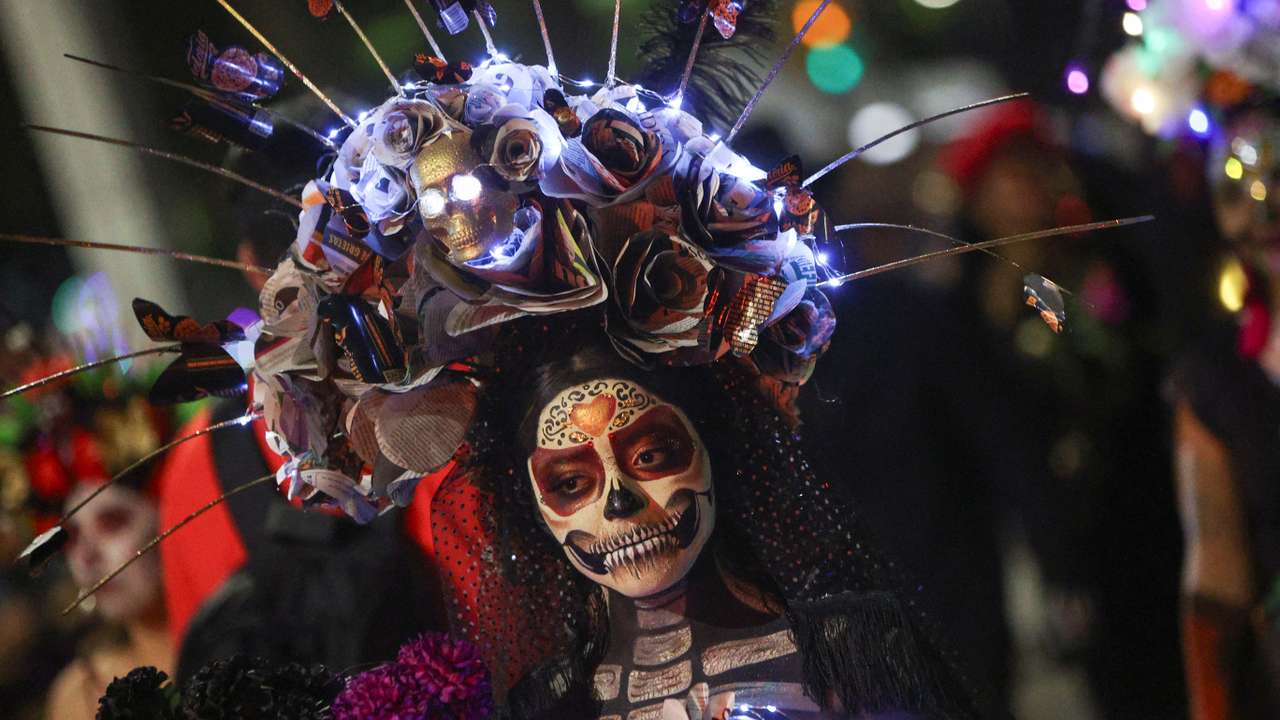
An impatient art crowd, eager to witness the U.S. debut of an exhibition titled "Posada: Printmaker to the Mexican People," overflowed the museum's capacity and led to thousands of people fighting with police at the Art Institute of Chicago on April 13, 1944, causing pandemonium.
The exhibition featured prints by José Guadalupe Posada, a Mexican engraver who passed away in 1913, according to cultural analyst Mathew Sandoval in The Conversation. His most famous work is a gaudy skeleton wearing a large feathered hat and a broad, toothy grin, which is known as La Catrina.
These days, La Catrina is the symbol of Mexico's Day of the Dead, a yearly celebration held on November 1st and 2nd in remembrance of the deceased. Perhaps only the Virgin of Guadalupe is considered Mexico's unofficial national emblem due to her idolatry, Sandoval argues.
Similar to her creator, she was unknown for a long time. This was altered in the middle of the 1920s when French artist Jean Charlot, a prominent member of the Mexican Renaissance, became interested in Posada's artwork. According to Sandoval, the first book of Posada's engravings was
Sandoval claims in his article that this boosterism made it possible for the Posada exhibition to travel and expose La Catrina to a larger audience. She received attention and promotion in Philadelphia, Mexico City, New York, and other Mexican cities.
RECOMMENDED FOR YOU

Lula and Flávio Bolsonaro over economy, crime and personal attacks in final Brazil election debate
La Catrina was further immortalized in 1947 when Diego Rivera made her the main subject of "Dream of a Sunday Afternoon in Alameda Park," one of his most well-known paintings. According to Sandoval, Rivera's notoriety encouraged Mexican and Mexican-American artists to use her in their creations, as did La Catrina's newly discovered gravitas.
Today, La Catrina's image is used to promote anything from beer to Barbie dolls. Spirit Halloween retailers and Walmart both sell La Catrina costumes. According to Sandoval, Posada did not invent La Catrina for commercial gain; in fact, La Catrina costume parades and contests are relatively recent additions to the Day of the Dead traditions in Mexico and the United States.
He argues that Posada just intended to parody the colourfully costumed "garbanceras" he spotted loitering about Mexico City's central square by using customary Day of the Dead humour.