LIVE: Peru voting through Monday as logistical woes delay result
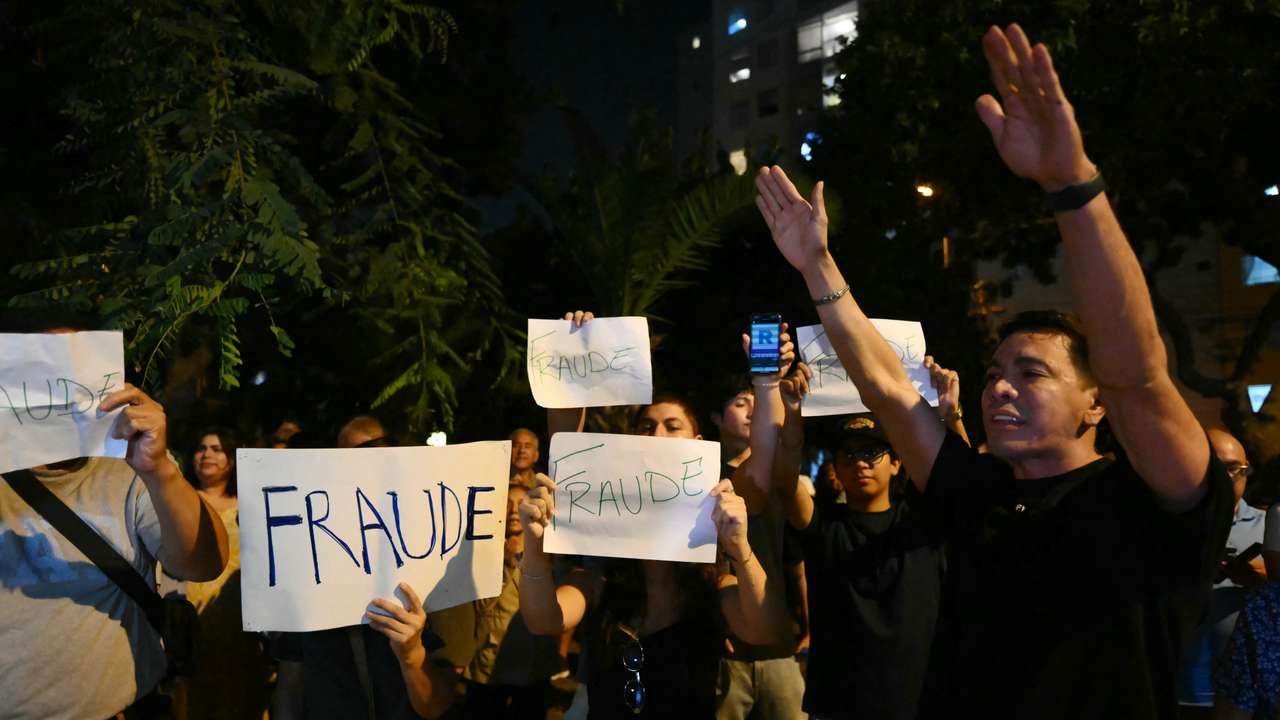
Peru enters election day with more than 27 million registered voters heading to the polls in a highly fragmented race featuring a record 35 candidates, as concerns over political instability, economic uncertainty and public security shape a pivotal vote for the country’s democratic future.
LIVE UPDATES
This concludes our live coverage of Peru’s 2026 general election. Stay with Global South World for the latest developments and final outcomes as the electoral process continues to unfold.
02:33 GMT: Peru extends voting into Monday after more than 63,000 people were unable to cast their ballots.
Electoral authorities announced that voting will continue until 13 April in order to allow those affected by earlier disruptions to participate. The decision follows reports of delays and logistical issues at polling stations that prevented tens of thousands of voters from casting their ballots during Sunday’s election.
23:10 GMT: Polls close in Peru’s first-round presidential election, with exit polls pointing to Keiko Fujimori in the lead.
RECOMMENDED FOR YOU

Six countries account for three-quarters of Europe’s unicorn startups
According to a Datum exit poll, right-wing candidate Keiko Fujimori is the most voted, while Rafael López Aliaga appears to be narrowly edging into second place, with only a slim margin over Jorge Nieto, suggesting a tightly contested race for the run-off.
23:05 GMT: Polls close in Peru as attention turns to which candidates will advance to a likely run-off
Voting has officially ended across the country following an extended election day marked by delays and logistical challenges. With a highly fragmented field of 35 candidates and no clear frontrunner, expectations are growing that the presidential race will head to a second round, with results set to determine which two candidates move forward to the decisive run-off.
22:44 GMT: Fuerza Popular presidential candidate Keiko Fujimori calls on electoral authorities to extend voting hours or organise a complementary vote for affected polling stations.
Fujimori urged the National Jury of Elections (JNE) and the Office of Electoral Processes (ONPE) to take additional measures to ensure participation at 211 polling stations reportedly impacted by earlier disruptions. Her remarks come amid broader concerns over delays and logistical issues during election day.
20:50 GMT: Presidential candidate Francisco Diez Canseco of Perú Acción casts his vote at Alfonso Ugarte school in Lima’s San Isidro district during the 2026 election
20:45 GMT: Allegations of potential electoral irregularities emerge in Peru, with claims that around 13% of polling stations in Lima, representing over one million votes, may have been affected.
While these assertions have not been officially confirmed, they have prompted calls in some quarters to review the voting process, with suggestions that parts of the election could be repeated if significant irregularities are verified.
RECOMMENDED FOR YOU
Burkina Faso to stop importing armoured vehicles, Traore says
18:50 GMT: Presidential candidate José Luna Gálvez of Podemos Perú casts his vote at the Parque de la Amistad Convention Centre in Lima’s Santiago de Surco district
18:40 GMT: Peru’s interim president dismisses fraud claims following delays in opening polling stations
18:25 GMT: Magnitude 4 earthquake felt in Lima and Callao during Peru’s election day, with no injuries or damage reported.
Authorities said the tremor, centred offshore in the Pacific, was mild and posed no tsunami risk.
18:20 GMT: Presidential candidate Mario Vizcarra of Perú Primero casts his vote at Federico Villareal school in Lima’s Miraflores district
17:55 GMT: Peru’s electoral authorities extend voting by one hour nationwide following delays at polling stations, particularly in Lima, officials say.
The head of the ONPE, Piero Corvetto, said the election authority approved the measure, extending voting until 6:00 PM local time (11:00 PM GMT).
17:50 GMT: Presidential candidate George Forsyth of Somos Perú casts his vote at Isabel La Católica school in Lima’s La Victoria district
RECOMMENDED FOR YOU
Norway has Europe’s highest petrol prices, Russia and Belarus remain cheapest
17:42 GMT: Presidential candidate Herbert Caller of the Partido Patriótico del Perú casts his vote at the National Agrarian University in Lima’s La Molina district
17:32 GMT: Reports emerge of voting disruptions in Lima, with some voters unable to cast ballots, raising concerns over the electoral process
17:10 GMT: Presidential candidate Antonio Ortiz of Salvemos al Perú casts his vote at Santa María Purísima school in Lima’s San Martín de Porres district
16:27 GMT: Presidential candidate Carlos Jaico casts his vote at Alfonso Ugarte school in Lima’s San Isidro district
15:40 GMT: Several major polling stations in Peru report delays in opening and receiving voters, in some cases due to a lack of electoral materials
15:20 GMT: Presidential candidate Rafael López Aliaga casts his vote during Peru’s general election

15:05 GMT: Presidential candidate Jorge Nieto violates electoral law by casting his vote outside the secret ballot booth
15:00 GMT: Presidential candidate Álvaro Paz de la Barra casts his vote in Lima’s La Molina district during Peru’s 2026 general election
RECOMMENDED FOR YOU
Families give DNA samples as 129 remain missing in Indonesia ship disaster
14:00 GMT: Fuerza Popular presidential candidate Keiko Fujimori waves as she arrives to cast her vote in Lima
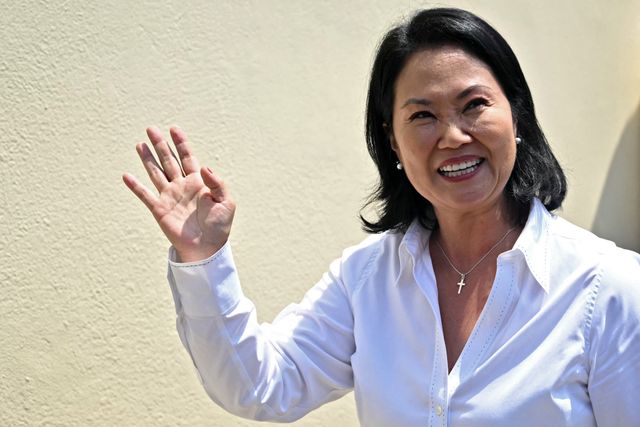
13:00 GMT: Keiko Fujimori, joined by family members, visits the grave of her father, former president Alberto Fujimori, at a Lima cemetery
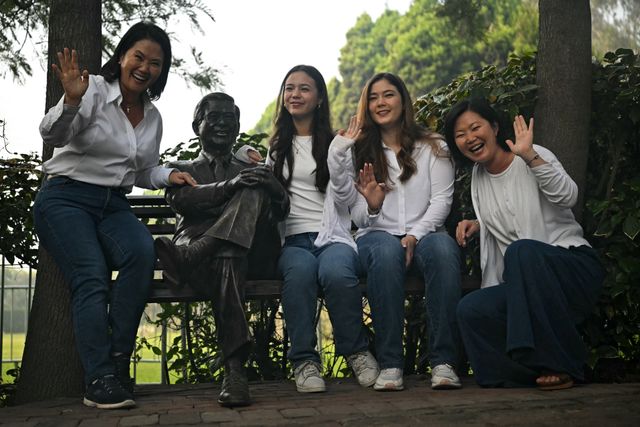
12:52 GMT: Keiko Fujimori heads to a cemetery ahead of her election day breakfast, saying it is her way of honouring her parents’ memory
12:49 GMT: Presidential candidate Rafael López Aliaga heads to Pamplona Alta for traditional election day breakfast
12:30 GMT: Peru activates large-scale security operation for Sunday’s general election
12:00 GMT: Polls open across Peru as voting begins in highly fragmented election featuring a record 35 candidates
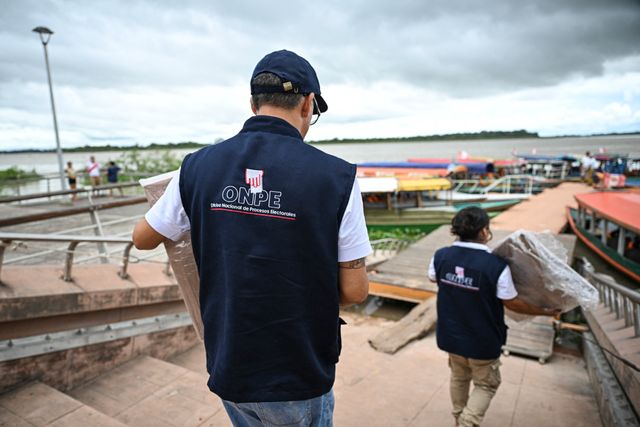
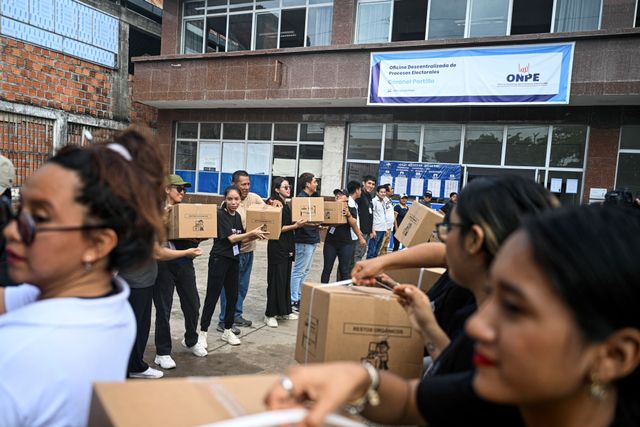
The voting process is set to run for 10 hours on election day, with polls expected to open at 7:00 AM local time (12:00 PM GMT) and close at 5:00 PM local time (10:00 PM GMT).
RECOMMENDED FOR YOU

Russia signs BRICS Pay and technology deals in New Delhi
What to know
On April 12, Peru will hold its general election, in which voters will choose a new president, two vice-presidents and all members of Congress. If no presidential candidate secures more than 50% of the vote in the first round, a run-off will be held between the top two candidates several weeks later. Voting is compulsory for citizens aged 18 to 70, although enforcement of penalties for abstention is often inconsistent.
The election takes place against a backdrop of prolonged political instability. Over the past decade, Peru has had eight presidents, reflecting a persistent cycle of institutional crisis, impeachment proceedings and governance challenges. This instability has eroded public trust in political institutions and contributed to widespread voter disillusionment.
Security concerns, economic uncertainty and frustration with political elites are central issues shaping voter sentiment. While Peru has traditionally maintained macroeconomic stability, inequality, informal employment and rising crime rates remain pressing concerns for many voters.
The political landscape is highly fragmented and crowded. A record number of 35 candidates are contesting the 2026 election, making the outcome difficult to predict and increasing the likelihood of a run-off. Polling suggests a large share of undecided voters, further adding to uncertainty.
Front-running candidates & proposals
Keiko Fujimori (Fuerza Popular): A prominent right-wing candidate and experienced political figure, Fujimori has consistently ranked among the frontrunners. She campaigns on strengthening security, encouraging investment and restoring political stability, while maintaining a strong and loyal support base despite past electoral defeats and legal controversies.
Rafael López Aliaga (Renovación Popular): Another leading right-wing figure, López Aliaga appeals to conservative voters with proposals focused on economic liberalisation, infrastructure development and a tougher stance on crime.
Other candidates: The race includes a wide range of contenders from across the political spectrum, but none has consolidated sufficient support to clearly dominate the field. This fragmentation reflects broader dissatisfaction with traditional political parties.
Political climate & stakes
Peru’s election comes at a critical moment for its democracy. The country’s recent history of rapid presidential turnover underscores deep institutional weaknesses and ongoing tensions between the executive and legislative branches. Governance challenges have often led to confrontations, impeachments and abrupt leadership changes.
RECOMMENDED FOR YOU

9/11: When terrorist money looked ordinary
The campaign has also highlighted polarisation within Peruvian society. Candidates have sought to mobilise voters through strong rhetoric, with some framing the election as a turning point for stability and order. High-profile rallies, including those led by Fujimori, have emphasised resilience and defiance amid a competitive and uncertain race.
With no clear frontrunner and a fragmented political field, analysts expect the next president to face significant challenges in building consensus in Congress. This could limit the government’s ability to pass reforms and address key issues such as security, economic recovery and institutional reform.
Ultimately, the election is seen as a test of Peru’s ability to break its cycle of political instability and restore confidence in its democratic system.
This story is written and edited by the Global South World team, you can contact us here.