LIVE: Uganda's octogenarian President Museveni takes early lead with 75% as 6% of votes counted
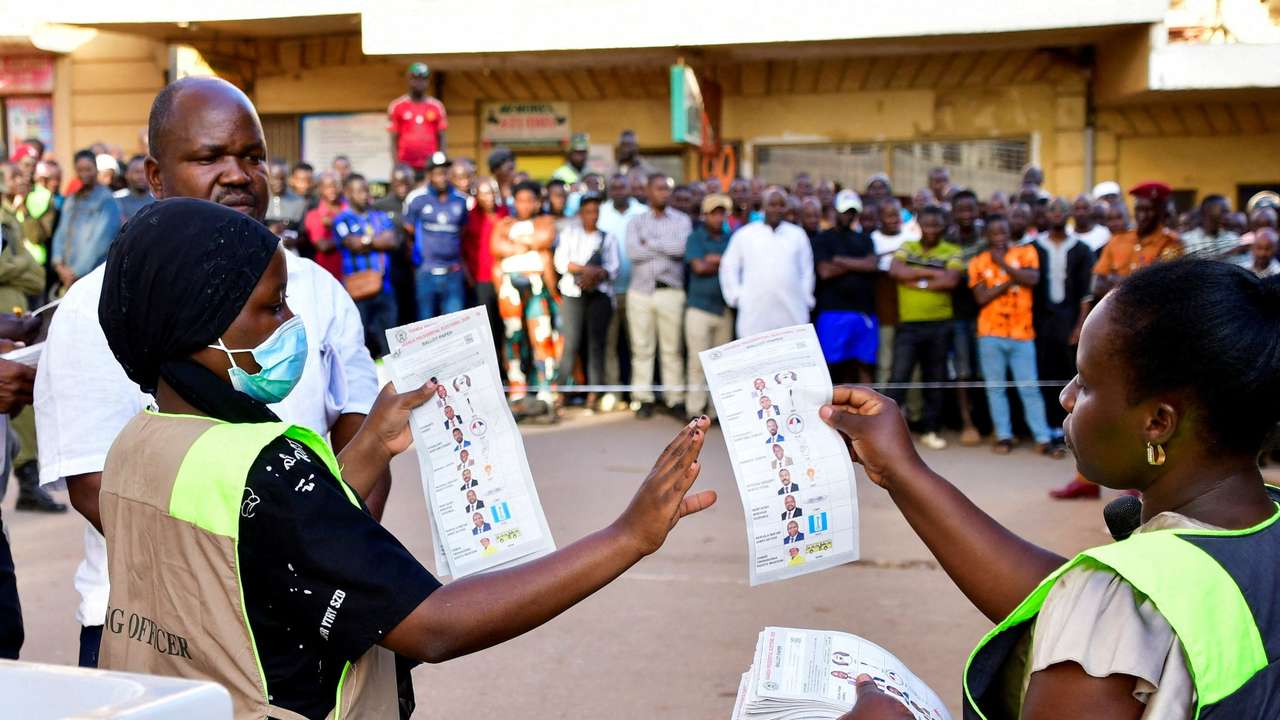
More than 21 million Ugandans are voting today in a high-stakes presidential election overshadowed by allegations of voter suppression, human rights violations and an internet shutdown.
LIVE UPDATES
This brings our live coverage of Uganda’s 2026 general election to an end. The vote is widely expected to extend President Yoweri Museveni’s four-decade rule. Follow Global South World for ongoing updates as the process continues, with final results expected from the Electoral Commission within the next 48 hours.
18:00 GMT: Yoweri Museveni takes early lead
15:00 GMT: Vote counting commences in several parts of the country
14:30 GMT: No "serious violations" detected during voting in Kampala, Russian election observer reports
RECOMMENDED FOR YOU
Japan leads housing vacancy ranking as millions of homes remain empty worldwide
14:00 GMT: Polls officially close at most polling stations across the country
1:30 GMT: Opposition leader Bobi Wine allege incidents of ballot stuffing
1:00 GMT: Uganda's National Tally Center in Lubowa is ready for first round of result later this evening
12:30 GMT: Polling hours have been extended from the earlier communicated 4:00pm to 5:00pm
12:00 GMT: Health Minister Dr Jane Ruth Aceng casts her vote
11:00 GMT: Voting underway at Kampala Road
10: 30 GMT: Presidential candidate Yvonne Mpambara raises concerns over technical failures on election day
10:30 GMT: Common Man’s Party Presidential flagbearer Mubarak Munyagwa votes
RECOMMENDED FOR YOU
Serbia election 2026: Student-led opposition secures parliamentary majority, defeats Vučić’s coalition
10:00 GMT: Opposition leader Bobi Wine votes in the company of his wife
9:30 GMT: President Yoweri Museveni speaks after voting
President Museveni has addressed the nation after casting his ballot on matters relating to election rigging, delays in opening polls, malfunctioning biometric machines, amongst others.
9:00 GMT: Incumbent President Yoweri Museveni votes
9:00 GMT: President Yoweri Museveni arrives at Rwakitura to vote
8:30 GMT: The Alliance for National Transformation (ANT) presidential candidate, Major General Gregory Mugisha Muntu (Rtd) casts ballot
8:00 GMT: Electoral Commission orders voting process to commence immediately despite machine malfunctions
Uganda’s Electoral Commission chief, Justice Simon Mugenyi Byabakama has ordered the immediate commencement of polls across all polling stations. This comes after reported delays and biometric machine malfunction in several polling stations across the country.
RECOMMENDED FOR YOU
Lula rallies thousands in Brazil's Minas Gerais ahead of presidential run-off
7:30 GMT: Polls delay and biometric machines malfunction
Polls was expected to open by 7am however reports from several parts of the capital, Kampala, and the city of Jinja said voting had yet to begin by 9am (0600 GMT), with reports that ballot papers had not been delivered and biometric machines used to check voters' identities were not working. "Nobody is here to tell us what is happening," said Abuza Monica Christine, a 56-year-old businesswoman in central Jinja, told AFP.
7:00 GMT: Voting begins across Uganda
Voting officially commenced at 7:00 am in various polling station across the country
Campaign Season
In the months leading up to the campaign, the Ugandan government stepped up actions against the opposition National Unity Platform (NUP), with arrests and charges against its members. In October 2025, ten NUP members were arrested in northern Uganda, and in November at least 95 more were charged with minor offences. After campaigning began, the pressure continued, including an incident on 6 December 2025 in Gulu where Bobi Wine and several supporters and staff were attacked and beaten by security forces while on the trail. President Yoweri Museveni, in a New Year’s Eve address on 31 December 2025, urged security forces to use more tear gas to disperse crowds, describing the opposition as “criminal” and arguing that tear gas was preferable to live ammunition.
Key Issues
- While Uganda’s per-capita income has slowly recovered since the pandemic, job creation has lagged behind rapid population growth, leaving millions of young people unemployed or underemployed.
- Corruption is another central voter concern. Uganda ranks 140th out of 180 countries on Transparency International’s Corruption Perceptions Index.
- In February 2025, an Afrobarometer report noted that Corruption ranked as the fifth-most important issue that citizens want their government to address, up from 12th place in 2005. Read more
Electoral System
RECOMMENDED FOR YOU
Netanyahu warns Israel’s enemies of harsher strikes ahead of election
Uganda’s president is elected under a two-round system, meaning a candidate must win 50% plus one vote to take the presidency in the first round. The law requires presidential candidates to be Ugandan citizens by birth, eligible to be an MP, and of sound mind, and it bars anyone with a formal connection to the Electoral Commission from running; term limits were removed in 2005, and elections are overseen by the Electoral Commission of Uganda.
Parliament has 529 seats: 353 are elected in single-member constituencies using first-past-the-post, and 146 district-based seats are reserved for women (one per district) and filled the same way. The remaining 30 seats are filled indirectly through special electoral colleges, 10 for the army and 5 each for youths, elders, unions and people with disabilities with requirements to ensure women are represented in each group.
The Candidates
A total of seven candidates were nominated during the two-day exercise held on 23rd and 24th September 2025 at the Electoral Commission grounds in Lweza-Lubowa, Wakiso District. Among those nominated is President Yoweri Kaguta Museveni, standing on the ticket of the ruling National Resistance Movement (NRM). Now in power for nearly four decades, Museveni first took office in 1986 after leading a guerrilla war that promised to restore democracy following years of instability. The opposition field is led by Robert Kyagulanyi Ssentamu, popularly known as Bobi Wine, the candidate of the National Unity Platform (NUP). A former pop star turned politician, Bobi Wine, is widely viewed as Museveni’s strongest challenger. Read more
Background and Electoral History
Uganda’s first national election was the 1962 Uganda National Assembly vote, which produced a post-independence government after an alliance between the Uganda People’s Congress (UPC) and Kabaka Yekka (KY) won a parliamentary majority and made Milton Obote executive prime minister. Elections then stalled for years amid dictatorship and political turmoil, including the eras of Idi Amin, Yusuf Lule and Godfrey Binaisa, until a disputed presidential election in December 1980 returned Obote to power amid allegations of fraud. One of the contenders, Yoweri Museveni, rejected the outcome and launched an armed rebellion, and his National Resistance Army eventually took power in 1986 after the short-lived government of Gen Tito Okello.
Under Museveni, Uganda introduced a “no-party” system that barred parties from fielding candidates directly, and the country held nonparty elections in 1996, its first popular presidential election since 1962, when Museveni won while formally running without a party, despite the existence of parties such as the Democratic Party, UPC and later the Forum for Democratic Change. Museveni also won again in 2001, in a vote challenged by his main rival Kizza Besigye but ultimately upheld by the Supreme Court. In 2005, Ugandans voted in a referendum to restore multiparty politics, setting up the 2006 general election as the first multiparty contest in 25 years, which Museveni and the NRM won; he later defeated opposition challenger Bobi Wine in the 2021 presidential election.
Voter Statistics
RECOMMENDED FOR YOU
The Brazilian lawmaker behind Lula’s digital army is taking his political influence beyond Brazil
According to the Ugandan Electoral Commission in its latest voter statistics, the country currently has 146 districts, 312 counties, 353 constituencies, 2,191 sub-counties/towns/municipal divisions, 10,717 parishes and 71,214 villages, while the scale of election administration has expanded since the last general cycle. The number of polling stations has risen from 34,684 in 2021 to 50,739 as of 13 November 2025, and the registered voter roll has grown from 18,103,603 (2021) to 21,681,491 (as of 13 November 2025).
This story is written and edited by the Global South World team, you can contact us here.