How defence dependency and domestic consumption shape U.S. and Chinese grand strategy — Opinion
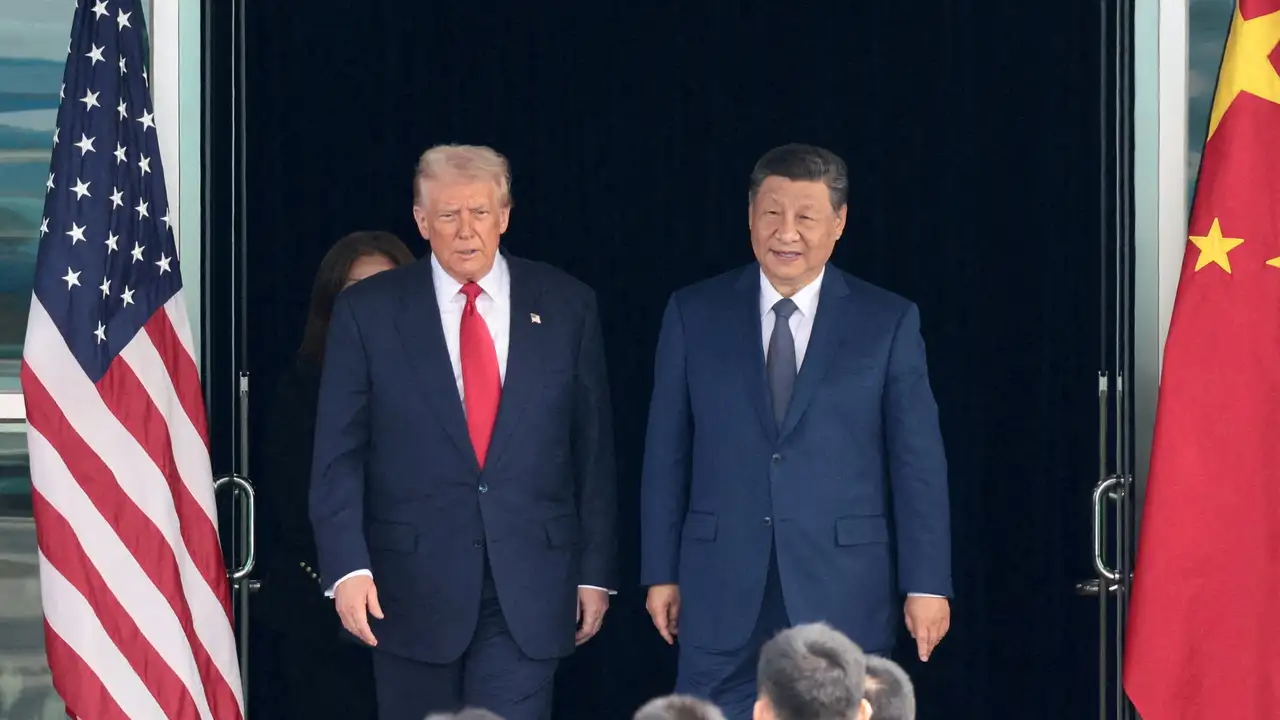
Much of the debate over U.S.-China rivalry centres on military strength, the technology race, and ideological clashes. But the deeper cause of the strategic split might be less obvious: the way their economies are structured.
The United States and China are not simply rival powers—they are rival political-economic systems that generate different approaches to global influence. The American system is deeply connected to military spending, while China’s economic model increasingly depends on domestic consumption and commercial expansion. These structural differences shape the foreign policy tools each country relies on and help explain why Washington and Beijing often interpret each other’s actions so differently.
Understanding that divergence is critical to understanding the future of global competition.
America’s military-centred economy
Since World War II, the United States has developed what economists occasionally refer to as a “military Keynesian” system—an economy where defence spending significantly influences macroeconomic policy.
The origins of this structure are rooted in history. Massive wartime production helped pull the United States out of the Great Depression, showing that large-scale government spending on defence could boost growth and jobs. When the Cold War started, high military spending became a lasting part of the American economy rather than just a temporary wartime measure.
RECOMMENDED FOR YOU
Kuwait Roundup: New arbitration law advances, Canada investment ties deepen and Hormuz security dominates talks
Today, the United States spends more on defence than any other country in history. Its military budget makes up about 40 percent of the world's total defence spending. The defence industrial base includes hundreds of thousands of companies and supports millions of jobs nationwide. Defence-related research funding has also fuelled technological innovation—from aerospace engineering to the digital technologies that form the backbone of today’s global economy.
Over time, this system has built strong political coalitions. Defence contractors, research institutions, military commands, and congressional districts reliant on defence jobs all have a vested interest in preserving large military budgets.
The result is not just a powerful military—it is a political economy that naturally leans toward using military tools in foreign policy. Alliances, overseas bases, security guarantees, and arms sales become key parts of the country's international strategy.
The result is not just a powerful military—it is a political economy that naturally leans toward using military tools in foreign policy. Alliances, overseas bases, security guarantees, and arms sales become key parts of the country's international strategy.
China’s commercial strategy
China’s economic trajectory has followed a very different path. For decades, Chinese growth mainly relied on exports and manufacturing. But since the late 2000s, Beijing has aimed to shift the economy toward domestic consumption, services, and higher-value industries. The change has been slow but meaningful. China’s middle class has grown significantly, consumer spending has increased, and the service sector now makes up the largest part of the country’s economic output.
Despite markets playing a central role in this transformation, the Chinese government still guides economic development through industrial policies, state-owned financial institutions, and long-term planning. The political goal of this strategy is clear: sustained economic growth is crucial for maintaining social stability and the legitimacy of the Communist Party's rule.
That imperative naturally promotes a foreign policy focused more on economic strategies than military power—trade agreements, infrastructure investment, development finance, and supply-chain integration. China’s Belt and Road Initiative, which funds infrastructure in dozens of countries, clearly reflects this strategy. Instead of showing power through military bases and alliances, Beijing often influences other nations with ports, railways, energy networks, and business partnerships.
Two different toolkits
These economic foundations produce two different foreign policy toolkits. The United States has unmatched hard power: global military bases, strong alliances, and advanced weapons systems. Its influence is supported by a security framework built over many years.
RECOMMENDED FOR YOU

Turkmenistan Roundup: Halk Maslahaty preparations, smart energy, and Caspian diplomacy
China’s power, on the other hand, relies increasingly on commercial connectivity—trade links, infrastructure projects, and investment networks that connect foreign economies to Chinese markets.
Both systems generate influence. However, they function through different methods.
The United States generally exerts power via security relationships, while China primarily uses economic integration.
Why Washington and Beijing misread each other
Because the two countries operate under different economic principles, they often interpret each other’s actions through the wrong lens. American policymakers often see Chinese infrastructure investments or technology exports as strategic moves aimed at expanding geopolitical influence.
Chinese policymakers frequently view U.S. military deployments and alliances as efforts to contain China’s economic growth
In reality, both countries may simply be acting based on the incentives built into their own political economies.
The shape of future competition
The emerging U.S.-China rivalry may therefore be less about ideology and more about two different models of global influence. One model relies on military alliances, security guarantees, and defence technology. The other depends on markets, infrastructure, and commercial integration.
Both are powerful—and both have their limits. The United States maintains unmatched military capabilities and a vast alliance network. Meanwhile, China continues to grow its economic reach across much of the developing world.
RECOMMENDED FOR YOU
China accuses Philippines of ‘false narratives’ after South China sea collision
The strategic competition between the two nations will likely play out not just in military contests but across trade, infrastructure, technology, and finance. In other words, the future of global power might be determined not just by who has the stronger military, but by which economic system proves more sustainable and influential over time.
The opinions and thoughts expressed in this article reflect only the author's views.
Dean Tavakoli is an analyst and a senior executive who possesses over a decade of extensive global quantitative investment experience. He is the CEO of Sea Enerji, a petrochemical trading company based in Turkey and has also served as a strategic advisor for the Middle East Oil and Gas.
