More than a treat: Why your go-to drink could be a sugar overdose
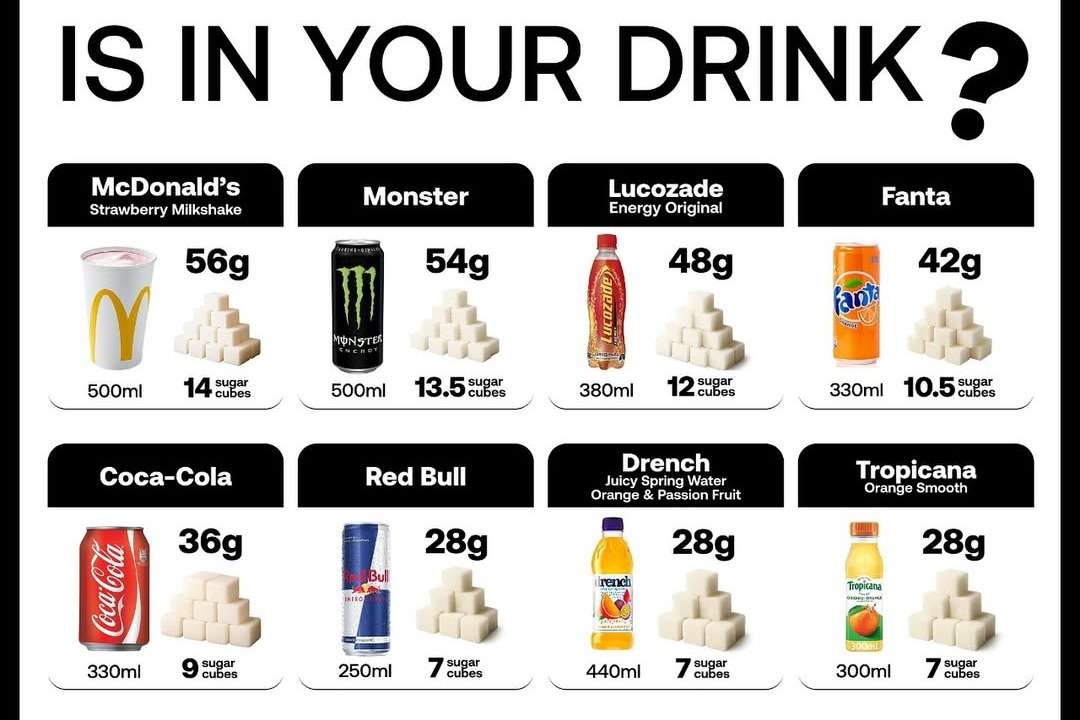
A single 500 ml McDonald’s strawberry milkshake contains 56g of sugar (around 14 sugar cubes), while a 330ml can of Coca-Cola packs in 36g (about 9 cubes). Even 250ml of Red Bull and 440ml of Drench juice contain 28g (7 cubes) each.
On the contrary, Diet Coke and plain Evian water contain zero sugar.
The World Health Organisation (WHO) recommends that both adults and children keep free sugar intake below 10% of total daily energy, and ideally under 5% for added health benefits.
For an average adult, that’s no more than 50g (about 12 teaspoons or 14 sugar cubes) per day, ideally closer to 25g (6 cubes).
RECOMMENDED FOR YOU

Six countries account for three-quarters of Europe’s unicorn startups
The infographic shows that just one drink can meet or exceed this limit. A McDonald’s milkshake alone (56g) surpasses even the WHO’s “better‑health” threshold. Many common beverages deliver a day's worth of free sugar in one sitting.
Health risks linked to excess sugar
Studies show that consuming more free sugars correlates with increased risk of overweight, obesity, and dental caries (tooth decay). Keeping intake below 10% of energy is a strong recommendation.
Reducing further to under 5%, though supported by less strong evidence, is conditionally recommended for even greater benefit
To counter this hidden sugar epidemic, Healthy Schools Cambridgeshire and Peterborough delivers educational programmes in schools.
Through initiatives like Healthy You, Food Smart, and Healthy You, Healthy Me, the organisation provides lesson packs, interactive workshops, parent engagement, and teacher training, all aimed at improving nutrition literacy and helping young people make informed beverage choices.