Namibia Roundup: Youth jobs plan, gold deal, digital payments strategy

Youth employability drive takes centre stage with new policy rollout
The Namibian government has launched a Work Integrated Learning Policy, targeting one of the country’s most pressing challenges: youth unemployment. The policy is designed to bridge the gap between education and the labour market by embedding practical work experience into training systems. In Namibia, where youth unemployment remains persistently high by regional standards, policymakers have increasingly focused on skills alignment and employability as key levers for economic inclusion. This move signals a shift away from purely academic pathways toward industry-linked training, with the expectation that graduates will enter the workforce with relevant, job-ready skills.
Economic outlook hints at a gradual recovery toward 2027
Namibia’s economy grew by 1.7% in 2025, missing expectations due to sharp declines in the diamond sector, livestock farming and investment. Growth started stronger early in the year but weakened overall. Analysts say early signs of recovery are emerging, supported by policy measures, monetary easing and rising credit activity, though the impact will take time to filter through. Growth is projected at 2%–2.5% in 2026, driven by agriculture, uranium and services, with stronger gains expected from 2027 onwards. Potential oil and gas investments could further boost the outlook, while household demand remains weak due to slow policy transmission.
Private sector leadership shifts as NCCI appoints new chairman
The election of Vetumbuavi Mungunda as chairman of the Namibia Chamber of Commerce and Industry (NCCI) marks a notable development in the country’s business landscape. The NCCI plays a central role in representing private sector interests, engaging with government on policy and promoting investment. Leadership changes at this level often signal shifts in advocacy priorities, particularly around business climate reforms, access to finance and support for small and medium-sized enterprises. Mungunda’s appointment comes at a time when closer public-private collaboration is seen as critical to unlocking growth.
Digital payments strategy targets financial modernisation
The Bank of Namibia (BoN), in collaboration with PAN, has launched a new payment system strategy aimed at modernising the country’s financial infrastructure. The initiative is expected to expand digital payment adoption, improve transaction efficiency and strengthen financial inclusion. Across Africa, central banks are increasingly prioritising digital systems to reduce reliance on cash and integrate informal sectors into the formal economy. For Namibia, this strategy aligns with broader efforts to build a more resilient and accessible financial system, particularly for underserved populations.
RECOMMENDED FOR YOU
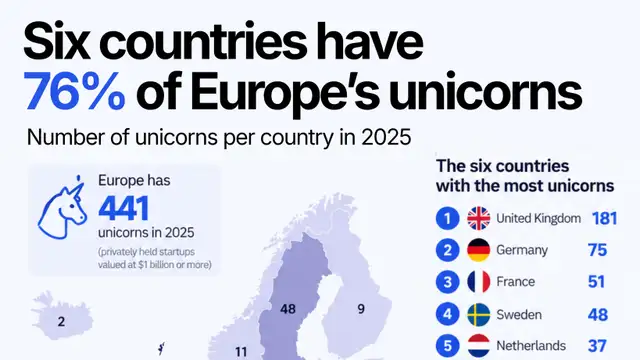
Six countries account for three-quarters of Europe’s unicorn startups
Gold supply deal signals strategic reserve strengthening
The Bank of Namibia has secured a gold supply deal, reinforcing its reserve assets. Gold remains a key instrument for central banks seeking to hedge against currency volatility and global economic uncertainty. The agreement suggests Namibia is taking steps to strengthen its macroeconomic buffers, particularly in a volatile global environment. This also reflects a wider trend among emerging markets to increase gold holdings as part of reserve diversification strategies.
This story is written and edited by the Global South World team, you can contact us here.