Nigeria surpasses all of Europe in annual births
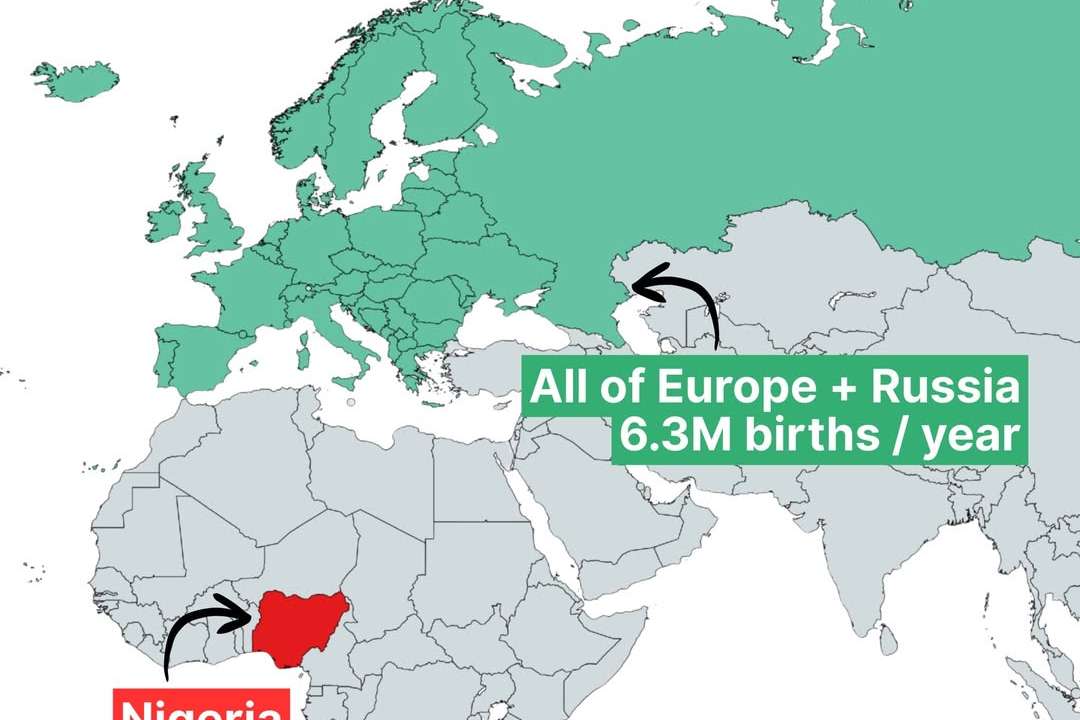
Nigeria, Africa’s most populous nation, is now giving birth to more babies each year than all of Europe plus Russia combined, a milestone that reflects profound global demographic change.
Nigeria, Africa’s most populous nation, is now giving birth to more babies each year than all of Europe plus Russia combined, a milestone that reflects profound global demographic change.
According to recent data, Nigeria records around 7.5 million live births annually, while Europe, together with Russia, see roughly 6.3 million births per year.
Nigeria’s high fertility rate, which averages around 4.6 births per woman, plays a big role in these figures. That rate is well above global averages and far higher than most of Europe, where fertility rates commonly fall below replacement level (about 1.4 to 1.6 children per woman).
By contrast, much of Europe has a deeply aged population and decades of low birth rates. Countries such as Italy, Spain and Germany have fertility well under replacement level, contributing to slower natural population growth and, in some cases, declining native population totals.
RECOMMENDED FOR YOU
Six countries account for three-quarters of Europe’s unicorn startups
Russia in particular illustrates this trend as its fertility rate is among the lowest in the world at roughly 1.4 births per woman, and official statistics show persistent declines in the number of births as the population ages.
Low fertility rates in Europe are already prompting incentives for families, reforms in parental support, and debates about immigration policy as governments seek ways to stabilise future population size and workforce strength.
Nigeria’s youth-heavy population and higher birth rates, on the other hand, have helped it become a demographic powerhouse, even as many European countries confront ageing populations, shrinking workforces and fiscal pressures linked to elder care.
Nigeria’s demographic trends also carry implications. Rapid population growth can fuel economic expansion if accompanied by investment in education, health and employment.
The World Economic Forum suggests that "A population projected to reach 400 million by 2050 needs jobs aligned with a fast-digitising economy. But youth unemployment remains among the highest globally, with 23% of young Nigerians actively looking for work, while another 32% are out of employment altogether. Employers also report persistent shortages in technical and digital skills, underscoring the need for coordinated investment."