Six networks: how China is building a template for tomorrow's economy. Opinion
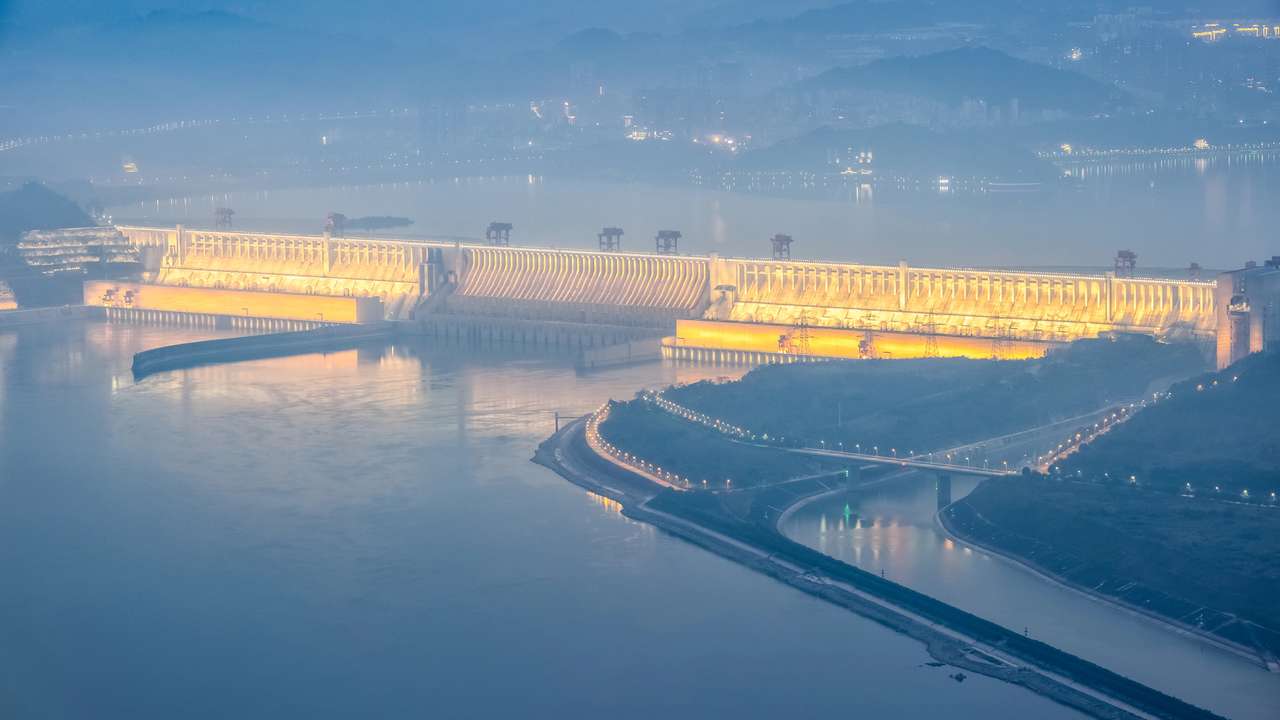
In October 1952, during an inspection of the Yellow River, then-Chinese leader Chairman Mao Zedong first envisioned the South-to-North Water Diversion Project.
Addressing the chronic water shortages in the north, he famously observed: "The south has plenty of water, while the north is dry. If possible, borrowing a bit of water would be fine."
To put the scale of this "borrowing" into perspective for a global audience, it is the equivalent of a transcontinental engineering feat that would divert the Danube to the Thames in Europe, or channel water from the Sierra Nevada in California across a thousand miles to irrigate the parched American Great Plains.
For decades, successive generations of Chinese leadership worked to reconcile vast resources with shifting demands, eventually turning that vision into a reality of steel and concrete. Today, the first phase of the Eastern and Middle Routes of the South-to-North Water Diversion Project has already diverted over 85 billion cubic metres of water, benefiting 195 million people across 48 major cities. As of April 2026, the ambitious Western Route -designed to "borrow" tens of billions of cubic metres annually from the Yangtze to the Yellow River - remains in the critical feasibility and technical research stage. This project serves as the backbone of the National Water Network, aiming to alleviate the water-carrying capacity issues of the Yellow River basin.
RECOMMENDED FOR YOU
Six countries account for three-quarters of Europe’s unicorn startups
Building on the legacy of resource coordination like this, the CPC Central Political Bureau recently convened a meeting to address the modern economic landscape. The leadership explicitly proposed tapping into the potential of domestic demand by accelerating the planning and construction of "Six Networks": the Water Network, New Power System, Computing Power Network, Next-Gen Communications, Urban Pipe Networks, and the Logistics Network. Supported by an estimated 7 trillion yuan ($1 trillion) in investment through 2026, these networks represent the digital and green evolution of China's classic balancing acts, such as "West-to-East Power Transmission" and the computing-focused "East Data, West Computing."
Forward thinking, strategic planning
The "Six Networks" strategy represents a leap toward Systemic Efficiency. Rather than simply building more, the goal is to integrate energy, data, water, and logistics into a single, high-performance ecosystem.
- The Water Network: This pillar anchors China’s water use through projects like the Western Route of the South-to-North Water Diversion Project and the Yinjiang Buhan Project (the Water Diversion Project from the Three Gorges Reservoir to the Hanjiang River). By using digital twin technology, the state can manage water flow with unprecedented precision.
- The New Power System: This network facilitates the movement of Western green power to Eastern industrial hubs. It is underpinned by innovative financing, such as China’s first Energy Storage REITs, which allow private capital to fund the "giant batteries" needed for a stable grid.
- The Computing Power Network: A national utility for Artificial Intelligence. Building on the "East Data, West Computing" framework, hubs like Shenzhen now feature "100,000-card clusters," allowing companies to tap into immense processing power as easily as drawing water from a tap.
- Next-Gen Communications: The scale-up of 5G-A (5.5G) and pioneering 6G testing provide the invisible tracks for the "low-altitude economy," enabling autonomous drone logistics to become a commercial reality.
- Urban Pipe Networks: This "below-ground" revolution prioritises city resilience. Using trenchless repair technology, cities are fixing ancient drainage and gas lines without disrupting surface life, embedding sensors to pre-emptively detect leaks.
- The Logistics Network: This is a dual-track modernisation. At the national level, it involves a physical modernisation of rail, road, port, aviation, warehousing, and cold-chain infrastructure to slash costs. At the enterprise level, it focuses on digital systems - websites and platforms featuring online ordering, real-time tracking, intelligent quoting, and smart management to achieve full transport visibility.
A template for the world
The significance of the "Six Networks" lies in its capacity to resolve the core contradictions of modern development: the distance between green energy production and urban consumption, the gap between data generation and processing power, and the friction between rapid urbanisation and aging underground safety.
By treating compute power and water as utilities as fundamental as electricity, China is insulating its economy against inflationary pressures. A factory that accesses cheaper green energy via the Power Network and more affordable AI processing via the Computing Network can remain globally competitive regardless of shifting demographics.
While the rollout is state-led, the sheer scale of this 7-trillion-yuan initiative creates a vast frontier for international partnership. The "Six Networks" demand high-end precision engineering, advanced material science for non-invasive urban repairs, and sophisticated green finance structures - fields where global expertise remains in high demand. For nations across the Global South, this model demonstrates that the path to a "Smart City" or a "Green Economy" requires more than isolated technological gadgets. It demands integrated, national-level grids that treat data and ecology as the essential roads and bridges of the 21st century. China is not merely upgrading its own house; it is redesigning the architecture of modern growth.
- Du Yubin is a journalist and producer for CGTN. He was stationed in Washington, D.C. and London for six years each, focusing on China-US and China-EU relations. He has over 15 years of experience in international communication and new media. The views expressed in this article are the author’s own.
Image credit: https://depositphotos.com/
This story is written and edited by the Global South World team, you can contact us here.
