Tenerife outshines Brazil in tourism despite being 0.02% its size

According to a 2024 statistic, the tiny Spanish island of Tenerife welcomed a whopping 7.2 million tourists, surpassing Brazil, a country 4,200 times larger, which attracted 6.6 million visitors during the same period. This jaw-dropping contrast begs the question about what makes Tenerife such a tourist magnet.
Brazil vs Tenerife: The size-tourism paradox
Despite boasting world wonders like the Amazon Rainforest, Iguazu Falls, Christ the Redeemer, and over 7,400 kilometres of coastline, Brazil struggles to fully capitalise on its tourism potential. In contrast, Tenerife, the largest of Spain’s Canary Islands, located off the northwest coast of Africa, thrives as a top global destination.
According to data from UN Tourism and World Bank, Brazil ranked 48th globally for international tourist arrivals in 2024, while Tenerife alone ranked among the top 30 single destinations, drawing visitors from the UK, Germany, and mainland Spain.
Why tourists flock to Tenerife
- Consistent Climate: With mild temperatures year-round (thanks to trade winds and the Canary Current), Tenerife is known as the “Island of Eternal Spring.”
- Accessibility: As part of Spain, Tenerife benefits from strong EU air travel links and infrastructure, with direct flights from over 100 cities.
- Tourism-Centric Economy: The island’s economy is built around hospitality, boasting all-inclusive resorts, entertainment, and efficient tourism services.
- Natural Beauty: From Teide National Park and black-sand beaches to whale watching and volcanic hikes, the island packs diversity into a small space.
Why is Brazil lagging?
Despite its immense tourism assets, Brazil faces several barriers:
RECOMMENDED FOR YOU
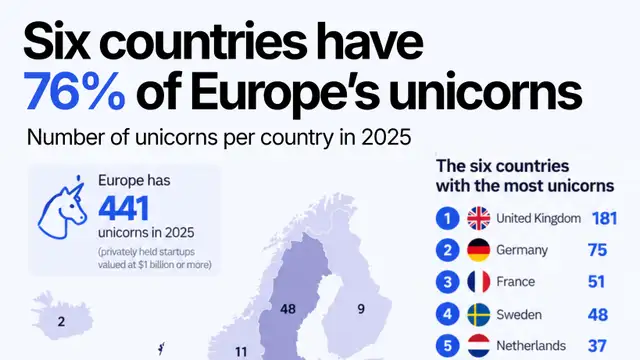
Six countries account for three-quarters of Europe’s unicorn startups
- Infrastructure and Safety Concerns: Poor road networks in remote regions and urban crime perceptions deter some travellers.
- Bureaucratic Hurdles: Lengthy visa processes and a lack of coordinated tourism marketing limit outreach.
- Underpromotion: Brazil’s tourism campaigns are often underfunded compared to European destinations.
- High Travel Costs: Especially for long-haul travellers, the expense of domestic flights and limited affordable accommodation options shrink its competitiveness.
What can Brazil learn?
Brazil could significantly boost its tourism by:
- Streamlining visas and expanding visa-free agreements.
- Investing in safety, transportation, and sustainable tourism infrastructure.
- Enhancing promotion efforts in key markets, leveraging digital platforms and influencers.
- Developing niche tourism like ecotourism, Afro-Brazilian cultural trails, and Amazon river cruises.