Thailand's Anutin seeks new mandate as parliament votes on prime minister
By Panu Wongcha-um
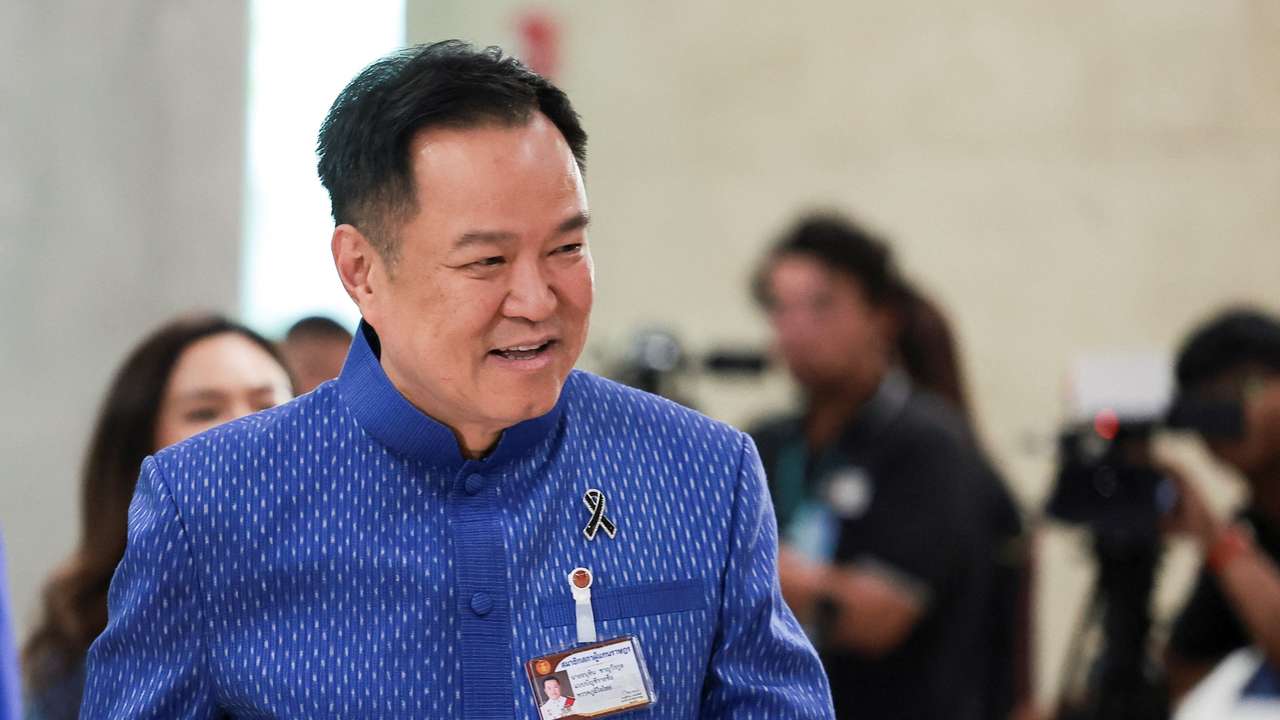
Thailand's Anutin Charnvirakul will seek to be elected back to power on Thursday in a parliamentary vote on a prime minister that could usher in a rare period of stability for a country long plagued by political drama and turmoil.
In a stunning turnaround in fortunes for a party that had struggled to make its mark in Thai politics, Anutin's Bhumjaithai sprang a surprise with a decisive victory in February's election after capitalising on a wave of nationalism arising out of military conflicts with Cambodia last year.
Much of Anutin's success comes from his opportunism in seizing on the decline of the once dominant Pheu Thai party, first by abandoning its coalition government then manoeuvring swiftly to form his own after a court sacked a second prime minister in the space of just over a year.
RECOMMENDED FOR YOU

Six countries account for three-quarters of Europe’s unicorn startups
After the February election, Bhumjaithai has made a pact with the politically bruised Pheu Thai and teamed up with a motley crew of small parties for an alliance that would control 292 of the current 499 seats in parliament.
"The government coalition is ready to perform its duty in the legislature and executive smoothly to bring prosperity to the country," Anutin told a press conference in parliament before the session started.
"We'll quickly form a cabinet and give a policy statement to solve the problems of the country."
RIVAL CHALLENGE
To be elected prime minister, Anutin, 59, needs the support of more than half of the house, or 251 votes. The vote is expected to take place later on Thursday.
Anutin was nominated for premier on Thursday morning and will go head-to-head in the vote against 38-year-old Natthaphong Ruengpanyawut, leader of the People's Party, the second-placed election finisher.
It is unclear what support Natthaphong has beyond the 120 seats his party holds, or if a deal has been made with other players. He said last week his intention was to use the vote to present his party's vision to parliament.
Anutin, a staunch royalist, has been a mainstay in Thai politics, weathering two decades of upheaval by positioning Bhumjaithai strategically between warring elites entangled in an intractable power struggle, which guaranteed its place in a succession of coalition governments.
RECOMMENDED FOR YOU

Ugandan queen mother claims house arrest amid Tooro succession dispute
If Anutin prevails, he would for the first time have a clear mandate to lead in a country with a long-stuttering economy shackled by massive household debt, in urgent need of structural reform and facing headwinds from trade uncertainty and the fallout of the U.S.-Israeli war on Iran.
PROSPECT OF STABILITY
Anutin's survival instincts and ability to straddle political divides could prove his biggest asset, some analysts say, with Bhumjaithai having been spared the wrath of Thailand's powerful military and judiciary, the engineers of the downfall of multiple governments and parties.
Napon Jatusripitak, a political scientist at Singapore's ISEAS–Yusof Ishak Institute, said that with Bhumjaithai set to hold sway over the upper and lower houses and Thailand's axes of institutional power appearing to be behind Anutin, the prospects for medium-term stability were good.
"People have strong reasons to believe that this government can last, particularly because it's the first time in a long while that the referee and the players are on the same side," Napon said.
"There's control," he said. "And we have a highly fragmented opposition."
This article was produced by Reuters news agency. It has not been edited by Global South World.