The 1962 Cuban missile crisis and the lessons it still teaches in a nuclear age
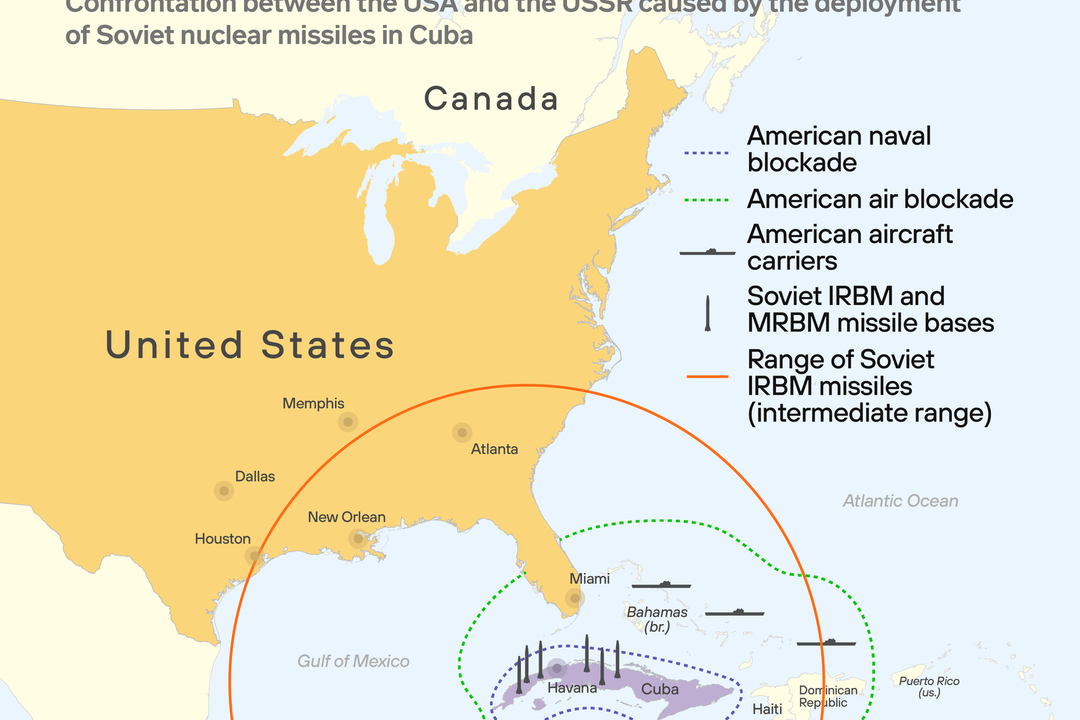
On that day, John F. Kennedy announced to the American people that the Cuban Missile Crisis was underway, an explosive revelation that the Soviet Union had secretly deployed nuclear-armed missiles on the island of Cuba, only 90 miles from the U.S. mainland.
The map above captures the gravity of that confrontation: Soviet intermediate-range ballistic missile bases in Cuba, U.S. naval and air “quarantine” (blockade) zones around the island and the looming threat circle stretching deep into the continental United States.
This wasn’t just another Cold War standoff. It was arguably the moment when nuclear war crept into real possibility, when world leaders and citizens alike recognised that missteps might have unleashed catastrophe.
The roots of the crisis lay in a series of strategic moves: the United States had placed medium-range nuclear missiles in Turkey and Italy, threatening Soviet territory, while the Soviet leadership under Nikita Khrushchev responded by emplacing nuclear missiles in Cuba to counter U.S. dominance and protect the regime of Fidel Castro.
Kennedy’s October 22 speech declared that any nuclear attack launched from Cuba would be met with full retaliatory response. Through a naval “quarantine” announced publicly, the U.S. effectively blocked further Soviet shipments to the island.
Within two weeks, the tension subsided, but only after a secret agreement: the Soviets would remove the missiles from Cuba, and the U.S. would privately agree to remove certain missiles from Turkey and Italy. The parties also established a direct communication link, the famed “hotline”, to avoid being so perilously close again.
This story is written and edited by the Global South World team, you can contact us here.