The hospital bed as a death sentence: Africa’s ‘no bed’ epidemic
Key Takeaways
A 29-year-old Ghanaian engineer died after three major hospitals in Accra reportedly turned him away over “no bed” space — a crisis mirrored in Nigeria, South Africa, Liberia and Kenya, where shortages of beds, staff, oxygen and functioning emergency systems are costing lives.
Data shows one in five critically ill hospital patients in Africa dies within a week, highlighting how underfunded emergency care and governance gaps have turned the continent’s hospital bed shortage into a systemic public health emergency.
On the night of February 6, a 29-year-old Ghanaian engineer and hit-and-run victim, Charles Amissah, lay bleeding on the asphalt of the Nkrumah Circle Overpass, a 3-tier interchange in the capital, Accra.
Within three minutes of a walk-in alert, Emergency Medical Technicians (EMTs) from the National Ambulance Service were at his side, finding him with profuse bleeding from a deep shoulder laceration. For the next two hours and 18 minutes, those technicians fruitlessly negotiated with three major hospitals in the capital.
The response was uniform: "No vacant bed available". By 12:50 am GMT, Charles Amissah was dead—not for lack of medical expertise or a responding ambulance, but for lack of a piece of furniture.
His tragic death has reignited fury over Ghana’s "no bed syndrome," a systemic failure where emergency care is routinely denied based on physical space.
However, a look into healthcare systems across sub-Saharan Africa reveals that Amissah’s death is not an isolated incident; it is a symptom of a continental crisis where hospital beds have become a tool of lethal exclusion.
RECOMMENDED FOR YOU

Six countries account for three-quarters of Europe’s unicorn startups
The Ghana context
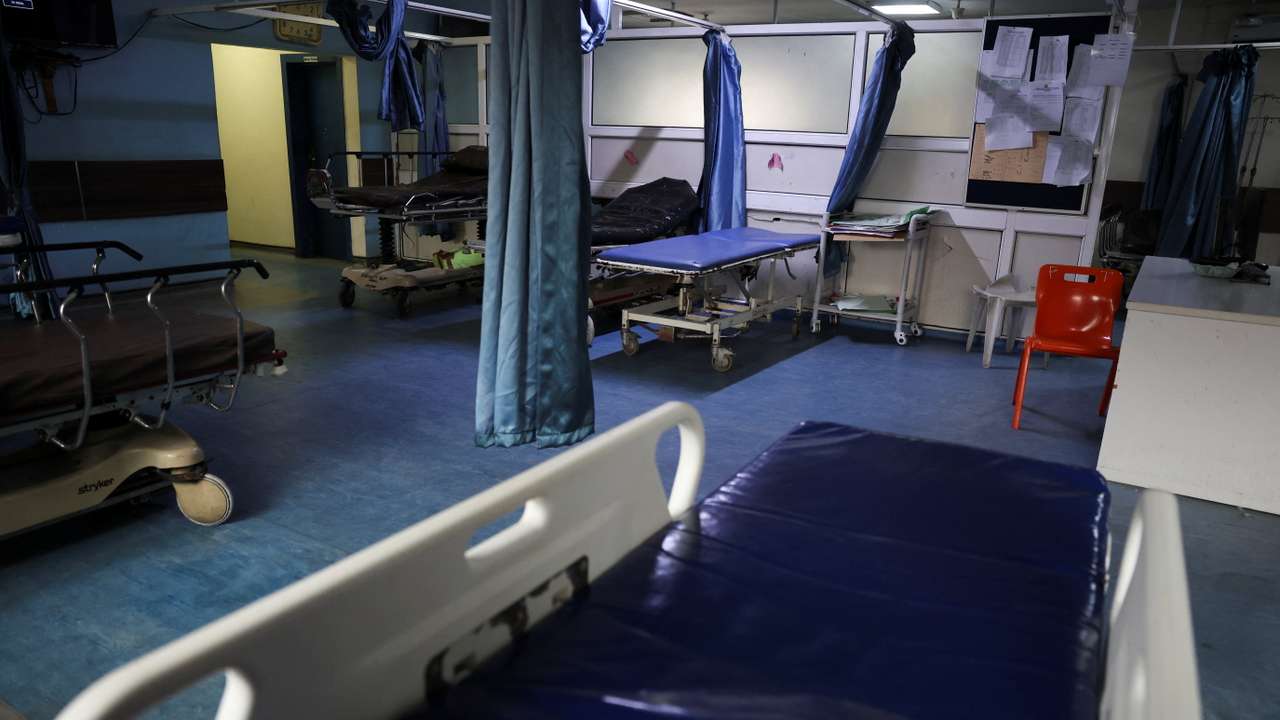
In Ghana, the "no bed syndrome" is a chronic ailment. In 2024, the Korle Bu Teaching Hospital (KBTH), the nation’s largest medical facility, had to suspend referrals to its Surgical Medical Emergency unit because it was housing 60 patients in a 36-bed unit. Photos on social media captured the dehumanising reality: patients receiving treatment in plastic chairs, wheelchairs, and on the bare floor.
The Ministry of Health, on February 18, announced that it had constituted a three-member committee to probe Amissah’s death, examining decision-making processes and contributing factors. Yet, local experts argue the problem is structural. Beyond the physical shortage, the system suffers from abandoned facilities, a lack of medicines, and a severe brain drain as medical professionals flee for better opportunities abroad.
Despite a national health insurance scheme, the cost of emergency care remains prohibitively high for many, and the referral chain is often broken by a lack of coordinated communication between ambulances and receiving wards.
The Nigerian mirror
Nigeria faces a nearly identical "no bed" crisis, often overshadowed by the "Japa syndrome"—the mass exodus of healthcare workers. The story of Ifelola Abiona last year, a 42-year-old mother of two, mirrors that of Charles Amissah.
Despite doctors being physically present and ready to operate at the Lagos State University Teaching Hospital (LASUTH), she was left to "languish" and eventually die because no bed could be found. Her husband recounted a harrowing ordeal of being referred between facilities, paying nearly a million naira (about $745) for redundant tests, only to be told again: "No bed".
The Nigerian Medical Association (NMA) blamed this on a dysfunctional referral system and a weak primary healthcare foundation.
Chairman of the NMA in Lagos, Dr Saheed Babajide, revealed that in Lagos, only 57 out of 300 primary health centres are comprehensive enough to have doctors, forcing patients to swarm tertiary hospitals for minor ailments. This over-subscription, according to reports, means that many hospitals consistently operate at over 90% occupancy.
Furthermore, the lack of space extends to the families. Informal caregivers—relatives who perform the roles of nurses due to staffing shortages—are forced to sleep on staircases, wooden benches, or bare concrete. They report being bitten by mosquitoes, shivering in the rain, and eventually falling ill themselves, creating a secondary public health risk.
RECOMMENDED FOR YOU

Burkina Faso to stop importing armoured vehicles, Traore says
The ICU crisis in South Africa
In South Africa, the crisis shifts from general ward beds to the even more critical shortage of Intensive Care Unit (ICU) beds. Reports reveal that South Africa has a mere five ICU beds per 100,000 people. In some provinces, the ratio drops to one bed per 100,000.
The consequences are visceral. In Gauteng, South Africa's economically dominant province, which houses its financial capital, Johannesburg, a 29-year-old man died after a one-hour wait for medical attention; his family attributed the delay to "corruption led by the political elite" and a lack of available ICU space. Another patient waited six weeks for an ICU bed for a bypass surgery; during that time, gangrene spread, resulting in a double amputation.
The shortage is not just about infrastructure but specialised human capital. Only 25% of ICU nurses in the country are actually trained in critical care. This deficit, combined with crumbling utilities and water/power shortages, means that even when a physical bed is available, there may be no one qualified to man it.
There have also been reports of financial mismanagement where security budgets outweigh clinical budgets, leaving hospitals under-equipped while funds are siphoned away.
Liberia and Kenya: Crumbling walls and digital deadlocks
In Liberia, the "no bed" crisis is exacerbated by the scars of civil war and the 2014 Ebola epidemic. At Phebe Hospital, the second-largest in the country, reports from 2024 indicated that a lone surgeon had been forced to carry out operations by the light of storm lanterns because of frequent electricity cuts.
The hospital, burdened by $300,000 in debt to vendors, often lacks basic drugs, forcing doctors to watch patients die while relatives run to local pharmacies to buy supplies. At the James Jenkins Dossen (JJ Dossen) Hospital in Harper, the coastal capital of Maryland County in southeastern Liberia, the influx of patients was so high that pregnant women and their newborn babies were forced to sleep on the floor.
Kenya offers a more modern, albeit equally frustrating, version of the crisis. Recent transitions to the Social Health Authority (SHA) portal resulted in chaotic situations where hospitals with physical beds were shown as having "zero occupancy" in the digital system. Hospital owners reported being forced to turn away women in need of maternity services because the digital dashboard "locked," preventing admissions and reimbursements.
Officials claim this was a deliberate downgrade to protect patient safety in facilities lacking essential equipment, but providers allege it is a cost-containment strategy by a state grappling with billions in unpaid claims.
RECOMMENDED FOR YOU

Sheinbaum rings historic bell as thousands fill Zocalo for Mexican Independence Day
A continental death trap
The collective data across these nations paints a grim picture:
- One in eight hospital inpatients in Africa is critically ill.
- One in five of these patients dies within a week.
- Only 48% of patients with respiratory failure receive life-saving oxygen therapy.
- According to the World Health Organisation (WHO), Road Traffic Accidents (RTAs) are the leading cause of death for children, adolescents, and young adults (5-29) in sub-Saharan Africa, yet the region has the least effective Pre-hospital and Emergency Care Services (PECS).
Why the bed is just the symptom
The "no bed syndrome" is rarely just about furniture. It is the end result of the "Three Delays" model, according to researchers:
- Delay in seeking care: Driven by poverty and a perceived low quality of care.
- Delay in reaching a facility: Caused by few ambulances and poor road networks.
- Delay in receiving treatment: This is where the "no bed" wall is hit. Even if a patient reaches a hospital, a lack of triage protocols, equipment, or staff prevents immediate care.
Many governments in Africa still view Emergency Medical Services (EMS) as a luxury rather than an essential component of Universal Health Coverage (UHC).
In Nigeria, for instance, only 9% of the population is covered by a formal EMS system. Governments struggle to maintain ambulance fleets, and most response is left to expensive, private hospital-owned vehicles that can cost more than a month’s wages to hire.
The path forward: Essential, not optional
The African Critical Illness Outcomes Study, which investigated about 20,000 patients from 180 hospitals in 22 countries across the continent, suggests that thousands of lives could be saved through simple, low-cost interventions that can be provided in general wards, such as ensuring oxygen availability and training staff in basic life support.
Case studies in Sierra Leone and Malawi show promise. Sierra Leone utilised ambulances from its Ebola response to create a national EMS system that now achieves national coverage with 80 ambulances and over 400 paramedics. Malawi is piloting a coordinated "118" emergency number and trauma registry along its deadliest road corridor.
This story is written and edited by the Global South World team, you can contact us here.
