The world’s most stolen grocery items revealed
Cheese has earned the dubious distinction of being the most stolen grocery item globally, according to data from World of Statistics covered by international outlets including Smithsonian Magazine and Telegrafi.
An astonishing 4% of global cheese production is lost annually to theft, highlighting how dairy, especially cheese, has become a prime target for both petty shoplifting and organised retail crime.
Based on the most recent crime statistics, shoplifting costs retailers more than $13 billion each year, which breaks down to over $35 million lost every single day.
This substantial financial burden not only affects individual businesses but also ripples through the broader economy, driving up retail prices and threatening the sustainability of stores across the country.
Regional theft patterns: What’s being stolen where
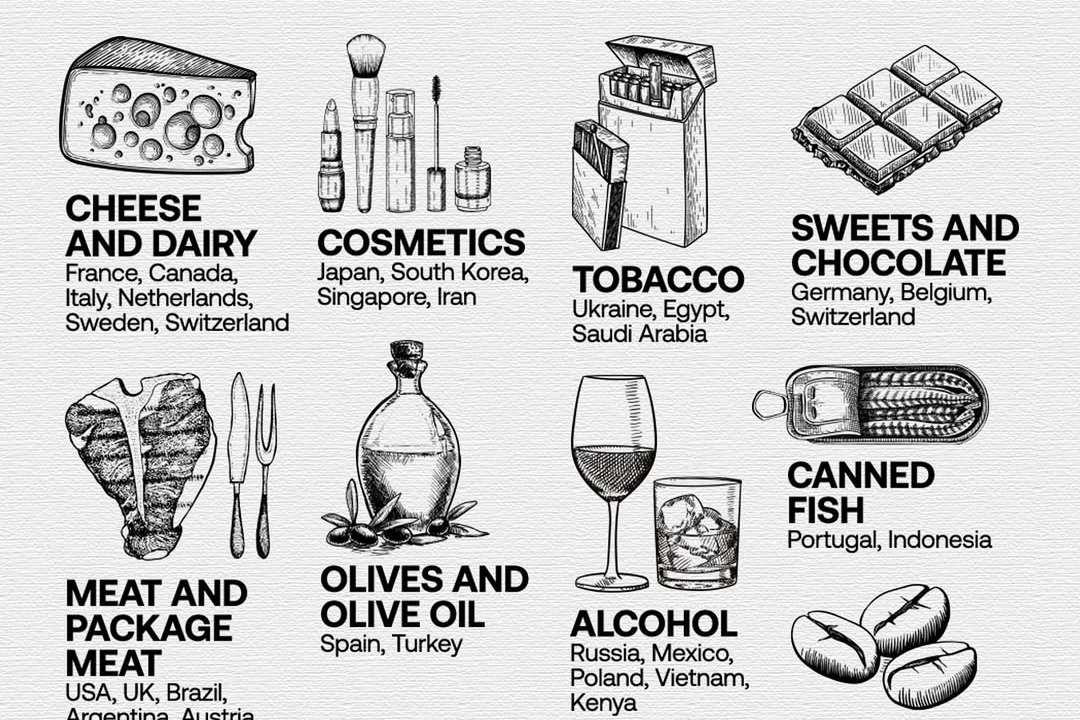
A World Visualized graphic reveals that different countries exhibit unique preferences when it comes to grocery theft:
- Cheese and dairy: Stolen most frequently in France, Canada, Italy, Netherlands, Sweden, and Switzerland—countries renowned for their love of cheese and dairy culture.
- Cosmetics: Frequently lifted in Japan, South Korea, Singapore, and Iran, suggesting that personal care items are high-value, easily concealable, and frequently targeted.
- Meat and packaged meat: The top stolen item in the USA, UK, Brazil, Argentina, Austria, South Africa, and New Zealand. High prices and essential status likely drive this trend.
- Alcohol: Dominates theft statistics in Russia, Mexico, Poland, Vietnam, and Kenya, all regions where alcohol is both socially and economically significant.
- Tobacco: The most shoplifted item in Ukraine, Egypt, and Saudi Arabia, indicating that non-food items with addictive properties are often targeted.
- Sweets and chocolate: Surprising no one, Germany, Belgium, and Switzerland—all nations with rich chocolate heritages—see high levels of candy theft.
- Olives and Olive Oil: Central to Mediterranean diets, these are stolen most in Spain and Turkey.
- Canned fish: Commonly lifted in Portugal and Indonesia, countries with strong fishing industries and seafood-based cuisines.
- Coffee: A hot commodity in Colombia and Peru, both major coffee producers and consumers.
This international pattern is more than random petty theft. Analysts from the Smithsonian Magazine note the increasing involvement of organised retail crime networks. These groups systematically target high-value, resellable, and often untraceable products such as cheese, cosmetics, alcohol, and coffee.
This story is written and edited by the Global South World team, you can contact us here.