Treachery and division against structural preparedness: What's next for Iran?
The elimination of a defence minister, the commander of the Revolutionary Guards and the Supreme Leader is not simply a symbolic act. It represents an attempt to strike at the very apex of a political system.
Operations of this kind are intended to decapitate a regime by removing its central decision-makers and disrupting its chain of command. Such strikes rarely occur by chance.
They typically reflect a prolonged process of intelligence gathering, surveillance and operational preparation. The ability to target senior figures simultaneously suggests highly detailed knowledge of internal structures and movements. In tactical terms, therefore, an operation that reaches the political and security leadership of a state constitutes a significant success. Yet the strategic implications are less straightforward.
But this isn't the end
The removal of high-ranking leaders does not automatically translate into the collapse of a political system. Authoritarian regimes in particular are often structured to withstand the loss of individuals, even at the highest level.
RECOMMENDED FOR YOU
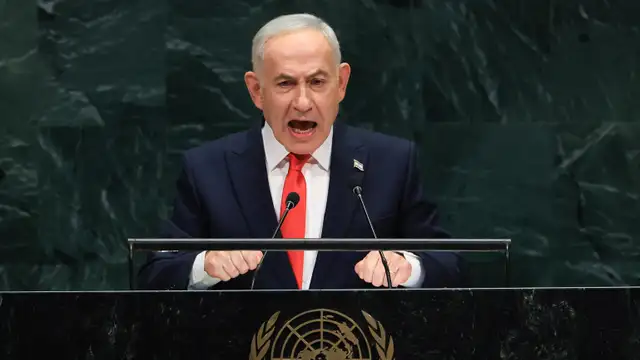
‘Iran could destroy us’ - Netanyahu warns of nuclear threat ahead of Israel election
The Islamic Republic of Iran is not merely a collection of personalities. It is a layered institutional system combining ideological authority, religious legitimacy and an extensive security apparatus.
Succession mechanisms exist, formal and informal, and historically the regime has demonstrated an ability to replace key figures relatively quickly.
For this reason, the real test following such strikes lies not in the immediate casualties but in the regime’s ability to reconstitute its command structure. Can the leadership rebuild a coherent chain of authority?
Can it maintain internal order and prevent fragmentation within its security forces?
If the answer to these questions is yes, the strikes will ultimately represent a dramatic tactical blow rather than a decisive structural rupture.
And strikes can be counterproductive
The Iranian system has never been entirely unified. Long-standing tensions exist between hardliners and more pragmatic elements, between ideological conservatives and reform-oriented factions.
Even within the security apparatus there are differing views about strategy and risk. Some actors interpret the current confrontation as an existential struggle requiring uncompromising resistance. Others may consider that uncontrolled escalation threatens the survival of the regime itself.
External pressure can therefore produce contradictory effects. On the one hand, it may strengthen internal cohesion by rallying elites around the defence of the state. On the other, it can intensify disagreements over how best to respond. In moments of acute crisis, these divisions may become more visible.
RECOMMENDED FOR YOU
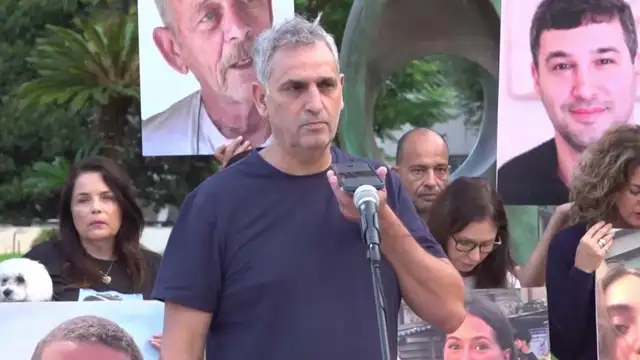
‘Who will take responsibility?’ - October 7 families confront Netanyahu on Israel election day
The battle for control
The durability of the regime is closely linked to the interests of those who benefit from it.
Iran’s security elite is deeply embedded in networks of economic patronage and institutional power. At the centre of this system stand the Islamic Revolutionary Guard Corps, numbering roughly 190,000 personnel, supported by the Basij militia and a range of internal security organisations.
These forces possess the capacity not only to defend the regime externally but also to suppress dissent domestically. The persistence of checkpoints, surveillance and internal security operations even during periods of external bombardment demonstrates that this apparatus remains operational. As long as the coercive machinery of the state remains intact, the regime retains the capacity to endure.
Alongside the Revolutionary Guards stands Iran’s regular army, a separate institution with a different historical identity and organisational culture. The Guards function as the ideological army of the Islamic Republic, closely integrated with the political leadership. The regular army, by contrast, represents a more traditional state institution. Should the regime face a severe crisis, the behaviour of the regular army could become decisive. It might remain neutral, support the existing system or attempt to act as an arbiter.
Iranian history offers a relevant precedent. During the revolution of 1979 the army initially participated in suppressing demonstrations but ultimately declined to intervene at a decisive moment. That episode continues to influence contemporary strategic thinking within the country.
So what IS next?
Another question concerns what might follow a weakened or collapsing regime. Some observers argue that Iran’s social structure and national identity make a descent into chaos less likely than in countries such as Iraq after 2003.
Iranian society possesses a strong sense of historical continuity and a relatively high level of education. Moreover, opposition movements exist, even if they remain fragmented and often operate outside the country.
These groups range from monarchists and republicans to centre-left movements and representatives of ethnic minorities.
RECOMMENDED FOR YOU

New Asia Forum targets $30 billion in investment at inaugural Bali gathering
Many share common demands centred on democratic governance, secular institutions and minority rights. Reza Pahlavi, the son of Iran’s last monarch, remains a controversial figure in this debate. While some see him as a possible rallying point for a transitional process, others question the legitimacy of any political figure who has spent decades in exile. A more sceptical view holds that organised opposition within Iran has been largely dismantled by decades of repression.
From this perspective, the absence of a coherent alternative could create the conditions for instability should the regime weaken dramatically.
This uncertainty creates a paradox.
Many Iranians may desire political change, yet fear the instability that might accompany the collapse of the current system.
The prospect of disorder can therefore slow political momentum and, in some cases, enable regimes under pressure to reconstitute themselves. It also explains why diplomatic appeals for negotiation may appear disconnected from the strategic reality of the conflict.
Once military operations begin targeting the highest levels of leadership, the confrontation moves beyond ordinary disputes. For the regime, the struggle becomes one of survival.
Under such circumstances, entering negotiations can appear indistinguishable from accepting defeat. The priority becomes internal consolidation rather than external dialogue.
There's a blame game
Perhaps the most destabilising element in such operations is not the immediate loss of leaders but the questions they raise about internal vulnerability.
RECOMMENDED FOR YOU
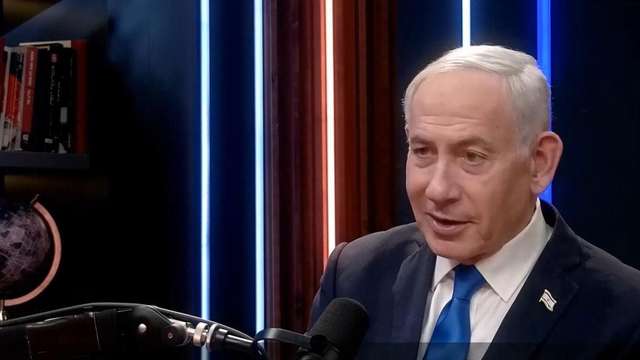
‘Hamas could reach Paris’ - Netanyahu warns Macron amid France protests
Strikes that successfully target high-level meetings suggest either exceptional intelligence capabilities or the presence of informants within the system itself. In authoritarian regimes, the mere suspicion of infiltration can be corrosive.
Trust within the leadership becomes fragile. Senior figures begin to question the loyalty of colleagues and subordinates. Decision-making becomes slower and more defensive as individuals prioritise personal survival.
History shows that many authoritarian systems do not collapse primarily because of external pressure. Instead, they weaken when internal cohesion begins to erode.
The decisive question
For this reason, the critical issue is not simply the removal of key leaders. The decisive question is whether the Islamic Republic can maintain institutional, military and psychological cohesion after such losses.
If the regime’s elites retain confidence in one another and successfully reconstruct their command structures, the system may endure despite the shock. If, however, suspicion spreads within the leadership and the chain of authority begins to fracture, the consequences could be far more profound. In that scenario, the most consequential battlefield may not lie outside Iran’s borders but within the regime itself. This article is based on writing by François Chauvancy and Jean-Marie Montail for Atlantico.fr
This story is written and edited by the Global South World team, you can contact us here.
