Trump weighs response to Iran crackdown, Tehran says communication open with US
By Jana Choukeir, Nayera Abdallah and Tala Ramadan
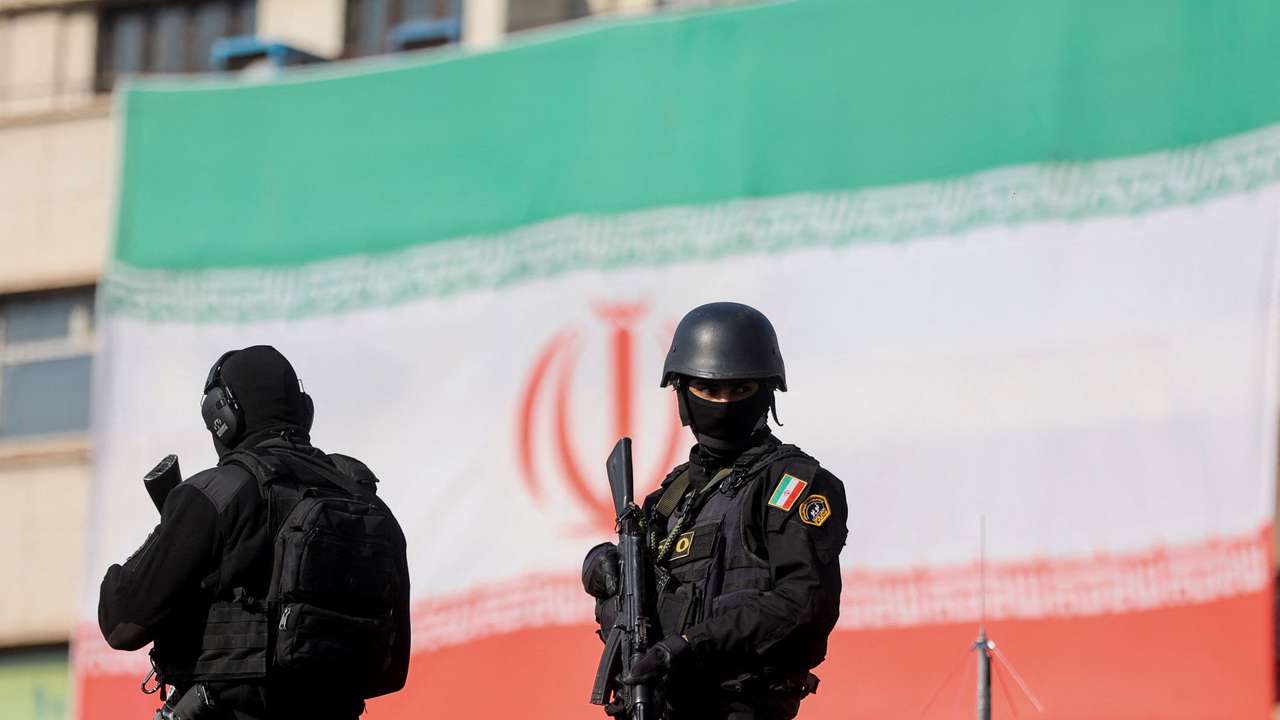
Tehran said on Monday it was keeping communication channels with Washington open as U.S. President Donald Trump considered how to respond to Iran's deadly crackdown on nationwide protests, one of the gravest tests of clerical rule since the Islamic Revolution in 1979.
Adding to threats of military action, Trump late on Monday announced that any country doing business with Iran, a major oil producer, will face a new tariff of 25% on its exports to the U.S.
"This Order is final and conclusive," Trump said in a social media post, without providing further detail about the legal authority he would use to impose the tariffs, or whether they would be aimed at all of Iran's trading partners. The White House did not respond to a request for comment.
RECOMMENDED FOR YOU

Six countries account for three-quarters of Europe’s unicorn startups
Iran's mission to the United Nations in New York declined to comment on Trump's tariff announcement. Iran, already under heavy U.S. sanctions, exports much of its oil to China, with Turkey, Iraq, the United Arab Emirates and India among its other top trading partners.
The Chinese embassy in Washington criticised Trump's approach, saying China will take "all necessary measures" to safeguard its interests and opposed "any illicit unilateral sanctions and long-arm jurisdiction."
Trump has warned Iran's leaders that the United States would attack if security forces open fire on protesters. On Sunday, he said the U.S. may meet Iranian officials and he was in contact with Iran's opposition.
Iran's leaders, their regional clout much reduced, are facing fierce demonstrations that evolved from complaints about dire economic hardships to defiant calls for the fall of the deeply entrenched clerical establishment.
U.S.-based rights group HRANA said by late Monday it had verified the deaths of 646 people, including 505 protesters, 113 military and security personnel and seven bystanders, and was investigating 579 more reported deaths.
Since the protests began on December 28, 10,721 people have been arrested, the group said. Reuters was unable to confirm the figures independently.
HRANA said it received reports and videos on Monday from Tehran's Behesht Zahra Cemetery where family members of victims "gathered at burial sites and chanted protest slogans."
While airstrikes were one of many alternatives open to Trump, "diplomacy is always the first option for the president," White House press secretary Karoline Leavitt told reporters on Monday.
RECOMMENDED FOR YOU
Burkina Faso to stop importing armoured vehicles, Traore says
"What you're hearing publicly from the Iranian regime is quite different from the messages the administration is receiving privately, and I think the president has an interest in exploring those messages," she said.
Iranian Foreign Minister Abbas Araqchi said Tehran was studying ideas proposed by Washington, though these were "incompatible" with U.S. threats.
"Communications between (U.S. special envoy Steve) Witkoff and me continued before and after the protests and are still ongoing," he told Al Jazeera.
The U.S. Department of State Consular Affairs highlighted the escalating protests and said U.S. citizens in Iran should consider leaving by land to Armenia or Turkey.
"U.S. nationals are at significant risk of questioning, arrest, and detention in Iran," the department said on its TravelGov account on X.
VICTIMS' FAMILIES REPORTED TO CHANT PROTEST SLOGANS
Iran, which has not given an official death toll from the protests, blames the bloodshed on U.S. interference and what it calls Israeli- and U.S.-backed terrorists. State-run media has focused attention on the deaths of security forces.
The flow of information from the Islamic Republic has been hampered by an internet blackout since Thursday, although some Iranians still have access to the internet via Elon Musk’s Starlink satellite service, three people inside the country said.
RECOMMENDED FOR YOU
Venezuelans protest Delcy Rodríguez's UNGA appearance
Iran's Ministry of Intelligence said on Monday it had detained "terrorist" teams responsible for acts including killing paramilitary volunteers loyal to the clerical establishment, torching mosques and attacking military sites, according to a statement carried by state media.
Addressing a large crowd in Tehran's Enqelab Square on Monday, parliament speaker Mohammad Baqer Qalibaf said Iranians were fighting a war on four fronts - "economic war, psychological warfare, military war against the U.S. and Israel, and today a war against terrorism."
Declaring the situation "under total control", Araqchi said on Monday that 53 mosques and 180 ambulances had been set on fire since the protests erupted.
Despite the massive scale of the protests, there are no signs of splits in the Shi'ite clerical leadership, military or security forces, and demonstrators have no clear central leadership. The opposition is fragmented.
Trump said on Sunday that Iran had called to negotiate about its disputed nuclear programme. Israel and the U.S. bombed Iranian nuclear sites in a 12-day war in June.
"A meeting is being set up, but we may have to act because of what is happening before the meeting," he told reporters on Air Force One.
US OPTIONS MAY INCLUDE CYBER, MILITARY STRIKES
Trump was to meet with senior advisers on Tuesday to discuss options for Iran, a U.S. official told Reuters. The Wall Street Journal reported that those included military strikes, using secret cyber weapons, widening sanctions and providing online help to anti-government sources.
RECOMMENDED FOR YOU
Sovereignty dominates biggest ever BRICS summit in India
Striking military installations could be highly risky, as some may be located in heavily populated areas.
In an interview with CBS News, Reza Pahlavi, son of Iran's last shah who lives in exile in the U.S., urged Trump to intervene "sooner."
"I think the president has a decision to make fairly soon," said Pahlavi, who has urged Iranians to protest and has positioned himself as a transitional leader for the country.
Qalibaf warned Washington against "a miscalculation".
"Let us be clear: in the case of an attack on Iran, the occupied territories (Israel) as well as all U.S. bases and ships will be our legitimate target," he said.
However, Tehran is still recovering from last year's war, and its regional clout has been weakened by blows to allies such as Lebanon's Hezbollah since the October 7, 2023, attack on Israel. Israel also killed top Iranian military commanders in the June war.
World oil prices hit seven-week highs on Monday on worries that Iran's exports could fall due to political turmoil and a potential U.S. response. [O/R]
The protests began in response to soaring prices that have worsened daily hardships, before turning against the clerical rulers who have governed for more than 45 years.
RECOMMENDED FOR YOU
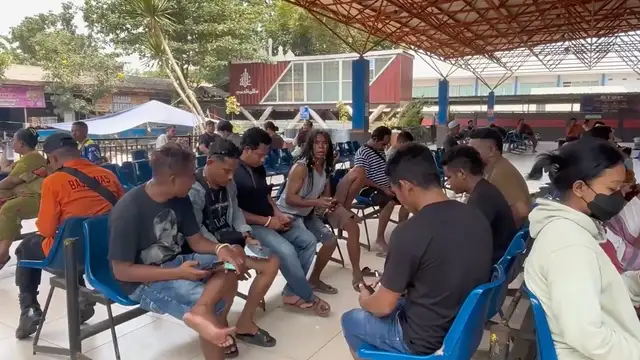
Families wait for news as 140 remain missing from Indonesian ferry
Iranians have grown increasingly resentful of the powerful Revolutionary Guards, whose business interests including oil and gas, construction and telecommunications are worth billions of dollars.
This article was produced by Reuters news agency. It has not been edited by Global South World.