UK MI6 spy chief warns of 'aggressive' Russia threat in first speech
By Michael Holden and Suban Abdulla
Russian President Vladimir Putin is dragging out negotiations over Ukraine, while Russia is seeking to bully critics with tactics from sabotage attacks to buzzing airports with drones, the head of Britain's MI6 spy agency said on Monday.
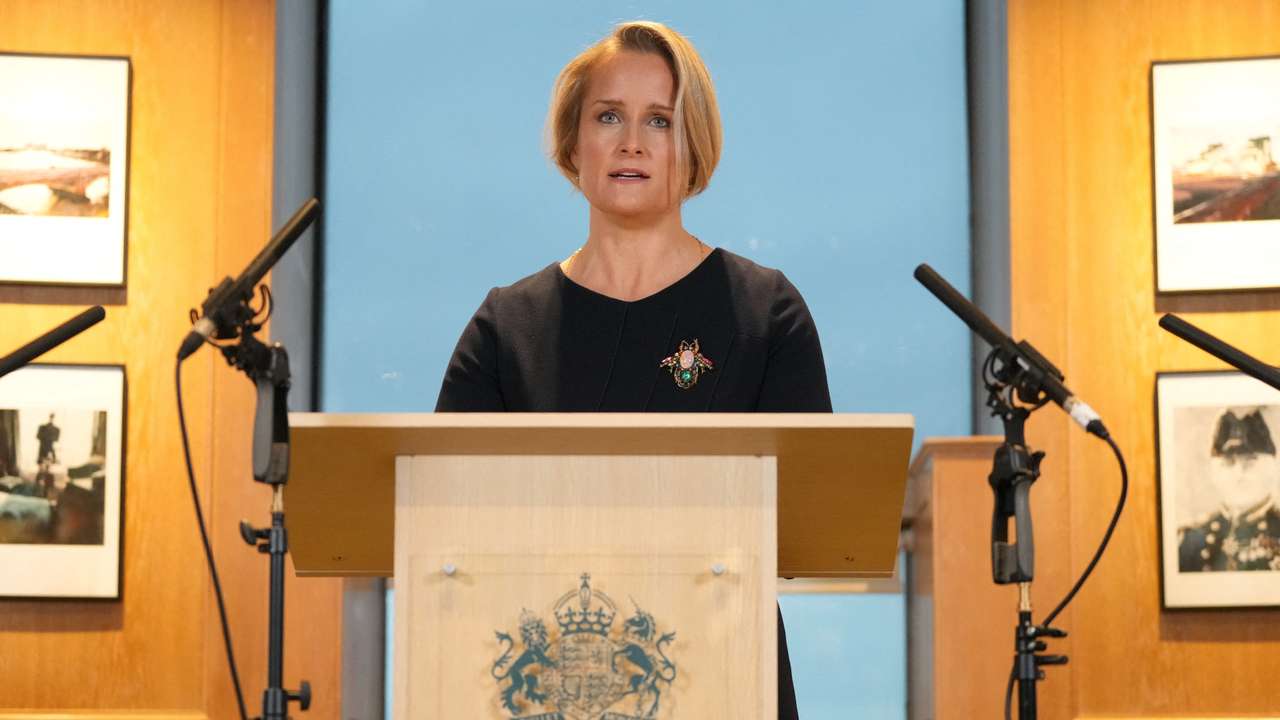
In her first public speech since becoming the head of Britain's Secret Intelligence Service, Blaise Metreweli said Russia posed an "aggressive, expansionist, and revisionist" threat that still sought to subjugate Ukraine and harass NATO members.
Talks between Ukrainian President Volodymyr Zelenskiy and U.S. President Donald Trump's envoys resumed in Berlin on Monday, after the U.S. side said a "lot of progress" had been made on ending the conflict.
RECOMMENDED FOR YOU
Lula and Flávio Bolsonaro over economy, crime and personal attacks in final Brazil election debate
BRITAIN'S SUPPORT FOR UKRAINE IS 'ENDURING'
Metreweli cast doubt on how much Putin himself wanted peace.
"I find it harrowing that hundreds of thousands have died, with the toll mounting every day, because of Putin's historical distortions and his compromised desire for respect," said Metreweli, who in October became MI6's first female chief - a role known by the codename "C" - in its 116-year history.
"He is dragging out negotiations and shifting the cost of war on to his own population," she said in her speech at the agency's London headquarters.
She said Russia should be in no doubt about Britain's "enduring" support for Ukraine and that "the pressure we apply on Ukraine's behalf will be sustained".
Putin has repeatedly said he is ready to talk peace, but that if Ukraine refuses an agreement then Russia's forces will advance further and take more Ukrainian territory.
Metreweli also accused Russia of using tactics "just below the threshold of war", including cyberattacks on critical infrastructure, drones buzzing airports and military bases, "aggressive activity" above and below the sea, arson and sabotage, and propaganda operations.
"The export of chaos is a feature not a bug in the Russian approach to international engagement, and we should be ready for this to continue until Putin is forced to change his calculus," she said.
RECOMMENDED FOR YOU

Giant cockroach set ablaze at India's Dussehra festival sparks political row
Russia regularly denies accusations that it is behind drone incidents or cyberattacks affecting Western countries. It also denies any plans to attack NATO, which has been providing weapons, intelligence and other assistance to Ukraine since Moscow's 2022 invasion.
TECHNOLOGY RE-SHAPING RISK
Metreweli was previously MI6's head of technology, known as "Q", and much of her speech focused on the peril posed by technological innovations, such as artificial intelligence, biotechnology and quantum computing.
It meant power was becoming more diffuse and unpredictable, shifting from states to corporations, and sometimes to individuals, she said.
"AI-powered robots and drones are brilliant for scaled manufacturing but devastating on the battlefield. Discoveries that cure disease can also create new weapons," she said.
"And as states race for tech supremacy, or as some algorithms become as powerful as states, those hyper-personalised tools could become a new vector for conflict and control."
Faced with these challenges, she said MI6 would take on a more active, operational role, "hustling to make things happen".
"We will take calculated risks, where the prize is significant and the national interest clear," she said. "We will never stoop to the tactics of our opponents. But we must seek to outplay them."
RECOMMENDED FOR YOU
Papua New Guinea leads world in language diversity with 843 living languages
Richard Knighton, head of Britain's armed forces, will also call in a separate speech on Monday for a "whole society" approach to defence in the face of growing uncertainty and threats, and highlight an increased probability of Russia invading a NATO country.
This article was produced by Reuters news agency. It has not been edited by Global South World.