US military interventions in South America over the years
The United States has long played a controversial role in the politics of South America, from quiet backing of coups in the 20th century to unprecedented military action in 2026. This week’s dramatic events in Caracas have once again highlighted that history.
The United States has long played a controversial role in the politics of South America, from quiet backing of coups in the 20th century to unprecedented military action in 2026. This week’s dramatic events in Caracas have once again highlighted that history.
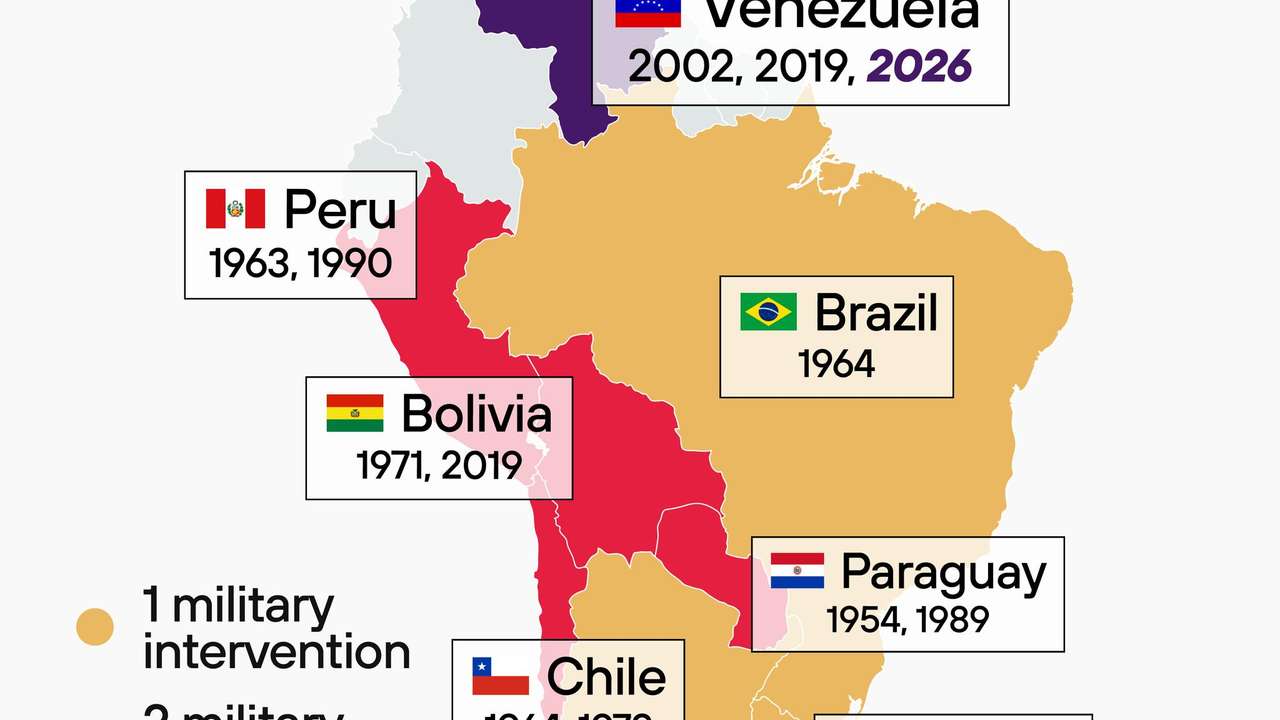
On 3 January 2026, U.S. forces launched what the White House dubbed Operation Absolute Resolve, an air and special forces mission in Venezuela that resulted in the capture and removal of President Nicolás Maduro from power.
The South American leader has since been flown to the United States to face federal charges related to alleged narco-terrorism and weapons offences. He is set to appear in a Manhattan court on Monday, January 5.
This marks the most forceful direct intervention by the United States in the region since the late 20th century, and it has triggered immediate global reaction.
RECOMMENDED FOR YOU
Six countries account for three-quarters of Europe’s unicorn startups
Leaders across Latin America, Europe and beyond have condemned the operation as a violation of international law and a threat to regional sovereignty, while some U.S. lawmakers argue the White House bypassed Congress in authorising the action.
Since World War II, the U.S. has intervened in multiple South American countries. Venezuela now stands alongside Peru (1963, 1990), Bolivia (1971, 2019), Chile (1964, 1973), Paraguay (1954, 1989), Argentina (1976), Uruguay (1973), and Brazil (1964) in episodes where U.S. military pressure, support or direct action shaped national politics.
Those earlier episodes include Cold War-era coups and covert operations, often linked with U.S. fears of Soviet influence and domestic leftist movements.
One notorious example was Operation Condor, a coordinated campaign in the 1970s by several South American dictatorships (Argentina, Chile, Uruguay, Paraguay, Bolivia, Brazil), which received tacit U.S. backing and targeted dissidents across borders.
The Trump administration has framed its 2026 intervention as part of a broader campaign against drug trafficking and threats to U.S. security, building on months of strikes against drug smuggling infrastructure and naval blockades.
This story is written and edited by the Global South World team, you can contact us here.