Venezuela tops the 2025 oil reserves ranking
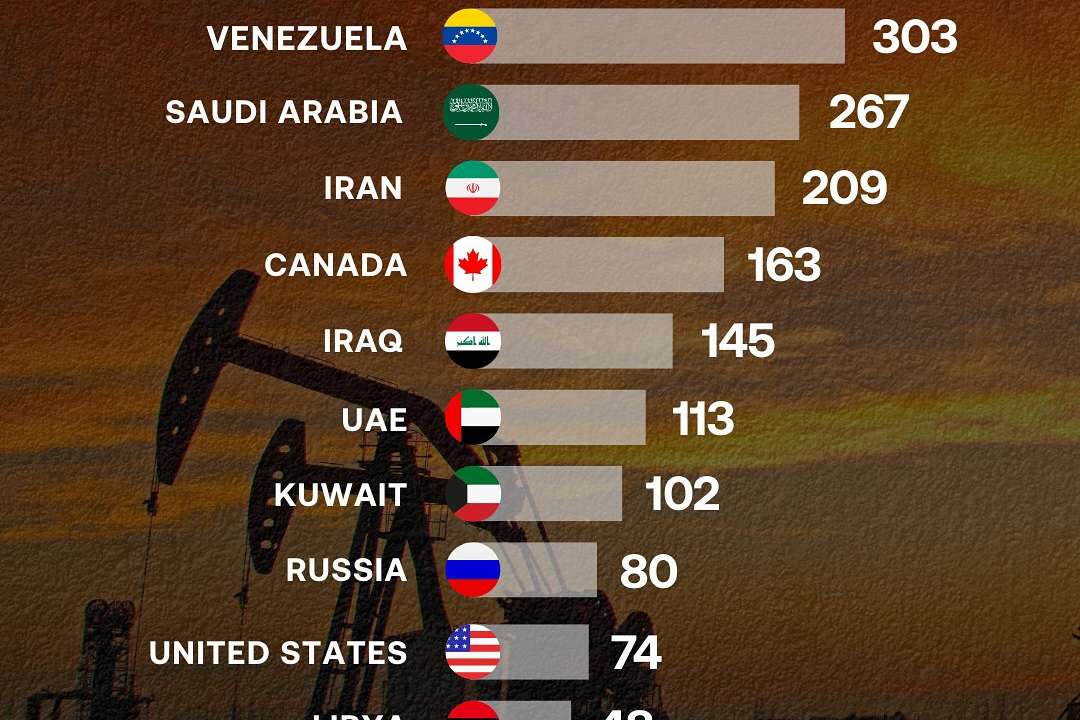
Venezuela leads the world in proven oil reserves in 2025 with an astonishing 303 billion barrels, followed closely by Saudi Arabia at 267 billion barrels, with Iran securing third place at 209 billion barrels.
A visual breakdown charts the top ten nations: Venezuela, Saudi Arabia, Iran, Canada (163 bn), Iraq (145 bn), UAE (113 bn), Kuwait (102 bn), Russia (80 bn), the United States (74 bn), and Libya (48 bn).
These top ten nations “hold strategic leverage in shaping global energy markets and international policy frameworks” and underscore how membership in OPEC or OPEC+ amplifies their global influence.
Political stability, technological access, and strategic alliances significantly influence actual production capacity and how these reserves translate into power.
More than just numbers
- Venezuela’s elephant in the room: Although topping the chart, Venezuela grapples with economic instability, sanctions, and the logistical challenges of extracting its extra-heavy oil from deposits like the Orinoco Belt, a potentially massive resource swathed in complexity
- In contrast, Saudi Arabia features some of the lowest-cost, most accessible oil globally. Its key asset, the Ghawar oil field, remains the world’s largest conventional oil field, capable of pumping millions of barrels per day and reinforcing Saudi Arabia’s pivotal role in global energy markets.
- Canada and Iraq: Canada’s reserves, largely located in the oil sands, pose environmental and cost challenges. Iraq, rich in reserves, must contend with infrastructure needs and regional instability in deploying its full potential.
- Russia and the U.S.: Russia, while part of OPEC+, wields significant influence in both oil and natural gas domains. The U.S., despite being the world's largest oil producer and consumer, ranks only ninth in reserves—highlighting the difference between production scale and resource endowment.
This story is written and edited by the Global South World team, you can contact us here.