War, displacement cast shadow over Muslim Eid holiday in Lebanon
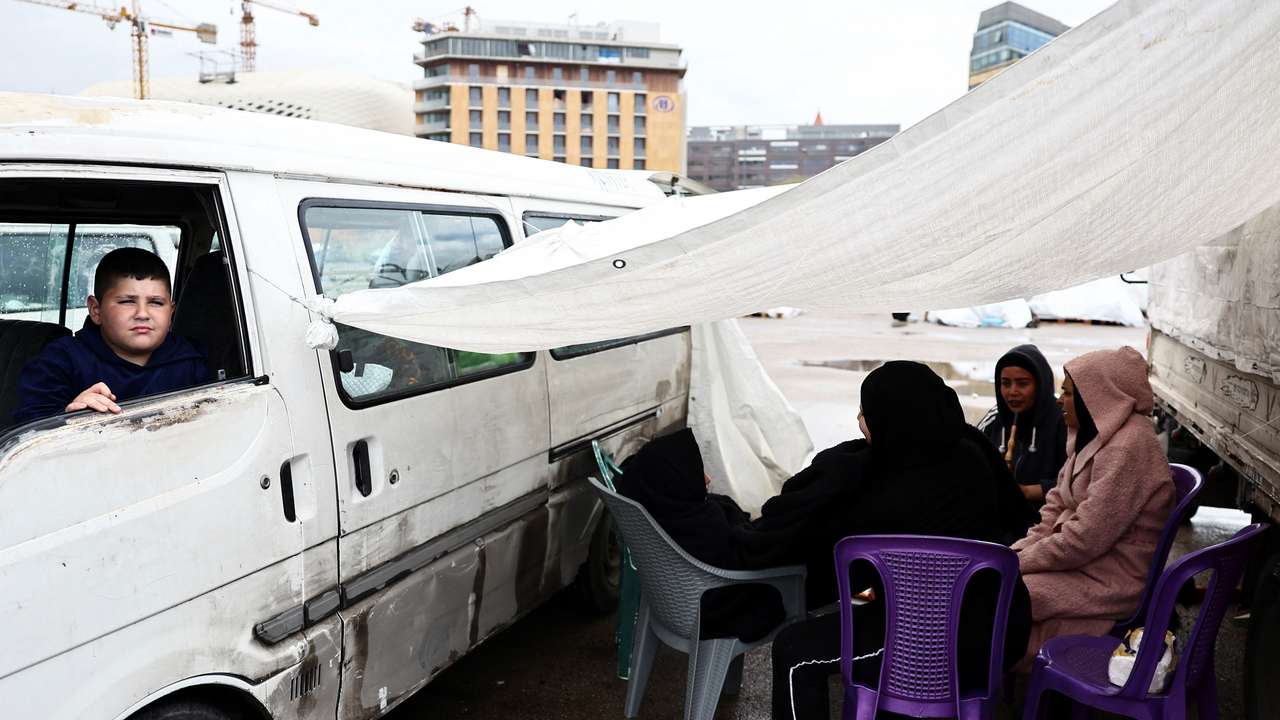
For Lebanese Muslims, there was little to celebrate on Friday during Eid al-Fitr as a displacement crisis prompted by Israeli strikes and fears for the future cast a dark shadow over the end of the holy fasting month of Ramadan.
Normally a joyous festival, Eid al-Fitr this year has been dampened by fallout from the war raging between Israel and Iran-backed Lebanese armed group Hezbollah, which dragged Lebanon into the regional conflict earlier this month.
Israel's strikes across Lebanon's south, east and its capital Beirut have killed more than 1,000 people and the Israeli military's evacuation orders have forced more than a million people to flee their homes.
In downtown Beirut, displaced Lebanese tried to shield themselves from bouts of heavy rain on Friday, crouching under flimsy tents just a few meters away from the grandiose Mohammad al Amin Mosque, where worshippers spent their morning praying.
RECOMMENDED FOR YOU

UAE Roundup: Historic Germany visit, Iran attack condemned, agentic AI push accelerates
Samah Hjola, a Lebanese mother of two sheltering under a tarp hung between two minivans, told Reuters her fond memories of previous Eid holidays felt like a different lifetime.
"Our circumstances used to be different; (we were) at home, my children had new clothes for the Eid," Hjola, 33, said.
"There is a huge difference between being at home and being in a tent or, rather, in a bus."
'EID IS GONE'
Some displaced families had hoisted their tents atop wooden planks to lift them off the wet ground.
Late on Friday morning, Israeli jets broke the sound barrier over Beirut, sending two colossal booms echoing over the city. The Israeli military did not immediately respond to a question on the purpose of the manoeuvre.
The sounds, which can easily be mistaken for air strikes, caused panic across the city as residents thought new bombing raids had begun.
In a Beirut school that had been turned into a shelter for the displaced, a musical band performed in front of dozens of children, seeking to alleviate the sombre reality of being far from home.
RECOMMENDED FOR YOU
Turkmenistan Roundup: Halk Maslahaty preparations, smart energy, and Caspian diplomacy
Volunteers cooked meals for the families staying there and floated balloons from the school's upper floors onto children in the courtyard.
For the adults, it was hard to shake the dark mood.
"There's no Eid, you can't mention Eid," said Abed Nasser, a 53-year-old displaced man.
"Eid is gone for us, and everything called a good life is gone. We live in sorrow for those who are gone. We live in tragedy, seeing the displaced unable to get by," he said.
'A HEAVINESS IN PEOPLE'S HEARTS'
Further south in the Lebanese port city of Sidon, families visited the graves of loved ones, an Eid tradition.
People from southern Lebanese villages displaced by Israel's expanding ground operations and evacuation orders told Reuters this week they were heartbroken that they would be unable to pay their respects on account of the war.
Worshippers filtered quietly out of a mosque in Sidon after prayers.
RECOMMENDED FOR YOU
More than 140 injured in India's traditional Bagwal Mela battle
"Honestly, there's a heaviness in people's hearts. The joy is incomplete," said Suleiman Youssef.
"I think people need joy, they need happiness. People want to be happy. This country needs safety and stability. We all hope the coming days will be better, and that the war will end as soon as possible."
This article was produced by Reuters news agency. It has not been edited by Global South World.