War Elephants: The ancient superweapon that reshaped warfare across continents
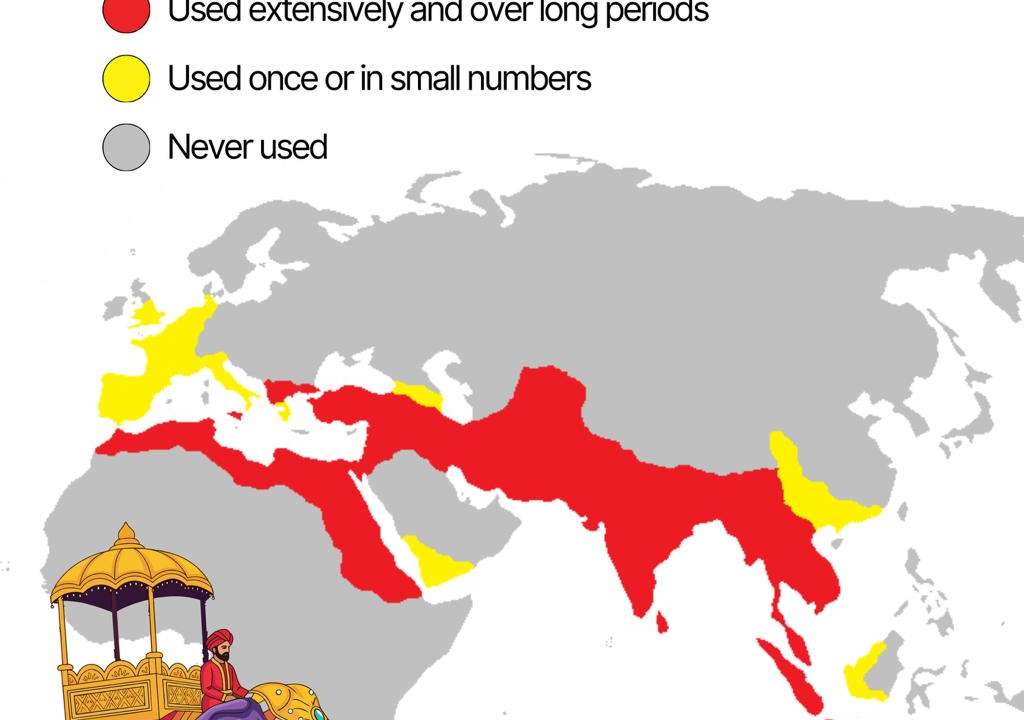
Long before gunpowder and mechanised armies transformed warfare, some of the most decisive battles in history were unexpectedly shaped by elephants.
Long before gunpowder and mechanised armies transformed warfare, some of the most decisive battles in history were unexpectedly shaped by elephants.
Towering over infantry and cavalry alike, war elephants were deployed for their physical power, psychological impact, and symbolic authority.
These animals played a strategic role in military campaigns for centuries, influencing how wars were fought and how empires expanded.
While there were numerous small-scale and experimental deployments following their introduction around 1100 BC, the presence of war elephants gradually became more structured and strategic, particularly in the Indian subcontinent. There, elephants were trained to charge enemy lines, carry archers or commanders, and instil fear through sheer size and noise.
RECOMMENDED FOR YOU

Six countries account for three-quarters of Europe’s unicorn startups
As military contact increased between civilisations, the practice spread westward. Persian armies were among the first outside South Asia to integrate elephants into organised warfare. This expansion culminated in one of the most significant military encounters of antiquity.
Gaugamela: Europe’s first encounter with war elephants
The first well-documented conflict involving Europeans and war elephants occurred at the Battle of Gaugamela in October 331 BC. Fought in what is now northern Iraq, the battle pitted Alexander the Great against the Persian king Darius III. Although elephants did not determine the outcome, their presence marked a turning point in European military consciousness.
Ancient sources suggest that the animals caused enough concern for Alexander to take religious precautions before the battle. While his Macedonian army ultimately prevailed, the encounter exposed Greek forces to a form of warfare they had never previously faced, prompting future Hellenistic rulers to adopt elephants themselves.
Following Alexander’s campaigns, war elephants became a prized military asset among his successors. The Seleucid Empire fielded large numbers of elephants sourced from India, while Ptolemaic Egypt developed its own elephant corps.
In the western Mediterranean, Carthage famously employed elephants during the Punic Wars, most notably under Hannibal, whose march across the Alps remains one of the most iconic episodes in military history.
Despite their dramatic impact, elephants were never universally effective. They required extensive training, were difficult to control under stress, and could panic if injured or frightened, sometimes turning against their own troops.
Decline and legacy
By the late classical and early medieval periods, changes in military technology and tactics reduced the battlefield value of war elephants. The rise of disciplined infantry formations, projectile weapons, and eventually firearms made them increasingly vulnerable.
Over time, their role shifted away from frontline combat and into ceremonial, logistical, or symbolic uses.
RECOMMENDED FOR YOU

Olympic flame arrives on African soil for first time as Senegal begins Dakar 2026 countdown
Still, war elephants shaped ancient military strategy, altered the psychology of warfare, and left a lasting imprint on historical memory.
This story is written and edited by the Global South World team, you can contact us here.