‘We will not be bullied’ - Why anger over US interference in South Africa is growing
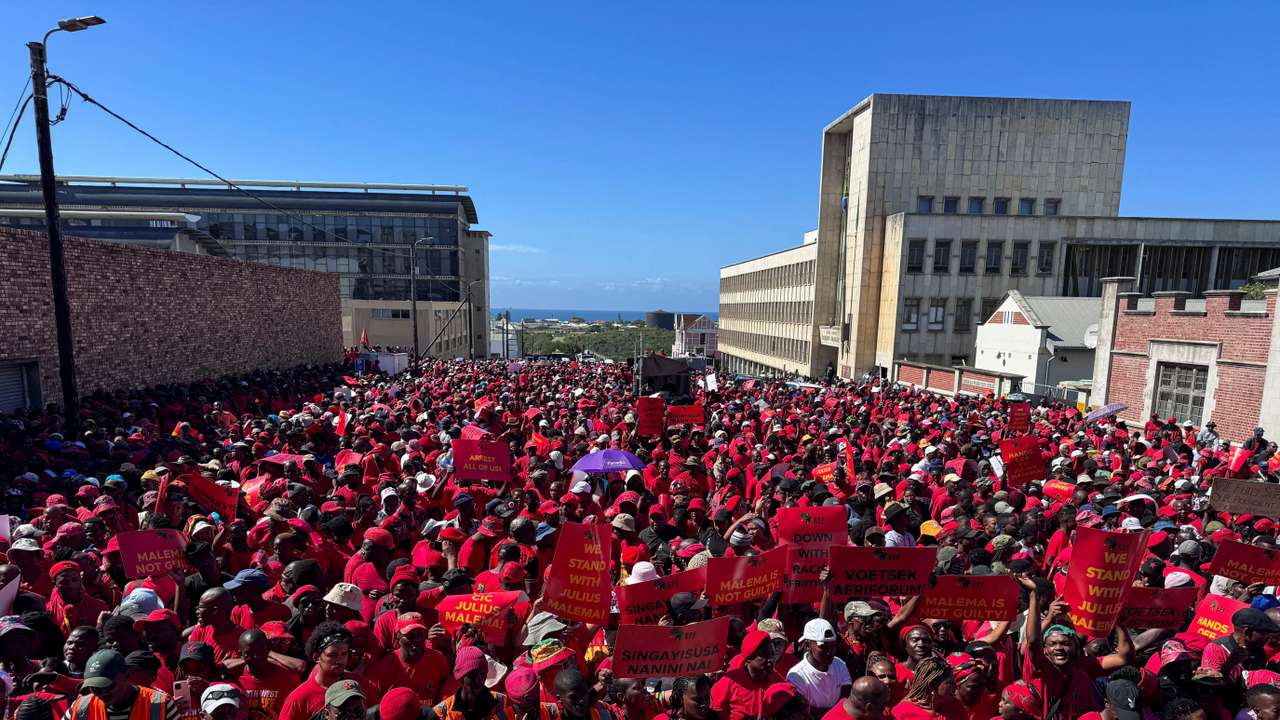
A march through Johannesburg over the weekend showed that anger over perceived US interference in South Africa is no longer limited to diplomatic disputes. It is becoming a public political issue.
With placards reading “We will not be bullied” and “In defence of our sovereignty and democratic gains”, protesters voiced a message that has gained traction in recent weeks, that Washington is trying to pressure Pretoria on matters that South Africans believe should be decided at home.
That frustration is being driven by several flashpoints at once. They include US criticism of South Africa’s transformation policies, land reform, farm attacks, and Pretoria’s genocide case against Israel at the International Court of Justice (ICJ).
For many South Africans, the problem is not just disagreement with the US. It is the sense that America is attempting to dictate domestic policy.
This perception has been sharpened by claims from Donald Trump that South Africa is enabling a “white genocide” through attacks on farmers. The South African government has rejected that claim, as have civil society groups and international observers. President Cyril Ramaphosa has said farm attacks are a serious crime problem, but not genocide.
RECOMMENDED FOR YOU
Six countries account for three-quarters of Europe’s unicorn startups
The issue has become even more contentious because of Gaza.
South Africa’s case against Israel at the ICJ has placed Pretoria in direct conflict with Washington, one of Israel’s strongest allies. On 13 March, the US formally intervened in the case, arguing that Israel does not have the specific intent required to prove genocide under the Genocide Convention.
Washington also said civilian deaths in urban warfare do not by themselves prove genocidal intent.
That position has angered many in South Africa, who see a double standard.
Tensions have also grown because of recent remarks by US Ambassador to South Africa Leo Brent Bozell III. He reportedly expressed frustration over Pretoria’s failure to act on Washington’s so-called “five asks”, which include broad-based black economic empowerment, farm attacks, the ‘Kill the Boer’ song, land expropriation, critical minerals and digital transformation.
That language has been poorly received within the ANC, which sees it as a direct challenge to South Africa’s sovereignty and post-apartheid policy choices. ANC deputy secretary-general Nomvula Mokonyane criticised the ambassador for making “undiplomatic statements”.
For the ANC, the dispute may also bring political benefit. With the 2026 local government elections approaching, the party has an opportunity to present itself once again as a defender of national sovereignty in the face of outside pressure.
This story is written and edited by the Global South World team, you can contact us here.