What can Global South countries do to advance a green transition that is just and transformative? — Opinion
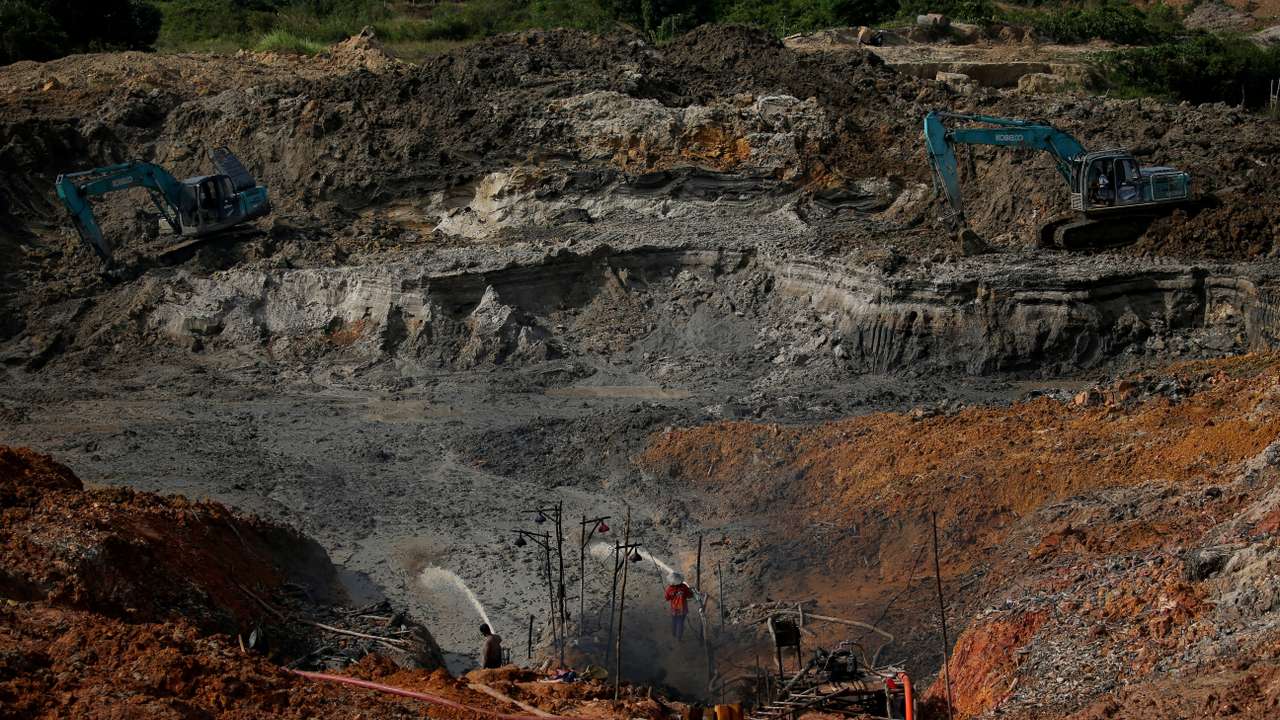
Everyone wants to get their hands on critical minerals as the world seeks to transition to a low-carbon future.
In previous eras, when other raw materials were viewed as equally critical for industrialisation (cotton, rubber, iron, oil, etc.), colonial powers ensured that they extracted them from compliant countries for their own benefit, with local elites often benefiting along the way.
The (mal)governance of raw materials such as these even led to the resources being seen as a ‘curse’. In the present day, the scramble for critical minerals has many of the same features – imperial powers seeking to take control of the resources for their own benefit. History seems to be repeating itself.
The US’s new proposed trading club for critical minerals, in conjunction with its more domestically-oriented Project Vault, albeit designed to protect technologies for AI, manufacturing and defence rather than green industries, is but the latest example of an imperial-centred approach. Such an approach could reinstate previous and reinforce existing power structures instead of recalibrating or even dismantling these structures for a socially-just global transformation that does not mainly serve the interests of the US.
If the world is to undergo a green transition, how might it do so without repeating the colonial and imperial global structures of the past? In short, what might a Green New International Economic Order (GNIEO) look like and how might it come about?
RECOMMENDED FOR YOU
Six countries account for three-quarters of Europe’s unicorn startups
As a first step, greater agency and voice for the Global South are a prerequisite. Notwithstanding the uneven global distribution of critical minerals, many of them are found in the countries of the Global South (for example, China and Brazil alone have over 70% of known rare earth reserves).
If they are to be extracted and used to meet progressive social, political, economic and ecological goals, then countries of the Global South will need to have control over their resources and have access to the technologies which will allow them to use these resources for their own industrial advancement. Ownership of resources and access to technology and finance were, in fact, key aspects of the Global South’s proposals for a New International Economic Order (NIEO) in the 1970s.
The NIEO was a brave attempt to see an alternative future for global economic governance but it failed to deliver as countries in the Global North, especially the US under Kissinger, sought to divide the countries of the Global South by exploiting the differences of interests between oil exporting and oil importing countries while maintaining Northern unity as much as possible, and as the Global South’s agenda unravelled as a result of the underlying tensions in its goals.
If a GNIEO were to be forged now, it would face many of the same problems. The unity of the Global North might be strained, however, as the US under Trump alienates friend and foe alike. Notwithstanding this, many of the current global governance institutions designed to regulate extractive processes, such as the World Bank’s Climate Smart Mining Initiative and the OECD’s Responsible Business Conduct, are dominated by Northern countries.
A coherent Global South response would require two major features. Firstly, it would need to manage the inherent tensions between resource nationalism and collective action. Secondly, and relatedly, it would need China to be a powerful leader given its global dominance in the extraction and processing of critical minerals.
Resource nationalism - and its associated policy instruments such as industrial policy, the support of State-Owned Enterprises, local content regulations and export bans - has resurfaced in the Global South over the past decade or so. Many countries feel the pull of resource nationalism as a way to protect and secure their own economic destinies in the face of predatory external threats.
Of course, this has often led local elites to engage in predatory behaviour themselves as part of the global structures of extraction and accumulation. Resource nationalism – in the sense of sovereign control over resources - is a necessary but insufficient condition for progressive change. One of the problems, from a global perspective, is how resource nationalism can be made compatible with collective action by the Global South, that is, which parts of nationalism can be reasonably ceded for the greater power offered by the prospect of cooperation with other Global South countries.
This dilemma is especially acute for China in the case of critical minerals. It is faced with geopolitical and geoeconomic threats from the US, is blocked by many Northern countries from investing in key sectors and from purchasing some key technologies. China’s response, perhaps unsurprisingly, has been overwhelmingly nationalist.
RECOMMENDED FOR YOU

Olympic flame arrives on African soil for first time as Senegal begins Dakar 2026 countdown
An examination of resource policy documents reveals a strong emphasis on domestic regulation covering issues such as environmental mitigation, work safety, export quotas and industrial restructuring and upgrading. There are specific provisions for international cooperation through the Belt and Road Initiative, for example, and in some bilateral agreements (with Russia, for example).
But there is conspicuously little which speaks to the global level, at how global governance structures could be forged to advance the interests of the Global South despite China’s insistence that it sees itself as a key member and supporter of the Global South.
At present, we are therefore left with critical minerals, essential to the future well-being of the global population and planetary health, being governed by the anarchic interactions of rival powers. A Green New International Economic Order is needed urgently.
The opinions and thoughts expressed in this article reflect only the author's views.
About the authors
Paul Bowles is Professor Emeritus at the University of Northern British Columbia, Canada. He has published widely on development, globalisation, and extractivism.
RECOMMENDED FOR YOU

Sheinbaum rings historic bell as thousands fill Zocalo for Mexican Independence Day
Nathan Andrews is an Associate Professor of International Relations at McMaster University whose research focuses on the global political economy/ecology of natural resource extraction and development.
Jing Vivian Zhan is a Professor in the School of Governance and Policy Science at the Chinese University of Hong Kong. Her research focuses on comparative political economy, local governance, and natural resource management, especially in the Chinese context.
This opinion piece draws upon the analysis set forth in Nathan Andrews, Paul Bowles and Jing Vivian Zhan, “Transforming Global Critical Minerals Governance: Is a Green New International Economic Order Possible?”, Third World Quarterly, 18 January 2026 (online first), DOI: 10.1080/01436597.2025.2608840. For extended analysis, see also Paul Bowles and Nathan Andrews (eds.), Extractive Bargains: Natural Resources and the State-Society Nexus, London: Routledge, 2024.


