What is Japan’s ‘naked festival’ and why did it turn dangerous in 2026?
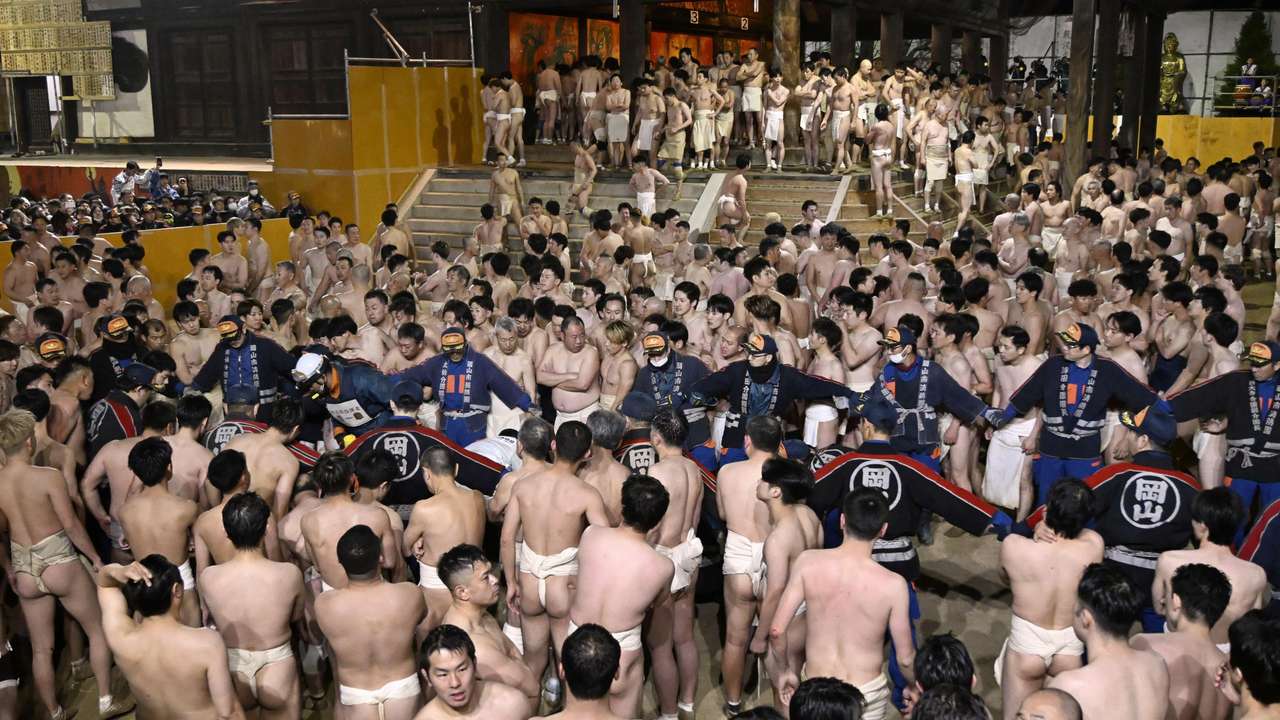
Multiple men were injured this week at Japan’s so-called “naked festival,” one of the country’s most intense winter rituals.
Six male participants were taken to hospital after the 2026 edition of the Saidaiji Eyo at Saidaiji Kannon Temple in Okayama. Three men in their 40s and 50s were found unconscious and in a critical condition after a crush inside the main hall.
Around 10,000 people had gathered for the late-night climax, during which the lights are extinguished and sacred wooden talismans are hurled into the crowd.
The festival, which dates back more than 500 years and is designated a National Important Intangible Folk Cultural Property, is a tightly choreographed ritual.
In the final ceremony, priests throw bundles of small wooden charms into the darkened temple hall, followed by two larger sacred sticks known as “shingi.” Thousands of men, dressed only in a traditional loincloth called a “fundoshi,” surge forward in a dense mass, pushing and grappling to seize one of the prized objects.
RECOMMENDED FOR YOU

‘We will rescue Brazil’ - Flavio Bolsonaro targets Lula at Recife rally
The two men who manage to secure the shingi are declared the year’s “lucky men,” believed to receive a year of good fortune and prosperity.
While it has been a cherished tradition in Japan, the festival’s combination of darkness, noise and extreme crowding has long raised safety concerns, particularly as participants pack shoulder to shoulder in a confined space.
In 2007, one participant died after being crushed.
Japan has several ‘naked’ festivals
Saidaiji Eyo is one of several “naked festivals” held across Japan during the coldest months of the year. These rituals combine Shinto and Buddhist elements and are rooted in ideas of purification: participants douse themselves in icy water and strip down to symbolise a return to an untainted state before petitioning the gods.
In northern Japan, the Somin-sai at Kokusekiji in Iwate long saw men battle for a sack of amulets believed to ward off disease and disaster. After centuries of observance, the temple announced its final full edition in 2024, citing dwindling local support.
Further south, the Hayama-gomori at Kuronuma Shrine in Fukushima remains a more secretive rite. Participants undergo days of abstinence and cold-water purification before nocturnal ceremonies and an oracle’s prophecy for the coming harvest.
For devotees, these festivals express communal endurance and spiritual renewal. Yet as crowds swell and rural organisers struggle with ageing populations, Japan faces a delicate balance between preserving tradition and preventing tragedy.
This story is written and edited by the Global South World team, you can contact us here.