What the world’s oldest cave paintings in Indonesia reveal about early humans
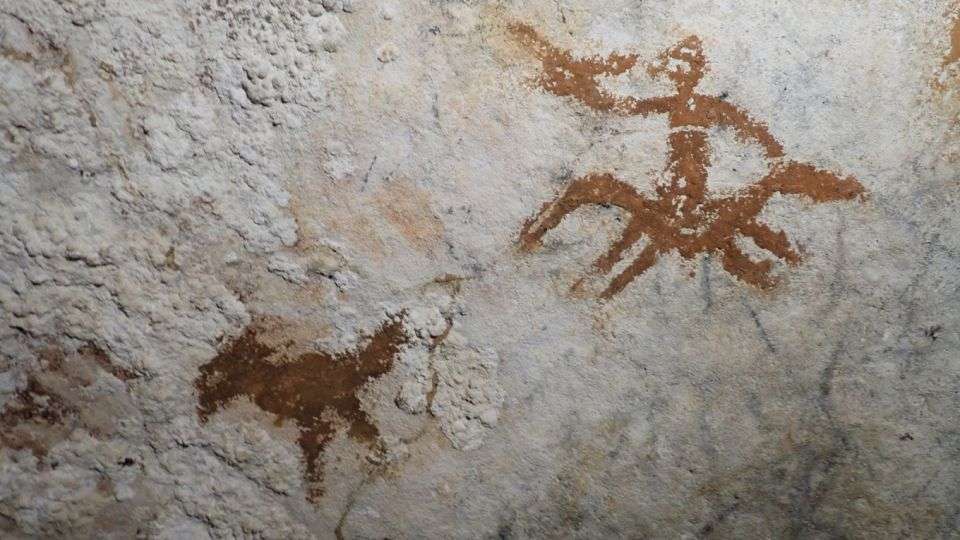
Cave paintings discovered in Indonesia are reshaping scientists’ understanding of when and how early humans developed symbolic thought, artistic expression and long-distance migration skills.
Sulawesi made global headlines after researchers dated a cave painting of a wild pig to at least 51,200 years ago, making it the oldest known representational artwork. New findings now suggest humans may have been creating symbolic art even earlier.
A recently studied hand stencil from Liang Metanduno cave on Muna Island, southeast of Sulawesi, has been dated to at least 67,800 years ago. If confirmed, it would be the oldest known example of cave art anywhere in the world.
The stencil is part of a wider network of rock art sites across Muna and neighbouring Buton Island. While the pigment is heavily faded, researchers identified clear traces of fingers and palm, indicating deliberate human marking rather than natural staining.
Taken together, the cave paintings suggest early humans in the region were not only capable seafarers, but also abstract thinkers — using art to express identity, belief or social meaning long before written history began.
RECOMMENDED FOR YOU

Six countries account for three-quarters of Europe’s unicorn startups
The findings strengthen evidence that early humans in Southeast Asia were producing symbolic art tens of thousands of years earlier than once believed, challenging long-held views that such behaviour first emerged in Europe.
How it was dated
To establish its age, scientists analysed mineral deposits that formed over the artwork using uranium-series dating. This method provides a minimum age, meaning the painting could be significantly older than the figure reported.
The discoveries also carry implications for human migration. Sulawesi lies along the route early humans likely took as they moved from mainland Asia towards Australia via the ancient Sahul landmass. The presence of advanced art supports the idea that these populations had complex cognitive abilities before reaching Australia.
Some researchers caution that questions remain over which human species created the artworks, noting that Denisovans and early Homo sapiens may have shared similar artistic capacities. Others argue the dating methods are robust and consistent across multiple sites.
This story is written and edited by the Global South World team, you can contact us here.