Where do the world’s penguins really live?
Antarctica usually comes to mind when people think of penguins. That instinct is right, but it is only a part of the story. Penguins are much more geographically widespread, with significant populations across South America, Africa, and Oceania.
Antarctica usually comes to mind when people think of penguins. That instinct is right, but it is only a part of the story. Penguins are much more geographically widespread, with significant populations across South America, Africa, and Oceania.
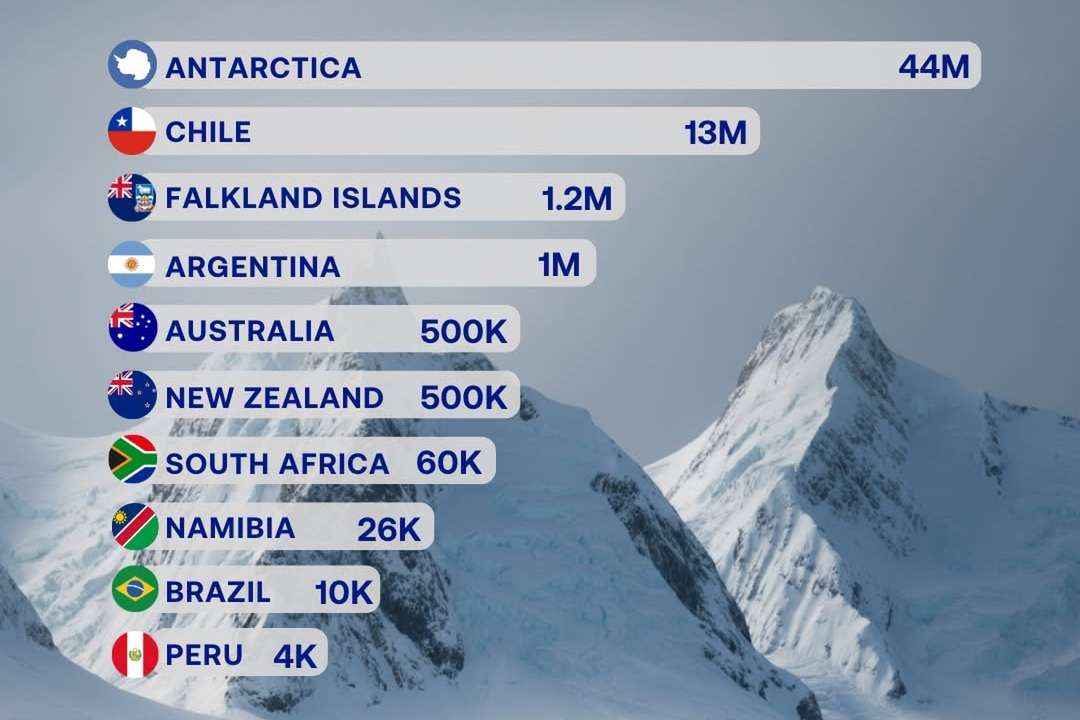
Antarctica is home to an estimated 44 million penguins, making it by far the largest stronghold for the species. According to World Population Review, this figure includes massive colonies of Adélie, Emperor, Chinstrap, and Gentoo penguins.
After Antarctica, Chile holds the second-largest penguin population in the world, with roughly 13 million birds. Its long southern coastline supports Humboldt, Magellanic, and Gentoo penguins.
Neighbouring regions also play an important role, as the Falkland Islands have approximately 1.2 million penguins, Argentina has around 1 million, and Peru has roughly 4,000 birds.
RECOMMENDED FOR YOU
Six countries account for three-quarters of Europe’s unicorn startups
Penguins are not confined to icy environments. South Africa is home to about 60,000 African penguins, while Namibia supports roughly 26,000. These birds live in temperate climates and depend heavily on sardine and anchovy stocks.
In Oceania, Australia has around 500,000 penguins, mainly Little Blue penguins and New Zealand hosts a similar number, including Yellow-eyed and Little Blue species.
The African penguin is, however, currently classified as endangered by the WWF, with populations declining sharply due to food shortages and human activity.
Countries like Brazil, with about 10,000 penguins, sit at the edges of penguin migration routes. These birds are often vulnerable, as they are far from core breeding grounds and more likely to be affected by changing ocean currents.
Penguins are indicator species. When their populations drop, it signals deeper problems in marine ecosystems. The World Wildlife Fund notes that protecting penguins means protecting fisheries, ocean biodiversity, and climate stability at the same time.
This story is written and edited by the Global South World team, you can contact us here.