Which countries report the highest bullying rates among 15‑year‑olds?
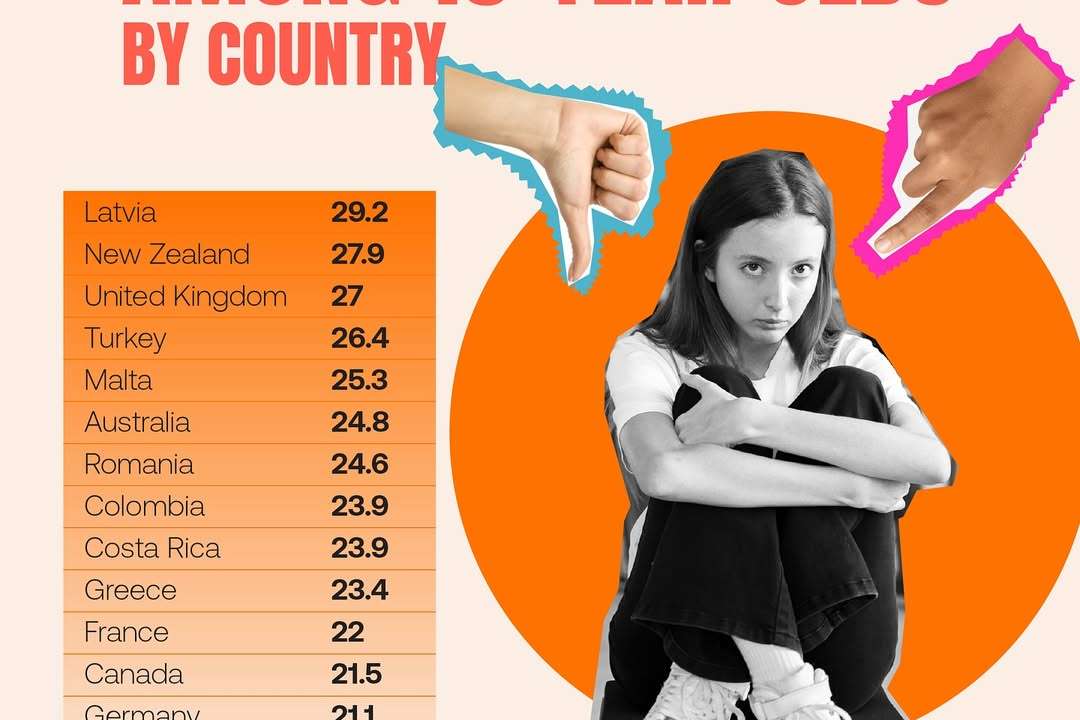
Being bullied is one of the strongest predictors of life satisfaction and is linked to depression, anxiety and even suicidal thoughts.
Being bullied is one of the strongest predictors of life satisfaction and is linked to depression, anxiety and even suicidal thoughts.
Drawing on data from the Programme for International Student Assessment (PISA) surveys, UNICEF notes that while frequent bullying has declined in most high‑income countries since 2018, it remains a serious threat to adolescent mental health.
The graphic above, compiled by World Visualized, ranks countries by the percentage of 15‑year‑olds who report being bullied at least a few times a month.
Latvia tops the table, with nearly one in three teenagers experiencing frequent bullying. New Zealand, the United Kingdom, Turkey and Malta follow closely. Canada, Germany, Chile and the United States show comparatively lower rates but still report that at least one in five 15‑year‑olds face regular harassment.
RECOMMENDED FOR YOU
Six countries account for three-quarters of Europe’s unicorn startups
Country | Bullying rate (%) |
|---|---|
Latvia | 29.2 |
New Zealand | 27.9 |
United Kingdom | 27.0 |
Turkey | 26.4 |
Malta | 25.3 |
Australia | 24.8 |
Romania | 24.6 |
Colombia | 23.9 |
Costa Rica | 23.9 |
Greece | 23.4 |
While these rates stem from self‑reported surveys rather than official police statistics, they underscore wide disparities in school climate. The figures suggest that teens in northern and English‑speaking countries, where digital connectivity is high, may face particularly intense cyberbullying pressure.
UNICEF’s Innocenti Report Card 19 emphasises that bullying is not a harmless rite of passage. Evidence shows it is associated with higher rates of depression, anxiety and suicidal behaviour, and its effects often persist into adulthood.
Victims of bullying tend to have lower life satisfaction, and their academic performance can suffer. Schools that foster positive relationships and teach social‑emotional skills report better outcomes; conversely, institutions that tolerate violence and discrimination see declines in student mental health.
Interestingly, the Innocenti report notes that the COVID‑19 pandemic coincided with a decrease in frequent bullying in most countries, likely because of school closures and remote learning. It is too early to tell whether this trend will hold; UNICEF warns that bullying remains common and urges governments to tackle it through comprehensive policies.
Suggested interventions include:
- Social‑emotional learning programmes to help students regulate their emotions and develop empathy.
- Integrated parenting support, giving caregivers tools to foster positive relationships and recognise bullying signs.
- Strong anti‑bullying policies and safe reporting mechanisms within schools and communities.
- Mental‑health services, including counselling for victims and perpetrators of bullying.