Jose Antonio Kast, Chile's next president, traces politics back to Pinochet era
- #Base Metals
- #Crime
- #Law
- #Justice
- #Conflicts
- #War
- #Peace
- #Currencies
- #Foreign Exchange Markets
- #Human Rights
- #Civil Rights
- #Asylum
- #Immigration
- #Refugees
- #Workforce
- #South America
- #Central America
- #Mining
- #Pictures
- #government
- #Politics
- #Personalities
- #People
- #Race Relations
- #Ethnic Issues
- #Elections
- #Voting
- #Presidential Elections
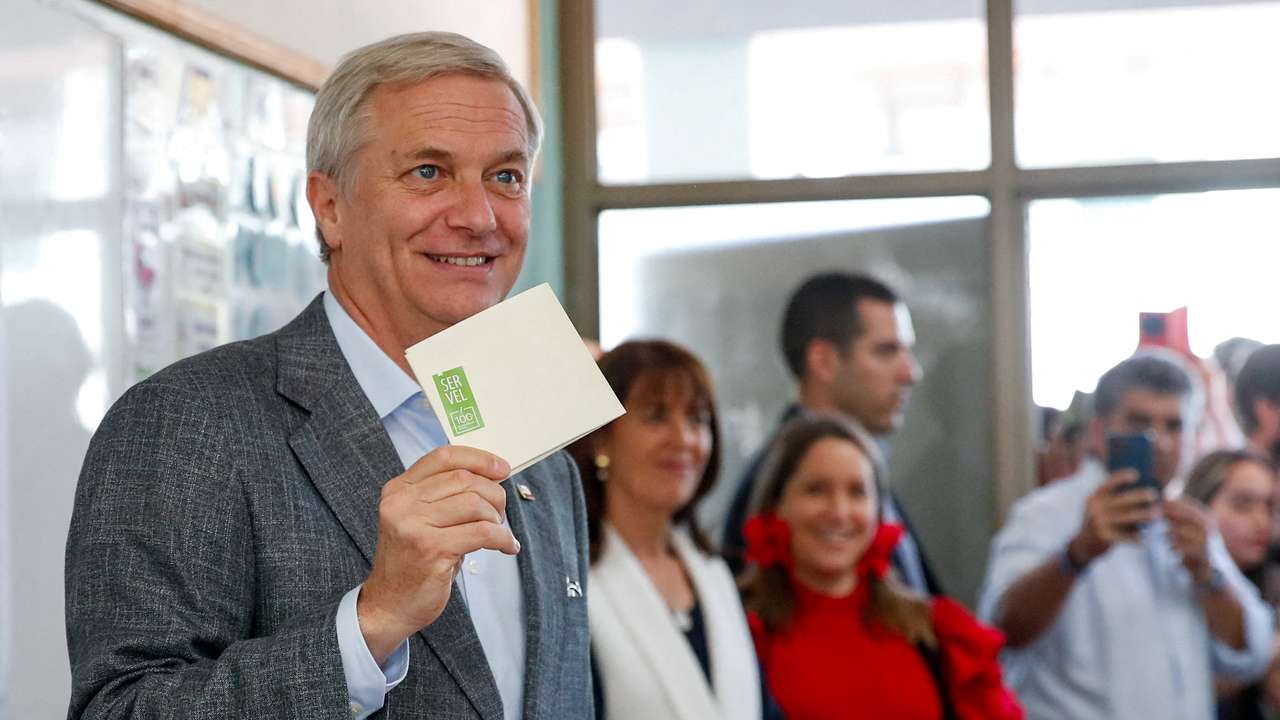
By Fabian Cambero and Sarah Morland
After falling short in two previous presidential runs, Jose Antonio Kast finally secured the Chilean presidency on Sunday, a sign of how his far-right, anti-immigrant views have gained a wave of new support amid fears about increased crime.
Kast, 59, easily beat leftist presidential candidate Jeannette Jara, winning 58% of the vote and steering the South American country toward its sharpest rightward shift since the end of the military dictatorship in 1990.
He lost to leftist President Gabriel Boric in the election in 2021, a time when Kast's hardline policies were out of step with an electorate rattled by the COVID-19 pandemic, widespread protests against inequality, and hopes of drafting a new constitution.
RECOMMENDED FOR YOU

UAE Roundup: Historic Germany visit, Iran attack condemned, agentic AI push accelerates
But now sentiment has shifted and Kast's proposals are resonating with voters who are overwhelmingly concerned about crime and immigration.
While Chile remains one of the safest countries in Latin America, an influx of organized crime has led to a rising murder rate and hurt economic growth, with a recent spike in high-profile incidents like kidnappings and assassinations.
As well as promising a crime crackdown, Kast has vowed to build border walls and form a specialized police force modeled on U.S. Immigration and Customs Enforcement and tasked with tracking down and deporting migrants in the country illegally. Government data shows the majority are Venezuelans.
"This government caused chaos, this government caused disorder, this government caused insecurity," Kast said at the end of the recent campaign. "We're going to do the opposite. We're going to create order, security and trust."
DRAWING INSPIRATION FROM EL SALVADOR
Kast has taken inspiration from the U.S. for his tough-on-borders approach, and last year visited the mega-prison system built by El Salvador's President Nayib Bukele, a model his platform calls for emulating.
The Chilean politician's success makes his country the latest in Latin America to tilt right after Bolivia's election in August and President Javier Milei's success in Argentina's midterm vote in October.
Like Milei, Kast - a Catholic with nine children - has expressed strong objections to abortion. He has previously said he would repeal Chile's limited abortion rights and ban sales of the morning-after pill, though he largely focused on other issues during his campaign. Polls show public opinion overwhelmingly supports maintaining existing abortion rights.
RECOMMENDED FOR YOU
Turkmenistan Roundup: Halk Maslahaty preparations, smart energy, and Caspian diplomacy
His economic plan involves more flexible labor laws, corporate tax cuts and less regulation - though he is expected to moderate planned spending cuts widely seen as unrealistic.
LINKS TO PINOCHET
Kast is the son of a German immigrant, a Nazi party member and army lieutenant who fled to South America after World War Two, where he eventually founded a lucrative sausage business in Paine, south of Santiago. Kast has said his father was a forced Nazi conscript.
The president-elect has been married to Maria Pia Adriasola, a lawyer who has frequently campaigned at his side, for more than three decades.
His eldest brother, Miguel Kast, was a government minister and central bank president in the early 1980s under the dictatorship of General Augusto Pinochet, during which more than 40,000 people were executed, detained and disappeared, or tortured. One of the "Chicago Boys" who pioneered shock-therapy economics, he pushed deregulation and privatizations.
As a law student, Jose Antonio Kast campaigned for the "yes" vote in a referendum on whether Pinochet should remain in power in 1988, a vote that Pinochet lost.
After serving as a congressman for the right-wing Independent Democratic Union (UDI) party for more than a decade, Kast stepped down in 2016 to pursue the presidency as an independent but ended up winning less than 10% of the vote. He gained more traction in 2021 running under the banner of his self-founded Republican Party.
His style is quite different to that of Milei or Bukele, said Nicholas Watson, Latin America managing director at Teneo.
RECOMMENDED FOR YOU
Rwanda Roundup: Kagame begins Oman visit, 7,188 pupils ordered to resit exams and youth leadership takes centre stage
"He is much less flamboyant and more reserved. He is also more of a political insider; he has not burst onto the political scene in the way that Milei did."
As such, Chileans view Kast as a familiar face with more than two decades of political experience, said David Altman, a political scientist at Chile's Pontifical Catholic University, adding that Kast benefited from growing rejection of Boric's incumbent government.
"It's not that people became more fascist in the space of four years," Altman said. "People abandoned the left and as there essentially was not a political center, they went right. It was the only place where they could land."
This article was produced by Reuters news agency. It has not been edited by Global South World.