Why Indonesia and Brunei are tightening cooperation on drugs

Indonesia and Brunei have formalised a new bilateral framework to strengthen cooperation against drug abuse and trafficking, as both countries face mounting risks from transnational syndicates operating across Southeast Asia.
The memorandum of understanding signed between Brunei’s Narcotics Control Bureau (NCB) and Indonesia’s National Narcotics Board (BNN) provides for intelligence-sharing, joint enforcement efforts and collaboration on prevention, treatment and rehabilitation.
This closer coordination comes as drug trafficking networks increasingly exploit regional transit routes and disparities in enforcement capacity, a problem the Association of Southeast Asian Nations (ASEAN) had already identified years before.
According to the ASEAN Drug Monitoring Report 2022, Brunei recorded 613 drug arrests that year, equivalent to about 0.14% of its population, with methamphetamine and cannabis remaining the most commonly seized drugs.
Indonesia, by contrast, was grappling with large-scale and highly organised networks at the time.
RECOMMENDED FOR YOU
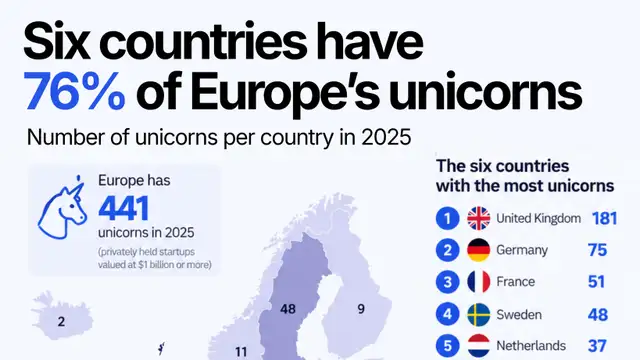
Six countries account for three-quarters of Europe’s unicorn startups
The ASEAN report shows Indonesian authorities dismantled 49 drug syndicates in 2022, including 23 international networks, and seized more than 8.5 tonnes of methamphetamine and over 123 tonnes of cannabis.
Officials from both sides said the cooperation aims to bridge this disparity by pairing Indonesia’s experience in dismantling large syndicates with Brunei’s border controls and early-intervention capabilities.
The agreement also aligns with ASEAN’s broader push for coordinated responses, as regional assessments warn that traffickers rapidly adapt to enforcement pressure by shifting routes, substances and operating methods.
Both countries said the framework would allow faster intelligence exchange and more coordinated action, as no single jurisdiction can effectively counter transnational drug networks acting across ASEAN.
This story is written and edited by the Global South World team, you can contact us here.