Why is Germany called so many different names around the world?
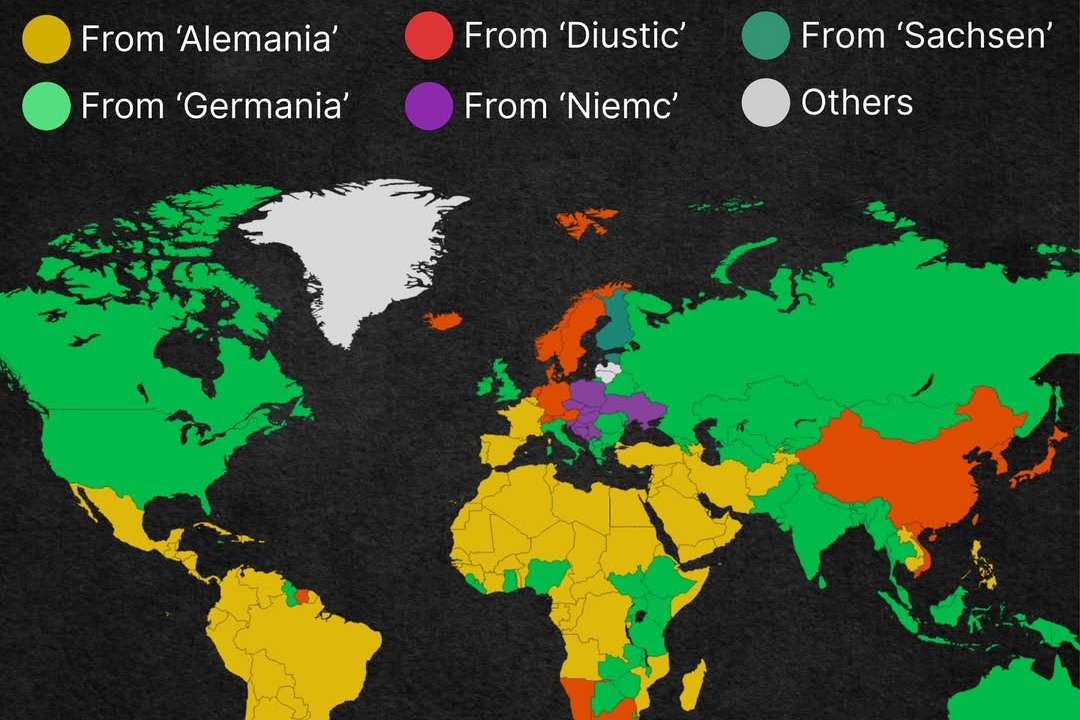
Germany may seem like a single, straightforward name in English, but across the world it goes by very different names, each rooted in history, migration, and how neighbouring people once understood the region.
Germany may seem like a single, straightforward name in English, but across the world it goes by very different names, each rooted in history, migration, and how neighbouring people once understood the region.
In English and many other languages, Germany comes from the Latin Germania, a term used by the Roman Empire to describe the lands east of the Rhine inhabited by Germanic tribes. Roman writers such as Julius Caesar and Tacitus helped popularise the name, which later spread through Latin-based and international usage.
From Alemania: naming the neighbours
In Spanish, French, Portuguese, and Arabic, Germany is known as Alemania or similar variants. This name comes from the Alemanni, a powerful Germanic confederation that lived near what is now southwestern Germany and Switzerland. Because the Alemanni were the first Germanic group many Romance-language speakers encountered, their name became shorthand for the entire region.
From Sachsen: the Saxon legacy
In Finnish and Estonian, Germany is called Saksa, derived from the Saxons, another influential Germanic tribe. Saxon traders and settlers played a major role around the Baltic Sea during the Middle Ages, which explains why their name stuck in northern Europe. Linguists note that trade routes often mattered more than political borders when names spread.
From Deutsch and Niemcy: identity and language
In German itself, the country is Deutschland, from the Old High German word diutisc, meaning “of the people”, a way to distinguish the local language from Latin.
Meanwhile, in many Slavic languages, Germany is called Niemcy, a term linked to an old Slavic word meaning “mute” or “unable to speak”, referring to people who did not speak Slavic languages. While the term sounds harsh today, historians explain that it reflected linguistic differences rather than insult.